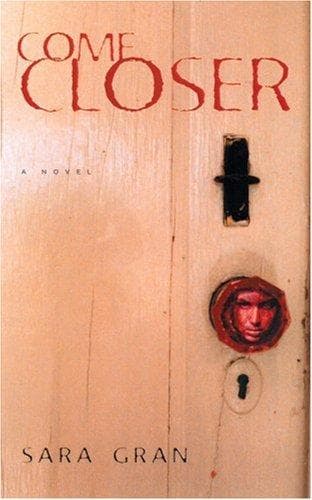
Demonic possession or psychic break? One of Esquire's Top 50 horror novels of all time delves deep into the terrifying consequences of losing control. "A perfect horror novel."—Paul Tremblay, author of The Cabin at the End of the World A recurrent, unidentifiable noise in her apartment. A memo to her boss that's replaced by obscene insults. Amanda—a successful architect in a happy marriage—finds her life going off kilter by degrees. She starts smoking again, and one night for no reason, without even the knowledge that she's doing it, she burns her husband with a cigarette. At night she dreams of a beautiful woman with pointed teeth on the shore of a blood-red sea. The new voice in Amanda's head, the one that tells her to steal things and talk to strange men in bars, is strange and frightening, and Amanda struggles to wrest back control of her life. A book on demon possession suggests that the figure on the shore could be the demon Naamah, known to scholars of the Kabbalah as the second wife of Adam, who stole into his dreams and tricked him into fathering her child. Whatever the case, as the violence of her erratic behavior increases, Amanda knows that she must act to put her life right, or see it destroyed. This new edition of the cult classic features a brand new post-script by the author and an "Are You Possessed?" questionnaire.
Demonic possession or psychic break? One of Esquire's Top 50 horror novels of all time delves deep into the terrifying consequences of losing control. "A perfect horror novel."—Paul Tremblay, author of The Cabin at the End of the World A recurrent, unidentifiable noise in her apartment. A memo to her boss that's replaced by obscene insults. Amanda—a successful architect in a happy marriage—finds her life going off kilter by degrees. She starts smoking again, and one night for no reason, without even the knowledge that she's doing it, she burns her husband with a cigarette. At night she dreams of a beautiful woman with pointed teeth on the shore of a blood-red sea. The new voice in Amanda's head, the one that tells her to steal things and talk to strange men in bars, is strange and frightening, and Amanda struggles to wrest back control of her life. A book on demon possession suggests that the figure on the shore could be the demon Naamah, known to scholars of the Kabbalah as the second wife of Adam, who stole into his dreams and tricked him into fathering her child. Whatever the case, as the violence of her erratic behavior increases, Amanda knows that she must act to put her life right, or see it destroyed. This new edition of the cult classic features a brand new post-script by the author and an "Are You Possessed?" questionnaire.
Add to your library to track progress and write reviews
Add to your library to track progress and write reviews
Find Come Closer Sara Gran in PDF, EPUB, ebook, audiobook, print, or library editions.
Find Come Closer Sara Gran in PDF, EPUB, ebook, audiobook, print, or library editions.
1 books in catalog
Blending psychological horror, noir crime, and existential mystery, novel-length fiction exploring dark obsession and unconventional detective work has earned international translation in over a dozen languages. Sara Gran established her place in modern speculative and crime fiction through distinctively unsettling narratives such as the psychological horror novel Come Closer and her acclaimed private investigator series starring Claire DeWitt.
Born on December 2, 1971, and raised in Brooklyn, New York, Gran developed a lifelong involvement with literature through her career as a writer, secondhand bookseller, and book collector. She published her debut novel, Saturn's Return to New York, in 2001 with Soho Press, followed by the psychological possession novel Come Closer in 2003 and the historical crime story Dope. Beyond her prose fiction, Gran expanded into television and film screenwriting, contributing to television series such as Southland, Berlin Station, and Chance, while also founding the independent small press Dreamland Books. Her articles and short writings have appeared in major publications including The New York Times, The New Orleans Times-Picayune, and USA Today.
Gran's writing frequently bridges traditional genre boundaries by fusing hardboiled noir sensibilities with supernatural suspense, psychological dread, and philosophical inquiry. Her narratives often center on moral ambiguity, memory, and characters confronting mysterious or traumatic pasts, utilizing sharp, concise prose to generate tension. Whether examining demonic possession in urban settings or deconstructing classic detective tropes through a self-proclaimed world's best detective who interprets esoteric clues, her work prioritizes thematic depth and interior realism over formulaic mystery structures.
1 books in catalog
Blending psychological horror, noir crime, and existential mystery, novel-length fiction exploring dark obsession and unconventional detective work has earned international translation in over a dozen languages. Sara Gran established her place in modern speculative and crime fiction through distinctively unsettling narratives such as the psychological horror novel Come Closer and her acclaimed private investigator series starring Claire DeWitt.
Born on December 2, 1971, and raised in Brooklyn, New York, Gran developed a lifelong involvement with literature through her career as a writer, secondhand bookseller, and book collector. She published her debut novel, Saturn's Return to New York, in 2001 with Soho Press, followed by the psychological possession novel Come Closer in 2003 and the historical crime story Dope. Beyond her prose fiction, Gran expanded into television and film screenwriting, contributing to television series such as Southland, Berlin Station, and Chance, while also founding the independent small press Dreamland Books. Her articles and short writings have appeared in major publications including The New York Times, The New Orleans Times-Picayune, and USA Today.
Gran's writing frequently bridges traditional genre boundaries by fusing hardboiled noir sensibilities with supernatural suspense, psychological dread, and philosophical inquiry. Her narratives often center on moral ambiguity, memory, and characters confronting mysterious or traumatic pasts, utilizing sharp, concise prose to generate tension. Whether examining demonic possession in urban settings or deconstructing classic detective tropes through a self-proclaimed world's best detective who interprets esoteric clues, her work prioritizes thematic depth and interior realism over formulaic mystery structures.