In Chocky, pioneering science-fiction master John Wyndham confronts an enigma as strange as anything found in his classic works The Day of the Triffids or The Chrysalids--the mind of a child.
It's not terribly unusual for a boy to have an imaginary friend, but Matthew's parents have to agree that his--nicknamed Chocky--is anything but ordinary. Why, Chocky demands to know, are there twenty-four hours in a day? Why are there two sexes? Why can't Matthew solve his math homework using a logical system like binary code? When the questions Chocky asks become too advanced and, frankly, too odd for teachers to answer, Matthew's parents start to wonder if Chocky might be something far stranger than a figment of their son's imagination.
Chocky, the last novel Wyndham published during his life, is a playful investigation of what being human is all about, delving into such matters as child-rearing, marriage, learning, artistic inspiration--and ending with a surprising and impassioned plea for better human stewardship of the earth.
In Chocky, pioneering science-fiction master John Wyndham confronts an enigma as strange as anything found in his classic works The Day of the Triffids or The Chrysalids--the mind of a child.
It's not terribly unusual for a boy to have an imaginary friend, but Matthew's parents have to agree that his--nicknamed Chocky--is anything but ordinary. Why, Chocky demands to know, are there twenty-four hours in a day? Why are there two sexes? Why can't Matthew solve his math homework using a logical system like binary code? When the questions Chocky asks become too advanced and, frankly, too odd for teachers to answer, Matthew's parents start to wonder if Chocky might be something far stranger than a figment of their son's imagination.
Chocky, the last novel Wyndham published during his life, is a playful investigation of what being human is all about, delving into such matters as child-rearing, marriage, learning, artistic inspiration--and ending with a surprising and impassioned plea for better human stewardship of the earth.
Add to your library to track progress and write reviews
Find Chocky John Wyndham in PDF, EPUB, ebook, audiobook, print, or library editions.

4 books in catalog
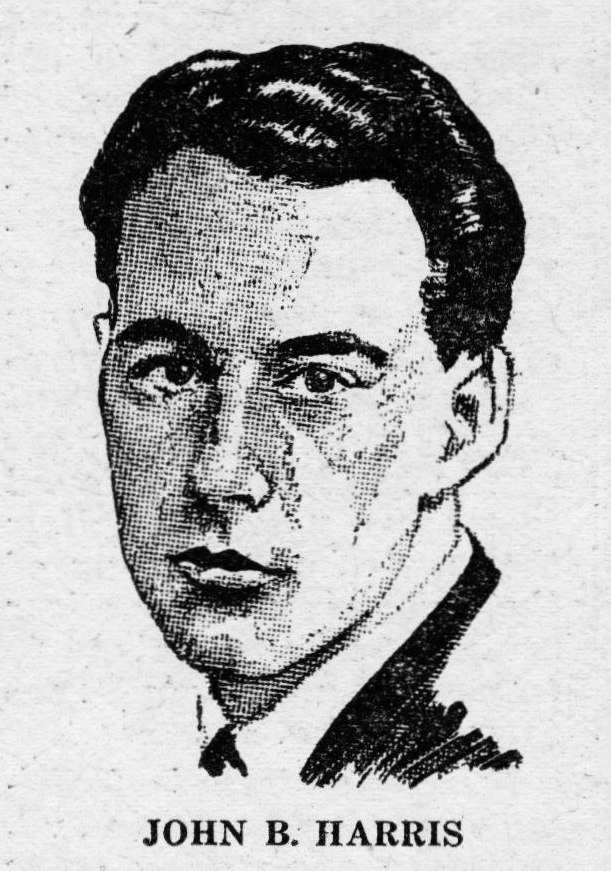
Post-apocalyptic narratives and speculative invasion stories gained widespread prominence through mid-twentieth-century British science fiction, most notably through the classic novel The Day of the Triffids (1951). English author John Wyndham, born John Wyndham Parkes Lucas Beynon Harris (10 July 1903 – 11 March 1969), crafted gripping scenarios where catastrophic events and unexpected evolutionary threats suddenly disrupt comfortable, everyday settings.
Educated in Derbyshire, the author pursued various occupations, including farming and advertising, before dedicating himself to fiction. During the mid-1920s, he began writing short stories for American pulp magazines. Prior to the Second World War, he published work under numerous variations of his name, including John Beynon, John Beynon Harris, Wyndham Parkes, Lucas Parkes, and Johnson Harris, producing early novels such as The Secret People (1935) and Planet Plane (1935, later retitled Stowaway). After serving during World War II, he adopted his best-known byline, John Wyndham, launching a successful series of post-war science fiction novels.
Wyndham's fiction frequently examines the human struggle for survival when catastrophic natural phenomena, alien intrusions, or strange mutations suddenly invade familiar English environments. His narratives contrast cozy, orderly village or suburban life with immense existential collapse and societal breakdown. Rather than focusing on distant space exploration, his speculative works explore psychological endurance, moral dilemmas, and social adaptability in post-apocalyptic or crisis-ridden settings.

4 books in catalog
Post-apocalyptic narratives and speculative invasion stories gained widespread prominence through mid-twentieth-century British science fiction, most notably through the classic novel The Day of the Triffids (1951). English author John Wyndham, born John Wyndham Parkes Lucas Beynon Harris (10 July 1903 – 11 March 1969), crafted gripping scenarios where catastrophic events and unexpected evolutionary threats suddenly disrupt comfortable, everyday settings.
Educated in Derbyshire, the author pursued various occupations, including farming and advertising, before dedicating himself to fiction. During the mid-1920s, he began writing short stories for American pulp magazines. Prior to the Second World War, he published work under numerous variations of his name, including John Beynon, John Beynon Harris, Wyndham Parkes, Lucas Parkes, and Johnson Harris, producing early novels such as The Secret People (1935) and Planet Plane (1935, later retitled Stowaway). After serving during World War II, he adopted his best-known byline, John Wyndham, launching a successful series of post-war science fiction novels.
Wyndham's fiction frequently examines the human struggle for survival when catastrophic natural phenomena, alien intrusions, or strange mutations suddenly invade familiar English environments. His narratives contrast cozy, orderly village or suburban life with immense existential collapse and societal breakdown. Rather than focusing on distant space exploration, his speculative works explore psychological endurance, moral dilemmas, and social adaptability in post-apocalyptic or crisis-ridden settings.