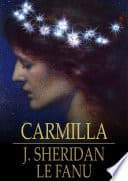
“To this hour the image of Carmilla returns to my memory with ambiguous alternations—sometimes the playful, languid, beautiful girl; sometimes the writhing fiend I saw in the ruined church. Sometimes, I start from a reverie, certain I heard the light step of Carmilla at the drawing-room door.”
Isolated in a remote mansion in a central European forest, Laura longs for companionship—until a carriage accident brings another young woman into her life: the secretive and sometimes erratic Carmilla. As Carmilla’s actions become more puzzling and volatile, Laura develops bizarre symptoms, and as her health goes into decline, Laura and her father discover something monstrous.
Joseph Sheridan Le Fanu’s compelling tale of a young woman’s seduction by a female vampire was a source of influence for Bram Stoker’s Dracula, which it predates by over a quarter century. Carmilla was originally serialized from 1871 to 1872 and went on to inspire adaptations in film, opera, and beyond, including the cult classic web series by the same name.
Add to your library to track progress and write reviews
Find Carmilla: The Wolves of Styria J. Sheridan Le Fanu in PDF, EPUB, ebook, audiobook, print, or library editions.

2 books in catalog
Victorian Gothic fiction and mystery writing were shaped profoundly by nineteenth-century ghost stories that blended psychological tension with macabre mystery. Irish author Joseph Thomas Sheridan Le Fanu emerged as a central figure in this genre, crafting intricate tales of terror and suspense that redefined supernatural literature. Best known for his chilling vampire novella Carmilla and his celebrated mystery novel Uncle Silas, his works established psychological realism within horror, earning him enduring acclaim including praise from M.R. James, who placed him absolutely in the first rank as a writer of ghost stories.
Born in Dublin in 1814 to a family of Huguenot extraction connected to the Anglican Ascendancy, Joseph Sheridan Le Fanu developed his literary talent early alongside notable familial connections, such as his playwright grandmother Alicia Sheridan Le Fanu and great-uncle Richard Brinsley Sheridan. He entered Trinity College, Dublin, in 1833 to train as a lawyer, but soon shifted his career toward journalism and creative writing. Joining the staff of the Dublin University Magazine in 1837, Le Fanu went on to become its editor and proprietor, while also acquiring ownership of several newspapers. His early creative output featured popular Irish ballads including Phaudhrig Croohore and Shamus O'Brien, yet his primary legacy rested on his ghost stories, macabre poetry, and sensation novels written throughout his life in Dublin until his death in 1873.
Le Fanu's writing style is characterized by atmospheric eerie settings, locked-room mysteries, and subtle psychological horror rather than simple physical shock. His stories frequently explore themes of guilt, haunted inheritances, and the invasion of the supernatural into everyday domestic spaces. Rather than relying on overt monsters, he pioneered a narrative technique where uncanny phenomena mirror the internal anxiety and psychological instability of his characters. This approach turned macabre supernatural tales into sophisticated psychological studies, exerting a major influence on subsequent Victorian and Edwardian writers of terror and speculative fiction.