BooksessaysBraiding Sweetgrass: Indigenous Wisdom, Scientific Knowledge, and the Teachings of Plants

As a botanist, Robin Wall Kimmerer has been trained to ask questions of nature with the tools of science. As a member of the Citizen Potawatomi Nation, she embraces the notion that plants and animals are our oldest teachers. In Braiding Sweetgrass, Kimmerer brings these lenses of knowledge together to show that the awakening of a wider ecological consciousness requires the acknowledgment and celebration of our reciprocal relationship with the rest of the living world. For only when we can hear the languages of other beings are we capable of understanding the generosity of the earth, and learning to give our own gifts in return.
Add to your library to track progress and write reviews
Find Braiding Sweetgrass: Indigenous Wisdom, Scientific Knowledge, and the Teachings of Plants Robin Wall Kimmerer in PDF, EPUB, ebook, audiobook, print, or library editions.

Braiding Sweetgrass: Indigenous Wisdom, Scientific Knowledge, and the Teachings of Plants
2 books in catalog
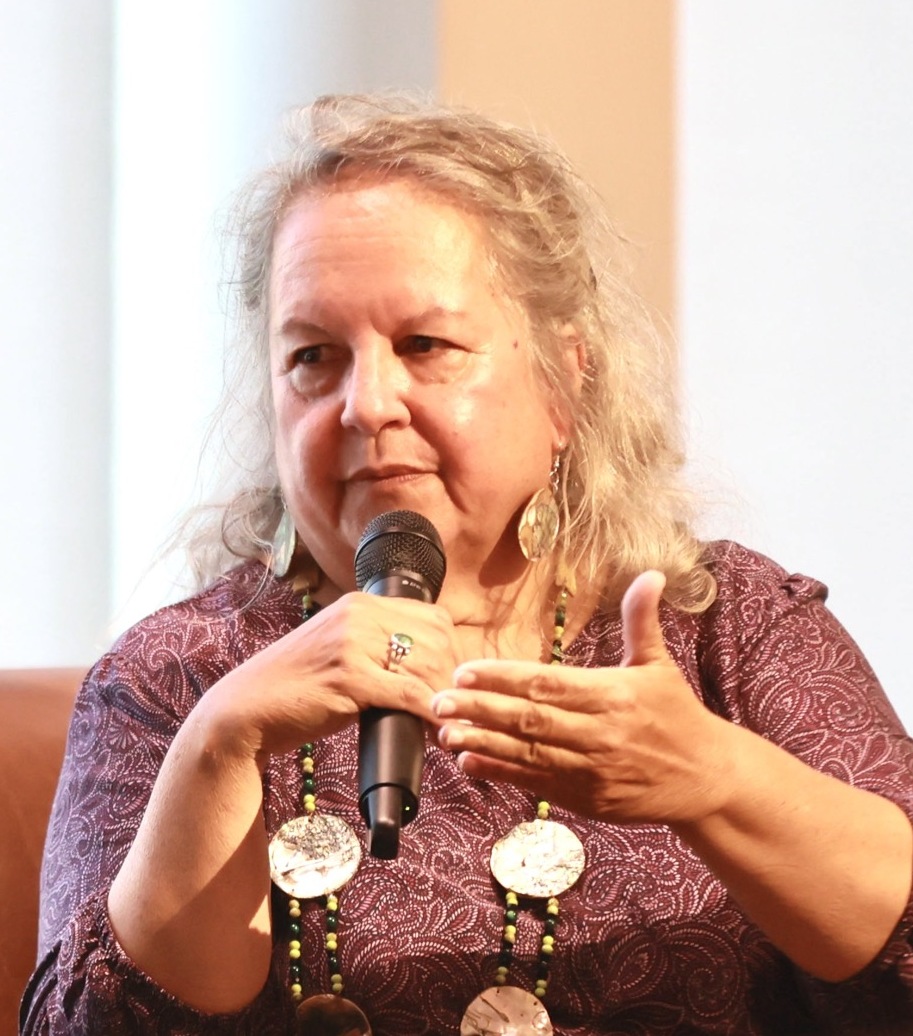
Bridging Western botanical science and Indigenous traditional ecological knowledge, nature writing has found a transformative voice in environmental literature and restoration ecology. Robin Wall Kimmerer, an Indigenous botanist and professor, has reshaped how readers understand human relationships with the natural world through her acclaimed books, including Braiding Sweetgrass: Indigenous Wisdom, Scientific Knowledge, and the Teachings of Plants and The Serviceberry: Abundance and Reciprocity in the Natural World.
An enrolled member of the Citizen Potawatomi Nation, Kimmerer was born in 1953. She earned a Bachelor of Science in Botany from the State University of New York College of Environmental Science and Forestry (SUNY ESF), followed by a Master of Science and a Ph.D. in Botany from the University of Wisconsin. She serves as a SUNY Distinguished Teaching Professor of Environmental Biology at SUNY ESF and is the founder and former director of the Center for Native Peoples and the Environment. Her academic research centers on plant ecology, bryophyte ecology, and ecological restoration. Kimmerer is the author of numerous scientific papers published in professional journals, and her essays have appeared in publications such as Orion and Whole Terrain. Beyond academia, Kimmerer tours widely as a speaker, having been featured on NPR's On Being with Krista Tippett. In 2015, she addressed the General Assembly of the United Nations on the topic 'Healing Our Relationship with Nature.' In recognition of her work combining scientific research and Traditional Ecological Knowledge, she was named a MacArthur Fellow in 2022. She resides on an old farm in upstate New York near Syracuse, where she tends both cultivated and wild gardens.
As a writer, mother, and scientist, Kimmerer focuses on ecological restoration that encompasses both physical ecosystems and human relationships with the land. Her writing blends rigorous botanical observation with the principles of Traditional Ecological Knowledge (TEK)—the living body of understanding cultivated by Indigenous peoples across generations. Rather than viewing nature strictly through utilitarian or objective scientific frameworks, Kimmerer's prose emphasizes kinship, gratitude, reciprocity, and the understanding of plants as humanity's oldest teachers. Her work explores how economic models and cultural perspectives can shift away from scarcity and exploitation toward abundance, gift economies, and mutual responsibility.