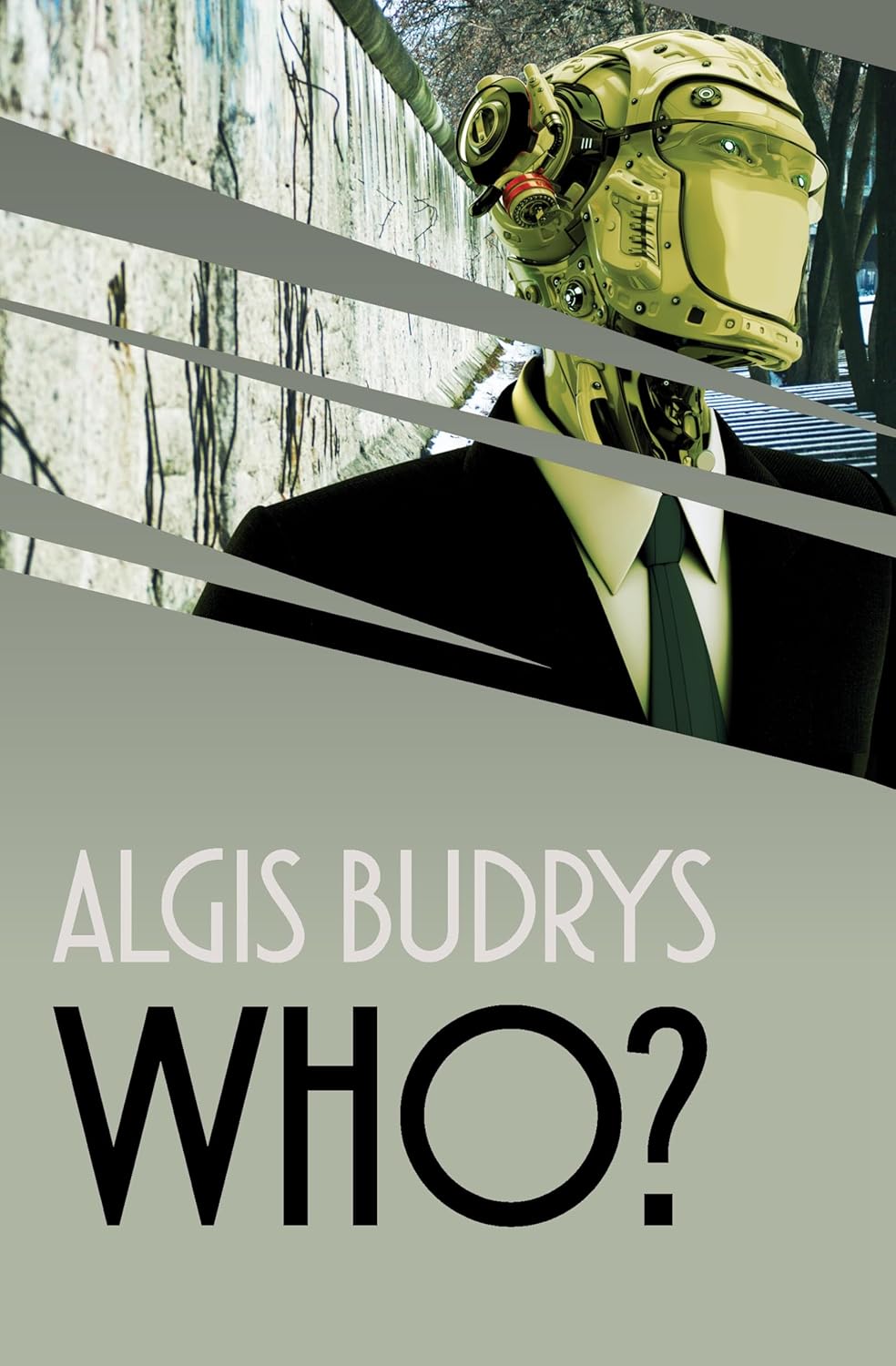
Robert Charles Wilson, says The New York Times, "writes superior science fiction thrillers." His Darwinia won Canada's Aurora Award; his most recent novel, The Chronoliths, won the prestigious John W. Campbell Memorial Award. Now he tells a gripping tale of alien contact and human love in a mysterious but hopeful universe. At Blind Lake, a large federal research installation in northern Minnesota, scientists are using a technology they barely understand to watch everyday life in a city of lobster like aliens upon a distant planet. They can't contact the aliens in any way or understand their language. All they can do is watch. Then, without warning, a military cordon is imposed on the Blind Lake site. All communication with the outside world is cut off. Food and other vital supplies are delivered by remote control. No one knows why. The scientists, nevertheless, go on with their research. Among them are Nerissa Iverson and the man she recently divorced, Raymond Scutter. They continue to work together despite the difficult conditions and the bitterness between them. Ray believes their efforts are doomed; that culture is arbitrary, and the aliens will forever be an enigma. Nerissa believes there is a commonality of sentient thought, and that our failure to understand is our own ignorance, not a fact of nature. The behavior of the alien she has been tracking seems to be developing an elusive narrative logic--and she comes to feel that the alien is somehow, impossibly, aware of the project's observers. But her time is running out. Ray is turning hostile, stalking her. The military cordon is tightening. Understanding had better come soon.... Blind Lake is a 2004 Hugo Award Nominee for Best Novel.
Add to your library to track progress and write reviews
Find Blind Lake Robert Charles Wilson in PDF, EPUB, ebook, audiobook, print, or library editions.

5 books in catalog
Speculative fiction featuring intimate character-driven narratives set against vast cosmological events defines a major strain of science fiction, exemplified by the award-winning novel Spin. Born in California and living in Canada, author Robert Charles Wilson has produced decades of acclaimed novels that blend high-concept cosmic premises with nuanced human emotion.
Robert Charles Wilson was born in Whittier, California, on December 15, 1953, and moved to Canada at age nine in 1962. His early publishing career began under the pen name Bob Chuck Wilson with the short story Equinocturne in Analog in 1975. After a decade-long hiatus from publishing fiction, he returned with short stories in 1985 and published his debut novel, A Hidden Place, in 1986, which became a Philip K. Dick Award finalist.
Over the following decades, Wilson published numerous celebrated novels, including Mysterium, which won the Philip K. Dick Award in 1994, and Darwinia, which won Canada's Aurora Award and received a Hugo Award nomination. His momentum continued with The Chronoliths, recipient of the John W. Campbell Memorial Award and a Hugo nominee, followed by Blind Lake. In 2006, his novel Spin achieved widespread critical acclaim, winning the Hugo Award for Best Novel.
A defining feature of Wilson's writing is the balance between cosmic scale and personal intimacy. His narratives frequently juxtapose extraordinary astronomical or dimension-altering phenomena—such as the sudden enclosure of Earth in Spin or the miraculous transformation of Europe in Darwinia—with grounded human drama and psychological depth. Rather than focusing solely on hard technical exposition, Wilson explores how ordinary individuals respond when confronted by unexplainable or overwhelming shifts in reality.
Philosophically, Wilson avoids rigid utopian or dystopian depictions, opting instead to examine human culture in complex intermediate states. He frequently explores themes of quarantine, alternate histories, temporal anomalies, and the psychological impact of contact with incomprehensible extraterrestrial or cosmic forces. By placing emotional realism at the core of high-concept speculative frameworks, Wilson creates science fiction grounded in human relationships.

5 books in catalog
Speculative fiction featuring intimate character-driven narratives set against vast cosmological events defines a major strain of science fiction, exemplified by the award-winning novel Spin. Born in California and living in Canada, author Robert Charles Wilson has produced decades of acclaimed novels that blend high-concept cosmic premises with nuanced human emotion.
Robert Charles Wilson was born in Whittier, California, on December 15, 1953, and moved to Canada at age nine in 1962. His early publishing career began under the pen name Bob Chuck Wilson with the short story Equinocturne in Analog in 1975. After a decade-long hiatus from publishing fiction, he returned with short stories in 1985 and published his debut novel, A Hidden Place, in 1986, which became a Philip K. Dick Award finalist.
Over the following decades, Wilson published numerous celebrated novels, including Mysterium, which won the Philip K. Dick Award in 1994, and Darwinia, which won Canada's Aurora Award and received a Hugo Award nomination. His momentum continued with The Chronoliths, recipient of the John W. Campbell Memorial Award and a Hugo nominee, followed by Blind Lake. In 2006, his novel Spin achieved widespread critical acclaim, winning the Hugo Award for Best Novel.
A defining feature of Wilson's writing is the balance between cosmic scale and personal intimacy. His narratives frequently juxtapose extraordinary astronomical or dimension-altering phenomena—such as the sudden enclosure of Earth in Spin or the miraculous transformation of Europe in Darwinia—with grounded human drama and psychological depth. Rather than focusing solely on hard technical exposition, Wilson explores how ordinary individuals respond when confronted by unexplainable or overwhelming shifts in reality.
Philosophically, Wilson avoids rigid utopian or dystopian depictions, opting instead to examine human culture in complex intermediate states. He frequently explores themes of quarantine, alternate histories, temporal anomalies, and the psychological impact of contact with incomprehensible extraterrestrial or cosmic forces. By placing emotional realism at the core of high-concept speculative frameworks, Wilson creates science fiction grounded in human relationships.