Explorations of psychological tension, moral dilemmas, and the sudden disruption of ordinary life define one of contemporary British fiction's most widely read bodies of work, notably exemplified by the critically acclaimed novel Atonement. Ian McEwan established his career through meticulously crafted prose that examines how intimate personal choices intersect with broader historical, scientific, and social forces.
Career & Background
Ian McEwan studied at the University of Sussex, receiving a BA degree in English Literature in 1970, and later earned an MA degree in English Literature at the University of East Anglia. His debut short story collection, First Love, Last Rites, won the Somerset Maugham Award in 1976. Early works such as The Cement Garden and The Comfort of Strangers featured dark, shocking subjects that earned him the nickname 'Ian Macabre' in the British press. Over subsequent decades, his literary repertoire broadened to cover family dynamics, political intrigue, and contemporary history.
McEwan received widespread international honors throughout his career. His 1987 novel The Child in Time won the Whitbread Novel Award (1987) and the Prix Fémina Étranger (1993). He was awarded Germany's Shakespeare Prize in 1999 and was named a CBE in 2000. Shortlisted for the Man Booker Prize on several occasions, he won the award for Amsterdam in 1998. His novel Atonement received the WH Smith Literary Award (2002), the National Book Critics' Circle Fiction Award (2003), the Los Angeles Times Prize for Fiction (2003), and the Santiago Prize for the European Novel (2004). In 2006, he won the James Tait Black Memorial Prize for his novel Saturday, and his novel On Chesil Beach was named Galaxy Book of the Year at the 2008 British Book Awards, where McEwan was also named Reader's Digest Author of the Year. McEwan lives in London.
Writing Style & Themes
McEwan's prose style is known for combining formal restraint and precise observation with sudden unsettling turns, exploring human vulnerability, guilt, and moral responsibility. A recurring structural theme across his novels is the single pivotal moment—an error in judgment, a tragic accident, or an unexpected encounter—that alters the course of characters' lives forever. In addition to psychological realism, his work reflects a deep engagement with science, rationalism, and technology, as seen in Machines Like Me and What We Can Know. His narrative range spans screenplays, short fiction, and novels that probe the intersection of personal conscience and public events.
Major Works
- Atonement — A sweeping novel detailing the lifelong consequences of a childhood misinterpretation, guilt, and the possibilities of narrative resolution.
- Amsterdam — A Booker Prize-winning satire following two friends whose personal pact leads to ethical disintegration.
- The Child in Time — A deeply moving story about grief, lost childhood, and official bureaucracy following a daughter's disappearance.
- The Cement Garden — McEwan's intense debut novel portraying four siblings who isolate themselves from the outside world following their mother's death.
- The Comfort of Strangers — A claustrophobic psychological thriller set in an unnamed European city about a visiting couple and an unsettling benefactor.
- Saturday — A novel set over twenty-four hours in post-9/11 London, following a neurosurgeon whose domestic life collides with violent chance.
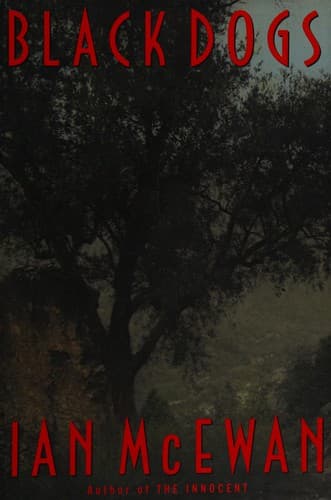
- Black Dogs — A reflective work addressing the fall of the Berlin Wall, examining the conflict between personal spirituality and political ideologies.
- Machines Like Me — An alternate-history novel exploring ethics, consciousness, and romance in 1980s London following the creation of synthetic humans.
- What We Can Know — A speculative novel set a century into the future that considers climate change and how future historians analyze our present era.