The seminal sword and sorcery sagas and groundbreaking multiverse concepts that reshaped speculative fiction in the mid-twentieth century owe much of their momentum to a vast body of work spanning fantasy, science fiction, and literary novels. Michael John Moorcock, who has also written under the pen name Bill Barclay, emerged as a central figure in modern fantasy through his influential tales of Elric of Melniboné, challenging traditional high fantasy conventions with tragic antiheroes and complex cosmic conflicts between Chaos and Law.
Career & Background
Born in London on 18 December 1939, Moorcock began his publishing career at a young age, writing for juvenile publications like Tarzan Adventures before taking on broader editorial roles. His most transformative editorial contribution came as the head of the influential British science fiction magazine New Worlds, which he edited from May 1964 until March 1971, and returned to edit from 1976 to 1996. Under his leadership, New Worlds became the center of the science fiction New Wave movement, encouraging stylistic innovation, psychological depth, and countercultural themes in both the United Kingdom and the United States. In addition to his prolific output of novels, Moorcock has worked extensively as a comics writer, editor, and musician, collaborating with rock groups such as Hawkwind.
Writing Style & Themes
Moorcock's literary style is marked by rapid pacing, vivid atmospheric worldbuilding, and a subversive approach to traditional genre tropes. A central organizing concept across his speculative fiction is the Multiverse, in which different incarnations of the Eternal Champion fight to maintain equilibrium between Law and Chaos across infinite parallel dimensions. His work frequently explores themes of entropy, imperial decay, moral ambiguity, and the psychological impact of war, drawing heavily on his childhood memories of bombed wartime London. Through both short fiction and multi-volume series, his prose bridges commercial pulp storytelling and avant-garde literary experimentation.
Major Works
- Elric of Melniboné and Other Stories — A foundational collection featuring the melancholic albino emperor Elric, whose tragic path and soul-stealing sword Stormbringer challenged established sword and sorcery archetypes.
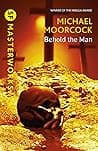
- Behold the Man — A award-winning speculative novel following Karl Glogauer, a twentieth-century man who uses a time machine to travel back to Judea in search of the historical Jesus.
- The Dancers at the End of Time (Dancers at the End of Time, #1-3) — A satirical trilogy omnibus set in an ultra-far-future era where immortal beings manipulate time, matter, and history for entertainment.
- Mother London — A sprawling literary novel weaving together the voices and perspectives of three Londoners across several decades of the city's modern history.