Hailed as the paramount expression of metafiction and Irish culture, and uproariously funny and inventive, At Swim-Two-Birds has influenced generations of writers, broadening the possibilities of what can be done in ficiton. This comic novel is the story of a loafing and inebriated Dublin-based university student who composes a mischief-filled novel about a protagonist doomed to fail as a writer. Penguin Random House Canada is proud to bring you classic works of literature in e-book form, with the highest quality production values. Find more today and rediscover books you never knew you loved.

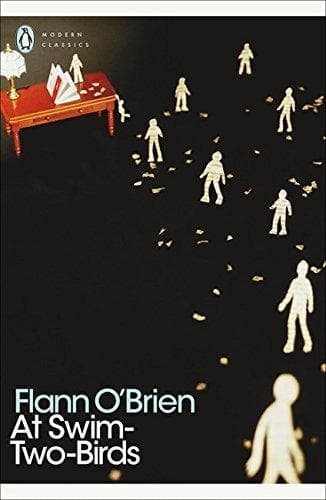
Hailed as the paramount expression of metafiction and Irish culture, and uproariously funny and inventive, At Swim-Two-Birds has influenced generations of writers, broadening the possibilities of what can be done in ficiton. This comic novel is the story of a loafing and inebriated Dublin-based university student who composes a mischief-filled novel about a protagonist doomed to fail as a writer. Penguin Random House Canada is proud to bring you classic works of literature in e-book form, with the highest quality production values. Find more today and rediscover books you never knew you loved.
Add to your library to track progress and write reviews
Find At Swim-Two-Birds Flann O'Brien in PDF, EPUB, ebook, audiobook, print, or library editions.
3 books in catalog
Brian O'Nolan was an Irish novelist and satirist, best known for his novels At Swim-Two-Birds and The Third Policeman written under the nom de plume Flann O'Brien. He also wrote the novel An Béal Bocht as well as many satirical columns in the Irish Times under the name Myles na gCopaleen. He was born in Strabane, County Tyrone.
Most of O'Nolan's writings were occasional pieces published in periodicals, which explains why his work has only recently come to enjoy the considered attention of literary scholars. O'Nolan was also notorious for his prolific use and creation of pseudonyms for much of his writing, including short stories, essays, and letters to editors, which has rendered a complete cataloging of his writings an almost impossible task—he allegedly would write letters to the Editor of the Irish Times complaining about his own articles published in that newspaper, for example in his regular Cruiskeen Lawn column, which gave rise to rampant speculation as to whether the author of a published letter existed or not. Not surprisingly, little of O'Nolan's pseudonymous activity has been verified.
A key feature of O'Nolan's personal situation was his status as an Irish government civil servant, who, as a result of his father's relatively early death, was obliged to support ten siblings, including an older brother who was an unsuccessful writer. Given the desperate poverty of Ireland in the 1930s to 1960s, a job as a civil servant was considered prestigious, being both secure and pensionable with a reliable cash income in a largely agrarian economy.
The Irish civil service has been, since the Irish Civil War, fairly strictly apolitical: Civil Service Regulations and the service’s internal culture generally prohibit Civil Servants above the level of clerical officer from publicly expressing political views. As a practical matter, this meant that writing in newspapers on current events was, during O'Nolan's career, generally prohibited without departmental permission on an article-by-article, publication-by-publication basis. This fact alone contributed to O'Nolan's use of pseudonyms, though he had started to create character-authors even in his pre-civil service writings.
In reality, that O'Nolan was Flann O'Brien and Myles na gCopaleen was an open secret, largely disregarded by his colleagues, who found his writing very entertaining; this was a function of the makeup of the civil service, which recruited leading graduates by competitive examination—it was an erudite and relatively liberal body in the Ireland of the 1930s to 1970s. Nonetheless, had O'Nolan forced the issue, by using one of his known pseudonyms or his own name for an article that seriously upset politicians, consequences would likely have followed—hence the acute pseudonym problem in attributing his work today.
Source and more information: http://en.wikipedia.org/wiki/Brian_O%27Nolan
3 books in catalog
Brian O'Nolan was an Irish novelist and satirist, best known for his novels At Swim-Two-Birds and The Third Policeman written under the nom de plume Flann O'Brien. He also wrote the novel An Béal Bocht as well as many satirical columns in the Irish Times under the name Myles na gCopaleen. He was born in Strabane, County Tyrone.
Most of O'Nolan's writings were occasional pieces published in periodicals, which explains why his work has only recently come to enjoy the considered attention of literary scholars. O'Nolan was also notorious for his prolific use and creation of pseudonyms for much of his writing, including short stories, essays, and letters to editors, which has rendered a complete cataloging of his writings an almost impossible task—he allegedly would write letters to the Editor of the Irish Times complaining about his own articles published in that newspaper, for example in his regular Cruiskeen Lawn column, which gave rise to rampant speculation as to whether the author of a published letter existed or not. Not surprisingly, little of O'Nolan's pseudonymous activity has been verified.
A key feature of O'Nolan's personal situation was his status as an Irish government civil servant, who, as a result of his father's relatively early death, was obliged to support ten siblings, including an older brother who was an unsuccessful writer. Given the desperate poverty of Ireland in the 1930s to 1960s, a job as a civil servant was considered prestigious, being both secure and pensionable with a reliable cash income in a largely agrarian economy.
The Irish civil service has been, since the Irish Civil War, fairly strictly apolitical: Civil Service Regulations and the service’s internal culture generally prohibit Civil Servants above the level of clerical officer from publicly expressing political views. As a practical matter, this meant that writing in newspapers on current events was, during O'Nolan's career, generally prohibited without departmental permission on an article-by-article, publication-by-publication basis. This fact alone contributed to O'Nolan's use of pseudonyms, though he had started to create character-authors even in his pre-civil service writings.
In reality, that O'Nolan was Flann O'Brien and Myles na gCopaleen was an open secret, largely disregarded by his colleagues, who found his writing very entertaining; this was a function of the makeup of the civil service, which recruited leading graduates by competitive examination—it was an erudite and relatively liberal body in the Ireland of the 1930s to 1970s. Nonetheless, had O'Nolan forced the issue, by using one of his known pseudonyms or his own name for an article that seriously upset politicians, consequences would likely have followed—hence the acute pseudonym problem in attributing his work today.
Source and more information: http://en.wikipedia.org/wiki/Brian_O%27Nolan