§Synopsis
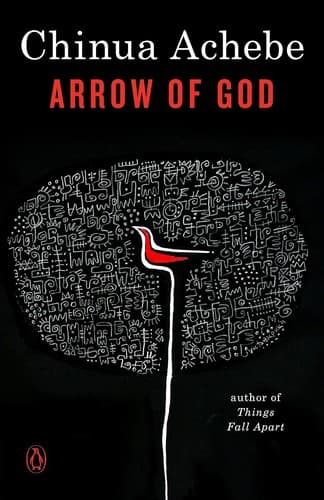
01Set in the Ibo heartland of eastern Nigeria, one of Africa's best-known writers describes the conflict between old and new in its most poignant aspect--the personal struggle between father and son.
Set in the Ibo heartland of eastern Nigeria, one of Africa's best-known writers describes the conflict between old and new in its most poignant aspect--the personal struggle between father and son.
Set in the Ibo heartland of eastern Nigeria, one of Africa's best-known writers describes the conflict between old and new in its most poignant aspect--the personal struggle between father and son.
Add to your library to track progress and write reviews
Add to your library to track progress and write reviews
Find Arrow of God Chinua Achebe in PDF, EPUB, ebook, audiobook, print, or library editions.
Find Arrow of God Chinua Achebe in PDF, EPUB, ebook, audiobook, print, or library editions.

2 books in catalog
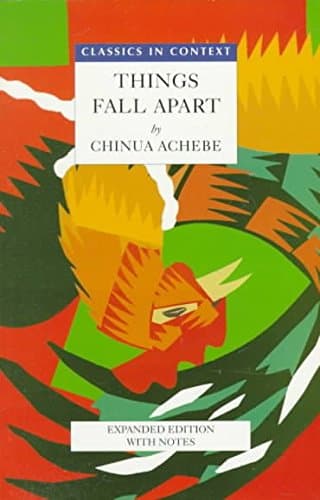
The history of postcolonial African fiction was reshaped by the publication of Things Fall Apart (1958), a novel exploring the tragic impact of European colonialism on traditional Igbo society in Nigeria. Chinua Achebe established himself as a central figure of modern African literature through this debut work, which remains the most widely studied, translated, and read African novel. His writing brought African perspectives, oral storytelling traditions, and indigenous cultural complexities to global readers while offering a direct counter-narrative to colonial depictions of Africa.
Born Albert Chinụalụmọgụ Achebe on 16 November 1930 in the village of Ogidi in eastern Nigeria, he grew up in an Igbo family where his parents were Protestant converts and catechists for the Church Missionary Society. He began learning English at age eight and attended Government College in Umuahia before enrolling in 1948 at University College, Ibadan. Though he initially intended to study medicine, he switched to English literary studies, where he began examining colonial representations of Africa. Following his studies, he built a distinguished career as a Nigerian novelist, poet, essayist, and critic, receiving the 2007 Man Booker International Prize before his death on 21 March 2013.
Writing primarily in English, Chinua Achebe defended using the colonial language to reach international audiences while infusing his prose with Igbo proverbs, idioms, oral rhythms, and cultural structures. His narratives frequently examine the destructive intersection of Western influence with traditional African norms, the breakdown of community governance, and the internal corruption of post-independence politics. In the West, commentators frequently referred to him as the "father of modern African literature", an epithet he vigorously rejected because he viewed African literary heritage as a collective, longstanding tradition rather than the product of any single individual.
2 books in catalog
The history of postcolonial African fiction was reshaped by the publication of Things Fall Apart (1958), a novel exploring the tragic impact of European colonialism on traditional Igbo society in Nigeria. Chinua Achebe established himself as a central figure of modern African literature through this debut work, which remains the most widely studied, translated, and read African novel. His writing brought African perspectives, oral storytelling traditions, and indigenous cultural complexities to global readers while offering a direct counter-narrative to colonial depictions of Africa.
Born Albert Chinụalụmọgụ Achebe on 16 November 1930 in the village of Ogidi in eastern Nigeria, he grew up in an Igbo family where his parents were Protestant converts and catechists for the Church Missionary Society. He began learning English at age eight and attended Government College in Umuahia before enrolling in 1948 at University College, Ibadan. Though he initially intended to study medicine, he switched to English literary studies, where he began examining colonial representations of Africa. Following his studies, he built a distinguished career as a Nigerian novelist, poet, essayist, and critic, receiving the 2007 Man Booker International Prize before his death on 21 March 2013.
Writing primarily in English, Chinua Achebe defended using the colonial language to reach international audiences while infusing his prose with Igbo proverbs, idioms, oral rhythms, and cultural structures. His narratives frequently examine the destructive intersection of Western influence with traditional African norms, the breakdown of community governance, and the internal corruption of post-independence politics. In the West, commentators frequently referred to him as the "father of modern African literature", an epithet he vigorously rejected because he viewed African literary heritage as a collective, longstanding tradition rather than the product of any single individual.
The African Trilogy
The African Trilogy