§Synopsis
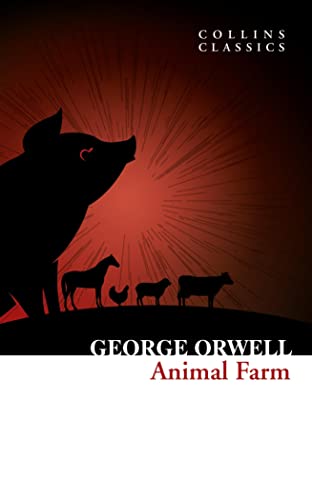
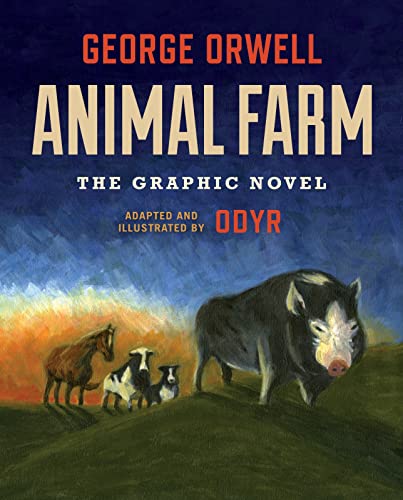
01Animal Farm is a brilliant political satire and a powerful and affecting story of revolutions and idealism, power and corruption. 'All animals are equal. But some animals are more equal than others.' Mr Jones of Manor Farm is so lazy and drunken that one day he forgets to feed his livestock. The ensuing rebellion under the leadership of the pigs Napoleon and Snowball leads to the animals taking over the farm. Vowing to eliminate the terrible inequities of the farmyard, the renamed Animal Farm is organised to benefit all who walk on four legs. But as time passes, the ideals of the rebellion are corrupted, then forgotten. And something new and unexpected emerges..
§Our take
Four publishers refused the manuscript. One consulted the Ministry of Information, which advised against it, and another balked at making the pigs the ruling class. Secker & Warburg finally brought it out in August 1945, after paper shortages and political nerves had delayed it. Orwell's unpublished preface made a pointed argument: the real threat to free expression wasn't state censorship but editors conforming voluntarily, and the book's own rejections were his example. The fight over what the fable targets never really ended. Conservatives used it as a warning against socialism, while New Left critics like Raymond Williams pushed back on purely Cold War readings. Orwell, a democratic socialist, said in his 1947 preface (which survives only as a back-translation from Ukrainian) that he meant to puncture the Soviet myth in order to save socialism. The afterlife is odd too: the 1954 animated film was covertly financed by US intelligence, which reworked the ending.
§Themes
- Revolution turning into rank
- The pigs appoint themselves 'brain workers' entitled to privilege, which guts the rebellion's founding principles.
- Words as weapons
- Rewritten slogans let the ruling pigs reshape what the other animals believe.
- A fable with a target
- The barnyard maps onto Soviet figures and events. The UK subtitle was 'A Fairy Story.'
- Self-censorship
- Orwell's unused preface blamed voluntary conformity among publishers and used the book's own rejections as proof.
§How it was received
British reviews at publication were largely warm, but George Soule in The New Republic found the book dull and its allegory clumsy. Reception later split along political lines: conservatives praised the craft and used it as a warning against socialism, while many on the left accused it of historical inaccuracy and a failure of political imagination.
§Read it if
- You like short satires in plain prose that carry heavy political ideas
- Propaganda and how people in power bend language is your subject
- You like classics with a strange afterlife: the 1954 animated film was covertly financed by US intelligence
§Skip it if
- Allegory feels heavy-handed to you. Some readers say the message crowds out character and the fable's path is obvious early.
- You want subplots and interior lives. The narration stays distant, like a fable.
§Before you start
- Reading experience
- fast pace. easy to read. Around 140 pages of plain prose, readable in one sitting. A Blackstone audiobook narrated by Ralph Cosham runs about three hours.
- Content notes
- Common Sense Media rates violence 'a lot': animal battles with humans, public executions, and intimidation by guard dogs — not graphic, but potentially upsetting; The pigs consume alcohol; no sexual content, nudity or strong language per the same review.
§Common questions
- Why did publishers reject it?
- Orwell reported that four publishers refused it during the wartime alliance with the USSR. One consulted the Ministry of Information, which advised against it, and another objected to pigs as the ruling class. It finally appeared in August 1945.
- Is it okay for kids?
- Common Sense Media recommends it for ages 11+. The barnyard setting makes dark themes approachable, though the violence can disturb and parents disagree on the right age.
- Is it about communism or socialism?
- Reviewers keep stressing that Orwell was a democratic socialist aiming at Stalinism. In his 1947 preface, which survives only as a back-translation from Ukrainian, he said he wanted to puncture the 'Soviet myth.' Cold War usage still shaped a popular reading of it as an attack on socialism itself.
§If you liked this
- Candide by Voltaire — Edmund Wilson reportedly set Animal Farm beside Voltaire as short philosophical satire.
- Gulliver's Travels by Jonathan Swift — Wilson's other reported comparison: political satire through an invented world and a plain-spoken narrator.
- Nineteen Eighty-Four by George Orwell — Orwell's other political warning, also about propaganda and rewriting the truth.
Track this book
Add to your library to track progress and write reviews