§Synopsis
01And Then There Were None is the signature novel of Agatha Christie, the most beloved work of the world's bestselling novelist. It is a masterpiece of mystery and suspense that has been a fixture in popular literature for more than sixty years, a brilliant tale that remains as compelling today as ever.
First there were ten—a curious assortment of strangers summoned as weekend guests to a private island off the-coast of Devon. Their host, an eccentric millionaire unknown to any of them, is nowhere to be found. All that the guests have in common is a wicked past they're unwilling to reveal—and a secret that will seal their fate. For each has been marked for murder, and one by one they begin to fall prey to an unseen hand. As the only people on the island, unable to leave and unable to call for help, they know that the only possible suspects are among their number. And only the dead are above suspicion.
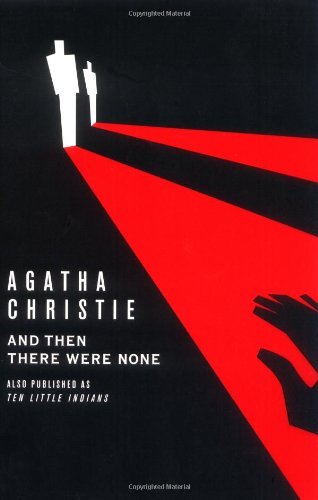
Also published as "Ten Little Indians"
§Our take
This is the Christie where nobody investigates for you. With no Poirot or Marple, the reader becomes the detective. Early reviews, known now mostly secondhand, were largely positive but split: one felt the steady run of deaths suited a newspaper serial better than a novel, another found the setup wildly implausible yet fascinating. Later critics treat it as a landmark — Robert Barnard credited it with real suspense despite the premise, and a 2015 vote run by Christie's estate named it the world's favourite Christie. The title history is part of the book's life: UK editions carried a racially offensive original title until 1985, while the US edition used the current title from its 1940 debut. Revised editions still contain period antisemitism and demeaning references to African people. The moral scheme keeps book clubs talking: the ten accused range from deliberate harm to negligence, and readers disagree on who deserves the rhyme's justice.
§Themes
- No detective, just suspects
- With no Poirot or Marple, the reader watches the cast shrink and does the detecting.
- A nursery rhyme as clock
- Each death follows a line of the rhyme, turning a children's song into a structural countdown.
- Legal justice versus moral justice
- Every guest is accused of a death the law never punished; the book asks whether the two kinds of justice align.
- Paranoia in a shrinking room
- Characters need each other for safety but know the killer sits among them, so company and solitude are both dangerous.
- An engineering feat
- Christie called the near-impossibility of killing ten people without absurdity the draw; the book's economy is the point.
§How it was received
Reviews on first publication were largely positive, by secondhand accounts: critics admired the puzzle and the characterisation, though one felt there was little real detection. Later critics have treated it as a landmark — 19th on the Crime Writers' Association's 1990 top 100 and 10th on the Mystery Writers of America's 1995 list — and a 2015 vote run by Christie's estate named it the world's favourite Christie. Modern criticism has turned to the racial imagery and what it reveals about interwar English anxieties.
§Read it if
- You want a closed-circle mystery with no detective to hold your hand
- You enjoy a moral puzzle where the victims are also perpetrators
- You like a lean, fast read that rewards re-reading for planted clues
§Skip it if
- Period racism and antisemitism in the text, even in revised editions, are a dealbreaker for you
- You read Christie for Poirot or Marple — neither appears, and the puzzle works differently without them
§Before you start
- Reading experience
- Short and fast: 16 chapters plus two epilogues, plain prose that serves plot over style, each chapter ending on a death or a new fear.
- Content notes
- A string of violent deaths (drowning, bludgeoning, shooting, a heavy object, poisonings), mostly discovered after the fact but described in some detail; Poisons (cyanide, chloral hydrate), sedatives, heavy drinking, and a character described as a drug dealer; Period racism: demeaning references to African people and an antisemitic remark remain in revised editions; original title and rhyme used a racial slur; Suicide and child deaths as backstory; grim tone throughout; Minimal sexual content: a past affair recalled.
§Common questions
- Why did the UK and US editions have different titles?
- The UK first edition (1939) used a racially offensive title taken from a minstrel-song rhyme, which UK editions kept until a 1985 Fontana reprint. The US edition used And Then There Were None from its 1940 debut, and the estate now publishes English editions only under that title, with the rhyme revised.
- Does Poirot or Marple appear in this book?
- No. Neither detective appears, and there is no on-page investigator. The reader does the detecting.
- Why do some adaptations have a different ending?
- Christie wrote a different, softer ending for her 1943 stage version, reportedly so as not to leave wartime audiences on such a bleak note, and the 1945 film followed it. Later adaptations split between the two; the novel's ending is the original.
§If you liked this
- Murder on the Orient Express by Agatha Christie — Another closed-circle Christie that turns on questions of justice; some readers name it the other contender for her best.
- The Murder of Roger Ackroyd by Agatha Christie — Frequently set beside it — a 1940 review compared the two, and one modern reviewer argues Ackroyd is the cleverer technical feat. Pick it if you want a Poirot puzzle instead.
- The Invisible Host by Gwen Bristow and Bruce Manning — A 1930 novel with a strikingly similar premise, noted as a possible unproven predecessor.
Track this book
Add to your library to track progress and write reviews




