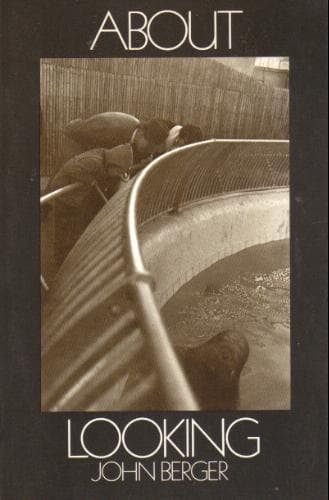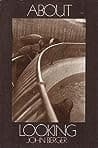
This successor to John Berger's <i>Ways of Seeing</i>, written over the last ten years, searches for meaning within and beyond what is looked at. Why do zoos disappoint children? Why do we take snapshots of those we love? How do the media use photographs of agony? When an animal looks us in the eyes, what does that look mean? Berger describes how a sixteenth-century masterpiece he saw in the 1960s comes to look different to him a decade later. He discusses how a forest looks to a woodcutter; how fields look to a peasant; how the world looks to a nineteenth-century barber's son; how New York looked to immigrants; and how each of these perspectives was reflected in the struggles of a particular painter. Every painting he considers, whether by Millet, Courbet, Turner, Magritte, Fasanella, or Francis Bacon, is evidence of an experience which belongs as fully to life as to art. (back cover copy)
This successor to John Berger's <i>Ways of Seeing</i>, written over the last ten years, searches for meaning within and beyond what is looked at. Why do zoos disappoint children? Why do we take snapshots of those we love? How do the media use photographs of agony? When an animal looks us in the eyes, what does that look mean? Berger describes how a sixteenth-century masterpiece he saw in the 1960s comes to look different to him a decade later. He discusses how a forest looks to a woodcutter; how fields look to a peasant; how the world looks to a nineteenth-century barber's son; how New York looked to immigrants; and how each of these perspectives was reflected in the struggles of a particular painter. Every painting he considers, whether by Millet, Courbet, Turner, Magritte, Fasanella, or Francis Bacon, is evidence of an experience which belongs as fully to life as to art. (back cover copy)
Add to your library to track progress and write reviews
Add to your library to track progress and write reviews
Find About Looking John Berger in PDF, EPUB, ebook, audiobook, print, or library editions.
Find About Looking John Berger in PDF, EPUB, ebook, audiobook, print, or library editions.
3 books in catalog
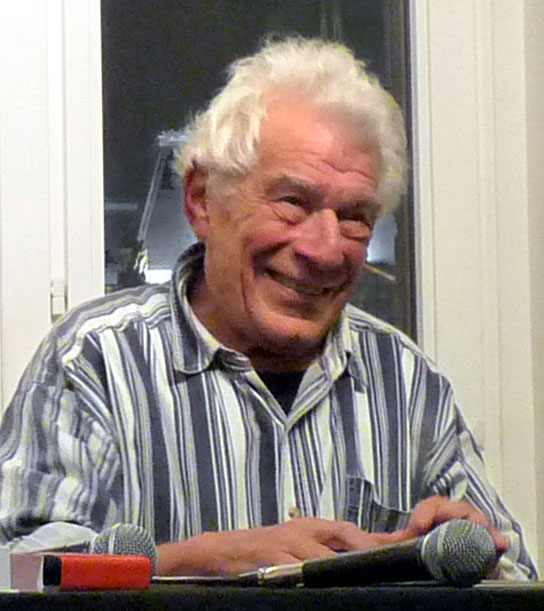
Art criticism and fiction underwent a major shift when television essays and experimental novels began demystifying traditional visual culture and social hierarchies. John Peter Berger, born in 1926 and dying in 2017, was an English art critic, novelist, painter, and poet who reshaped how audiences analyze images and storytelling. His essay on art criticism Ways of Seeing, created alongside the groundbreaking BBC television series of the same name, demystified art history and remains a standard university text on visual culture.
Born John Peter Berger in London in 1926, he trained as a painter at the Central School of Art and Chelsea School of Art after serving in the British Army from 1944 to 1946. During the 1950s, he taught drawing, exhibited his artwork in London galleries, and began writing regular art criticism for publications such as the New Statesman and Tribune. Believing that writing offered a more direct medium for expressing his Marxist political views and social critique, he shifted his primary focus from painting to literature. He later left England and lived in France for over fifty years, spending decades in the rural peasant community of Quincy before passing away in 2017 in the Paris suburb of Antony.
Berger's literary and critical approach merged rigorous social analysis, historical context, and formal experimentation across more than thirty published works. In critical collections like About Looking and Ways of Seeing, he exposed how ideology, class, and gender influence visual perception and artistic appreciation. His fiction incorporated modernist techniques, political commentary, and intimate observational detail to examine human labor, migration, and power dynamics. By collaborating with photographers, filmmakers, and translators, Berger constantly pushed the boundaries of multi-disciplinary storytelling while maintaining a steadfast commitment to political engagement and the dignity of everyday life.
3 books in catalog
Art criticism and fiction underwent a major shift when television essays and experimental novels began demystifying traditional visual culture and social hierarchies. John Peter Berger, born in 1926 and dying in 2017, was an English art critic, novelist, painter, and poet who reshaped how audiences analyze images and storytelling. His essay on art criticism Ways of Seeing, created alongside the groundbreaking BBC television series of the same name, demystified art history and remains a standard university text on visual culture.
Born John Peter Berger in London in 1926, he trained as a painter at the Central School of Art and Chelsea School of Art after serving in the British Army from 1944 to 1946. During the 1950s, he taught drawing, exhibited his artwork in London galleries, and began writing regular art criticism for publications such as the New Statesman and Tribune. Believing that writing offered a more direct medium for expressing his Marxist political views and social critique, he shifted his primary focus from painting to literature. He later left England and lived in France for over fifty years, spending decades in the rural peasant community of Quincy before passing away in 2017 in the Paris suburb of Antony.
Berger's literary and critical approach merged rigorous social analysis, historical context, and formal experimentation across more than thirty published works. In critical collections like About Looking and Ways of Seeing, he exposed how ideology, class, and gender influence visual perception and artistic appreciation. His fiction incorporated modernist techniques, political commentary, and intimate observational detail to examine human labor, migration, and power dynamics. By collaborating with photographers, filmmakers, and translators, Berger constantly pushed the boundaries of multi-disciplinary storytelling while maintaining a steadfast commitment to political engagement and the dignity of everyday life.