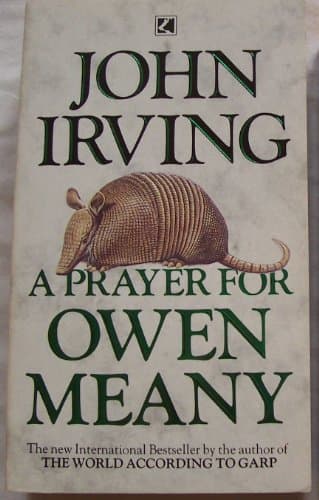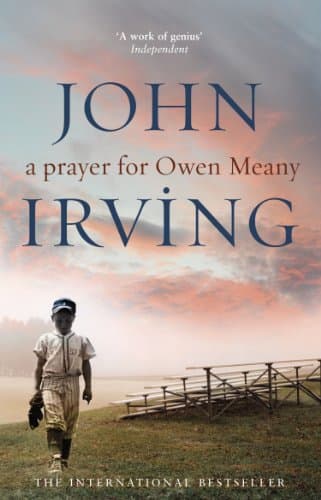
I am doomed to remember a boy with a wrecked voice—not because of his voice, or because he was the smallest person I ever knew, or even because he was the instrument of my mother's death, but because he is the reason I believe in God; I am a Christian because of Owen Meany.
In the summer of 1953, two eleven-year-old boys—best friends—are playing in a Little League baseball game in Gravesend, New Hampshire. One of the boys hits a foul ball that kills the other boy's mother. The boy who hits the ball doesn't believe in accidents; Owen Meany believes he is God's instrument. What happens to Owen after that 1953 foul ball is extraordinary.
Add to your library to track progress and write reviews
Find A Prayer For Owen Meany John Irving in PDF, EPUB, ebook, audiobook, print, or library editions.

3 books in catalog
Tragicomic storytelling, eccentric character portraits, and intricate narrative structures define a literary career spanning sixteen novels translated into more than thirty-five languages. The author John Irving established his international reputation with his fourth novel, The World According to Garp, which earned a National Book Award in 1980 and brought his distinct narrative style to millions of readers worldwide.
Born John Wallace Blunt Jr. in Exeter, New Hampshire, in 1942, he was later renamed John Winslow Irving after his mother remarried in 1948. He attended the University of New Hampshire and the University of Iowa before publishing his debut novel, Setting Free the Bears, in 1968 at twenty-six years old. Alongside his literary pursuits, he competed as a wrestler for twenty years and coached the sport until he was forty-seven, drawing on his athletic experiences to shape the physical discipline and recurring motifs in his fiction. Over his career, he has achieved significant recognition across mediums, receiving three National Book Award nominations—winning once in 1980 for The World According to Garp—an O. Henry Award in 1981 for his short story "Interior Space", an Academy Award in 2000 for Best Adapted Screenplay for The Cider House Rules, and a Lambda Literary Award in 2013 for his novel In One Person. A dual citizen of the United States and Canada, he resides in Toronto.
Irving's narrative technique relies on expansive, character-driven plotting, vivid tragicomedy, and recurring motifs such as wrestling, boarding schools, family dynamics, mortality, and personal identity. Influenced by Victorian fiction and classic literature, his novels frequently balance absurd humor with deep grief and social critique. His works are known for detailed world-building and empathetic character development, exploring complex social issues, non-traditional family structures, and human vulnerability across multi-generational timelines.