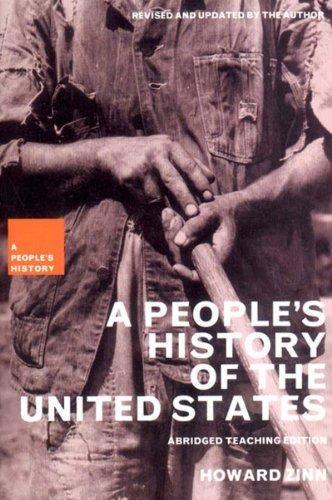
Historical writing from the perspective of grassroots movements, working-class labor, and marginalized communities transformed American historiography through A People's History of the United States. American historian, playwright, and activist Howard Zinn introduced readers to a bottom-up view of history that critically reexamined traditional narratives of American power.
Career & Background
Born in 1922, Howard Zinn grew up in a working-class immigrant family in Brooklyn and worked as a shipyard worker at age 18 before joining the United States Army Air Forces during World War II. Flying combat missions over Europe shaped his lifelong anti-war principles and informed his approach to historical scholarship. After earning his Ph.D. in history from Columbia University under the GI Bill, Zinn chaired the history and social sciences department at Spelman College, where he served as an advisor to the Student Nonviolent Coordinating Committee (SNCC) during the Civil Rights Movement. He later taught as a professor of political science at Boston University, authoring more than 20 books alongside numerous articles and plays prior to his death in 2010 at age 87.
Writing Style & Themes
Describing his political outlook as a blend of anarchism, socialism, and democratic socialism, Zinn focused his writing on labor history, racial justice, and anti-war resistance. He rejected the concept of neutral historical reporting, maintaining that every historical account reflects a political choice. His personal experiences in social movements are documented in his memoir, You Can't Be Neutral on a Moving Train, published in 2002, which served as the basis for a 2004 documentary film. To make grassroots history accessible to younger audiences, his work was adapted in 2007 into A Young People's History of the United States.
Major Works
- A People's History of the United States — First published in 1980, this influential historical work presents American history through the perspectives of workers, Native Americans, African Americans, and grassroots social movements.
- You Can't Be Neutral on a Moving Train — Published in 2002, this political memoir details Zinn's military service, civil rights activism at Spelman College, and involvement in anti-war campaigns, serving as the basis for a 2004 documentary film.
- A Young People's History of the United States — Published in 2007, this adaptation brings Zinn's signature bottom-up historical analysis to younger readers.