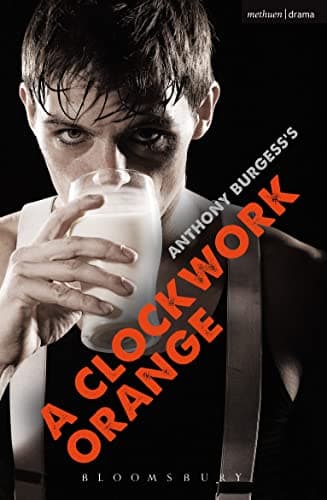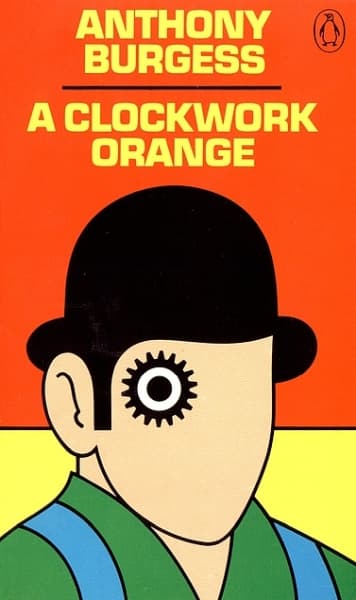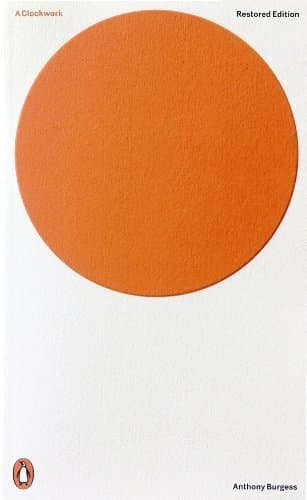
Fifteen-year-old Alex and his three friends start an evening's mayhem by hitting an old man, tearing up his books and stripping him of money and clothes.
Or rather Alex and his three droogs tolchock an old veck, razrez his books, pull off his outer platties and take a malenky bit of cutter.
For Alex's confessions are written in 'nadsat' - the teenage argot of a not-too-distant future.
Because of his delinquent excesses, Alex is jailed and made subject to 'Ludovico's Technique,' a chilling experiment in Reclamation Treatment...
Horror farce? Social prophecy? Penetrating study of human choice between good and evil? A Clockwork Orange is all three, dazzling proof of Anthony Burgess's vast talents.
Add to your library to track progress and write reviews
Find A Clockwork Orange Anthony Burgess in PDF, EPUB, ebook, audiobook, print, or library editions.

2 books in catalog
Dystopian satire, linguistic experimentation, and provocative moral philosophy converged in twentieth-century fiction through novels that explored free will and state coercion. Anthony Burgess emerged as one of the period's most prolific writers and composers, achieving international acclaim with his 1962 novel A Clockwork Orange. Beyond his celebrated dystopian work, he authored dozens of novels, critical studies, translations, and musical compositions.
John Anthony Burgess Wilson was born on February 25, 1917, in Harpurhey, Manchester. Trained in English literature and phonetics, he served in the military during World War II and worked in education during the postwar years, including teaching at Banbury Grammar School from 1950 to 1954. Between 1954 and 1959, he served as an education officer in Malaya and Borneo, an experience that inspired his early Malayan trilogy starting with Time for a Tiger in 1956. Writing under the pen name Anthony Burgess—derived from his mother's maiden name—he turned to full-time writing after returning to England.
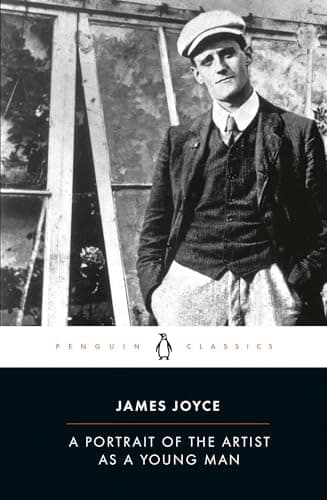
Burgess maintained a rapid publishing output throughout the 1960s, 1970s, and 1980s. Alongside fiction, he wrote extensively as a journalist, reviewer, and literary critic for publications such as The Observer and The Guardian. He produced biographical and critical studies of major literary figures including William Shakespeare, James Joyce, Ernest Hemingway, and D. H. Lawrence, while also composing orchestral music, librettos, and screenplays such as the 1977 television mini-series Jesus of Nazareth. Burgess died in London on November 22, 1993.
Burgess's fiction combined comic satire, moral earnestness, and a deep engagement with linguistics. As a trained phonetician and polyglot, he constructed invented argots, such as the Russian-influenced youth slang Nadsat in A Clockwork Orange, to heighten narrative tone and force readers into active linguistic interpretation. His stories routinely investigate the tension between individual free will, human evil, state control, and religious orthodoxy.
His craft extended across mediums and languages, encompassing screenwriting, musical composition, and literary translation, including rendered translations such as Tito di Gormenghast. Across his extensive bibliography, Burgess brought acoustic sensitivity, polyglot wit, and complex theological inquiries to modern literature.