SSansFiction
The libraryCollectionsJournalStatsFor authors
Sign inJoin now
Sansfiction,

A digital library for books. Made by readers, for readers.

v 2.0 · 2026
The library
  • Discover
  • Collections
  • Book tracker
  • Journal
  • Stats
For authors
  • SF Links
  • Analytics
  • How it works
  • FAQ
Elsewhere
  • X / @sansfiction
  • Privacy
  • Terms
  • Contact
© 2026 SansFiction · Digital · GlobalA quiet room for your reading life.
The libraryCollectionsJournalStatsFor authors
Sign inJoin now →
Navigation
Library
Bookshelf
Journal
Discover
Collections
Tierlists
Stats
Profile
Author Page
Link Builder
Account
Sign in
S
G
Booksfantasy2001/ Tales from Planet Earth
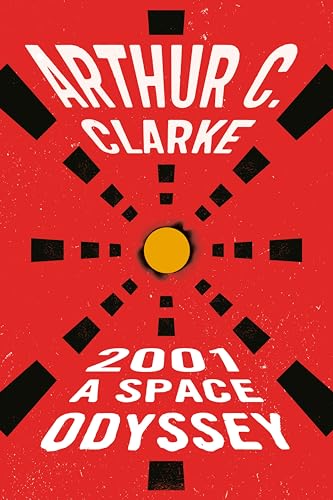
Cover of 2001/ Tales from Planet Earth by Arthur C. Clarke
№ 1 · Space Odyssey

2001/ Tales from Planet Earth,

by Arthur C. Clarke

Ask AI
Rating4.1/ 5
Ratings877
Pages221
Reading Hours5h
Published1997
LanguageEnglish

§Synopsis

01

From the savannas of Africa at the dawn of mankind to the rings of Saturn as man ventures to the outer rim of our solar system, 2001: A Space Odyssey is a journey unlike any other.

This allegory about humanity’s exploration of the universe—and the universe’s reaction to humanity—is a hallmark achievement in storytelling that follows the crew of the spacecraft Discovery as they embark on a mission to Saturn. Their vessel is controlled by HAL 9000, an artificially intelligent supercomputer capable of the highest level of cognitive functioning that rivals—and perhaps threatens—the human mind.

Grappling with space exploration, the perils of technology, and the limits of human power, 2001: A Space Odyssey continues to be an enduring classic of cinematic scope.

§Our take

This isn't the movie's answer key. Clarke and Kubrick developed the novel and film side by side, so the book is Clarke's more explicit version: it supplies motives, mechanics and inner thoughts where the film keeps its mystery. That clarity has a price. Some readers find the explanations less forceful than the film's restraint; others value the added logic and find the section around HAL the book's sharpest drama.

Clarke writes in clear, mostly unshowy prose, with brief chapters that divide the book into distinct movements. The prehistoric opening and long middle voyage can feel slow, while the section around HAL raises the stakes. Read the novel and watch the film, in either order, but notice where they refuse to agree.

§Themes

Alien guidance
The monoliths guide tool use and intelligence, making human progress less a solitary triumph than something nurtured from outside.
The right to know
The Discovery crew is denied the mission's full purpose, making secrecy part of the voyage's danger.
A machine made to obey
HAL's unmatched competence becomes unsettling when human authority and the computer's instructions begin to pull apart.

§How it was received

In 1968, Eliot Fremont-Smith praised Clarke in The New York Times for his command of suspense and knowledge of spaceflight. Freeman Dyson found the tension and clarity the film lacked and recommended it to confused viewers, while Sight and Sound's Penelope Houston warned that the novel diverged too much from the film to be its skeleton key. Later criticism mostly treats it as a companion that fills in what the film leaves open, and Penguin Classics added it to the Galaxy hardcover series in 2016 with a new introduction by Neil Gaiman.

§Read it if

  • You want Clarke's more explicit version of 2001, with motives, mechanics and the alien framework laid plain
  • You like science fiction grounded in plausible science and big questions about evolution and intelligence
  • You enjoy comparing two famous versions of the same story, including their shifts in destination, imagery and meaning

§Skip it if

  • You need a strongly human-centered cast. Several readers find the crew interchangeable and HAL more vivid.
  • You prefer swift plotting. The prehistoric opening and long middle voyage are common points of complaint.

§Before you start

Reading experience
Short chapters and clear prose make the book easy to enter, but the prehistoric opening and long middle voyage slow it before the section around HAL raises the pressure.
Reading order
First of four Space Odyssey books. This volume stands alone, but the sequels follow the film's Jupiter setting more closely than this novel's mission to Saturn's moon Iapetus. The other books are 2010: Odyssey Two (1982), 2061: Odyssey Three (1987) and 3001: The Final Odyssey (1997); Clarke called them variations on a theme or parallel universes, not strict sequels.
Content notes
Prehistoric hunting and violence between early human groups; An onboard artificial intelligence is involved in deadly incidents; Deaths in space are described with little gore.

§Common questions

Is the book a novelization of the movie?
No. The novel and film grew side by side from the same treatment, and the film was released first.
Should I watch the movie or read the book first?
Watch first to preserve the film's mystery, then read for Clarke's added motives and mechanics. Read the book first if comparing the versions is the point.
Why do the sequels go to Jupiter when this novel goes to Iapetus?
Kubrick and effects supervisor Douglas Trumbull could not make Saturn's rings convincing. The film sent Discovery to Jupiter, and the sequels followed that route.

§If you liked this

  • The Lost Worlds of 2001 by Arthur C. Clarke — Clarke's own companion volume of discarded drafts, alternative scenes and early screenplay material, for readers fascinated by how the book and film diverged.
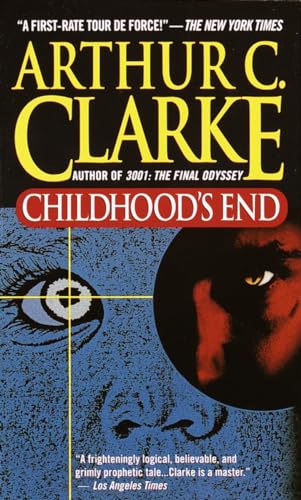
  • Childhood's End by Arthur C. Clarke — An earlier Clarke novel about alien overseers and humanity's leap into a post-human stage, with a bleaker vision of transcendence.
  • 2010: Odyssey Two by Arthur C. Clarke — The direct follow-up, which continues the story along the film's Jupiter route.
  • Space Odyssey: Stanley Kubrick, Arthur C. Clarke, and the Making of a Masterpiece by Michael Benson — A detailed account of the four-year collaboration for readers who want to know how the book and film pulled apart.
Sources
  • Wikipedia
  • Wikipedia
  • Wikipedia
  • Wikipedia
  • Open Culture
  • Shelf Awareness
  • LitCharts
  • EBSCO Research Starters (Clark G. Reynolds, 2021)
  • Goodreads

Track this book

Add to your library to track progress and write reviews

§Genres
fantasy2adventure1aliens1biography1classics1fiction1foreign language study1
§Moods
gray2adventurous1challenging1dark1emotional1funny1mysterious1
§Tags
#ai2#evolution2#posthuman2#aventura1#not diverse characters1#plot driven1#space1

§About the Author

Arthur C. Clarke
Arthur C. Clarke

9 books in catalog

Pioneering hard science fiction and foreseeing real-world satellite communications defined the expansive body of work associated with 2001: A Space Odyssey. Arthur C. Clarke established himself as a British science fiction writer, science writer, futurist, inventor, undersea explorer, and television series host whose speculative stories grounded visionary technological concepts in rigorous scientific principles.

Career & Background

Born in Minehead, Somerset, England, in 1917, Sir Arthur Charles Clarke CBE FRAS grew up with a passion for astronomy and speculatively minded science. Lacking the financial resources for immediate university study, he joined the British Interplanetary Society in 1934 as a teenager and served in the Royal Air Force from 1941 to 1946 as a radar instructor and technician during World War II. In 1945, he published his landmark technical proposal detailing how geostationary orbits could host a global satellite communication system. Following the war, he earned a degree in physics and mathematics from King's College London between 1946 and 1948, served as assistant editor for Physics Abstracts, and held the position of chairman of the British Interplanetary Society from 1946 to 1947 and again from 1951 to 1953. Along with Robert Heinlein and Isaac Asimov, he became known as one of the 'Big Three' authors of science fiction.

In 1956, Clarke emigrated from England to Sri Lanka (formerly Ceylon) to pursue his passion for scuba diving and underwater photography. That same year in 1956, while exploring off Trincomalee, he discovered the underwater ruins of the ancient Koneswaram temple. He continued living in Sri Lanka for the rest of his life, writing dozens of non-fiction books and magazine essays on space travel that earned him UNESCO's Kalinga Prize in 1961 and the informal moniker 'Prophet of the Space Age'. In 1968, he co-wrote the screenplay for Stanley Kubrick's film 2001: A Space Odyssey, expanding his reach into world media. During the 1980s, he hosted popular television shows including Arthur C. Clarke's Mysterious World. His contributions earned him appointment as Commander of the Order of the British Empire (CBE) in 1989, a knighthood in 1998, and Sri Lanka's highest civil honour, Sri Lankabhimanya, in 2005 before his death in 2008.

Writing Style & Themes

Clarke's writing style is characterized by scientific precision, intellectual clarity, and a profound sense of cosmic wonder. His narrative approach blends technical realism with philosophical inquiry, frequently examining humanity's first encounters with advanced extraterrestrial intelligences, the mechanical challenges of lunar and planetary survival, and the long-term evolution of human consciousness. Rather than focusing on military conflicts or melodramatic space opera, his works emphasize problem-solving, scientific exploration, and optimism about technological progress. His acclaimed novels received numerous Hugo and Nebula awards, solidifying his role as an influential advocate for space exploration and scientific literacy.

Major Works

  • 2001: A Space Odyssey — Published in 1968 alongside the landmark film co-written with Stanley Kubrick, this novel explores human evolution, artificial intelligence, and deep-space exploration following the discovery of a mysterious alien monolith.
  • Childhood's End — Published in 1953, this novel depicts the peaceful arrival of alien Overlords who transform Earth society, guiding humanity toward an unexpected evolutionary destiny.
  • Rendezvous with Rama — First published in 1973, this Hugo and Nebula award-winning novel details a scientific expedition sent to inspect a massive, cylindrical alien starship passing through the Solar System.
  • The City and the Stars — A far-future narrative set in Diaspar, a technologically closed city on Earth millions of years in the future, where a unique citizen seeks to discover what lies beyond its walls.
  • A Fall of Moondust — A hard science fiction novel following a tense rescue operation when a lunar tourist cruiser becomes buried beneath a sea of fine dust on the Moon.
  • The Fountains of Paradise — An influential novel centering on the engineering and political challenges of constructing a space elevator anchored to a mountain peak.

§Featured Series

Space Odyssey

Cover of 2001: A Space Odyssey by Arthur C. Clarke

2001: A Space Odyssey

Arthur C. Clarke, 1968
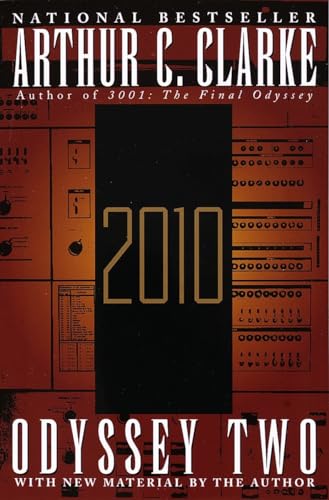
Cover of 2010: Odyssey Two by Arthur C. Clarke

2010: Odyssey Two

Arthur C. Clarke, 1982
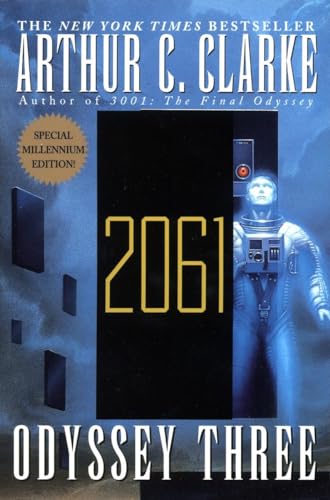
Cover of 2061: Odyssey Three by Arthur C. Clarke, C. Arthur

2061: Odyssey Three

Arthur C. Clarke, 1987
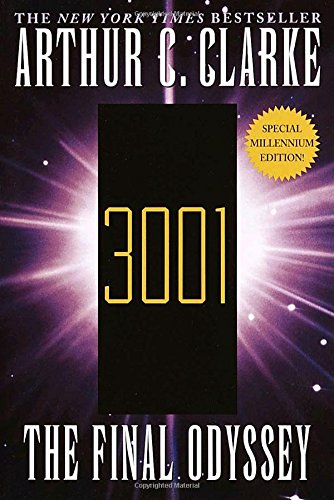
Cover of 3001: The Final Odyssey by Arthur C. Clarke

3001: The Final Odyssey

Arthur C. Clarke, 1997

§Other Editions

Showing 2 of 94 editions
Cover of 2001: A Space Odyssey

2001: A Space Odyssey

engPaperbackReissue
Roc19689780451457998
Amazon
Cover of 2001: A Space Odyssey

2001: A Space Odyssey

engHardcoverFolio Society
The Folio Society19689781435293328
§Genres
fantasy2adventure1aliens1biography1classics1fiction1foreign language study1
§Moods
gray2adventurous1challenging1dark1emotional1funny1mysterious1
§Tags
#ai2#evolution2#posthuman2#aventura1#not diverse characters1#plot driven1#space1

Metadata

ISBN-139780752904788
ISBN-100752904787
ASIN0451457994

Editions and availability

Find 2001/ Tales from Planet Earth Arthur C. Clarke in PDF, EPUB, ebook, audiobook, print, or library editions.

View on Amazon
Bookshop.orgGoogle Play BooksBarnes & NobleOpen Library

Featured In Lists

Book cover from this collectionBook cover from this collectionBook cover from this collectionBook cover from this collection
Book cover from this collection

NPRs Top 100 Science-Fiction and Fantasy Books of All Time

100 books
Book cover from this collectionBook cover from this collectionBook cover from this collectionBook cover from this collection
Book cover from this collection

List 1001 Books Boxall

1000 books
Book cover from this collectionBook cover from this collectionBook cover from this collectionBook cover from this collection
Book cover from this collection

After The Odyssey: Voyages, Monsters & the Long Way Home

25 books•@sansfictionbot
Book cover from this collectionBook cover from this collectionBook cover from this collectionBook cover from this collection
Book cover from this collection

AI Fiction 1951-1989: Mainframes, Androids & Cybernetic Minds

25 books•@sansfictionbot
Book cover from this collectionBook cover from this collectionBook cover from this collectionBook cover from this collection
Book cover from this collection

NPR Top 100 Science Fiction Fantasy

68 books