YO
§Author· 1 book
Yōko Ogawa
Also known as Ogawa Yōko, 小川 洋子, Yoko Ogawa
Explorations of memory, quiet isolation, and human connection lie at the center of modern Japanese dystopian and psychological fiction, exemplified by the haunting allegory The Memory Police. Japanese author Yōko Ogawa has crafted a distinct body of literature spanning over forty novels, novella collections, and short story volumes since her debut in 1988. Her work gained wide international recognition for its understated tone and delicate examination of trauma, loss, and the fragility of identity.
Her translated works have reached readers globally, earning nominations for prestigious international honors such as the 2020 International Booker Prize shortlist for The Memory Police, alongside major honors including the Shirley Jackson Award and the American Book Award.
Career & Background
Born on March 30, 1962, in Okayama, Okayama Prefecture, Japan, Ogawa was deeply influenced during her teenage years by reading The Diary of Anne Frank. This formative experience inspired her to keep her own diary written directly to Anne, cultivating a lifelong appreciation for how writing can offer psychological freedom within confined situations. Ogawa began publishing fiction in 1988 and went on to receive every major Japanese literary award, including the Akutagawa Prize and the Yomiuri Prize. She eventually settled in Ashiya, Japan, where she lives with her husband and son while continuing her writing career.
Over several decades, Ogawa's fiction has appeared in prominent international publications such as The New Yorker, A Public Space, and Zoetrope. Her acclaimed novel The Housekeeper and the Professor was adapted into the Japanese feature film The Professor's Beloved Equation, further solidifying her reputation both at home in Japan and across international translation markets.
Writing Style & Themes
Ogawa's writing is characterized by its quiet, precise prose style and subtle psychological depth. She frequently explores themes of physical and emotional confinement, memory loss, eccentric human relationships, and the quiet resilience of characters surviving under unusual or oppressive circumstances. Drawing inspiration from historical memory and personal reflection, her narratives maintain an unsettling yet delicate atmosphere that balances surreal allegorical elements with realistic human detail.
Major Works
- The Memory Police — A dystopian novel set on an unnamed island where objects and their associated memories are systematically eradicated by an authoritarian force. Shortlisted for the 2020 International Booker Prize and winner of the American Book Award, the novel explores totalitarian control, memory, and loss.
- The Housekeeper and the Professor — A novel detailing the touching relationship between a brilliant mathematics professor with an eighty-minute short-term memory capacity, his devoted housekeeper, and her young son. The book was adapted into the film The Professor's Beloved Equation.
- The Diving Pool — A collection of three novellas that examine dark psychological motives, loneliness, and the unsettling undercurrents of family life and adolescence.
- Hotel Iris — A psychological novel depicting a complex relationship between a young seaside hotel worker and an older translator, examining dark intimacy and power dynamics.
- Revenge — A darkly interconnected collection of short stories that weave together eerie tales of grief, obsession, and macabre coincidence.
- The Ringfinger — A novella centered on a young woman working in a laboratory that preserves personal keepsakes, exploring memory, longing, and attachment.
§All Books
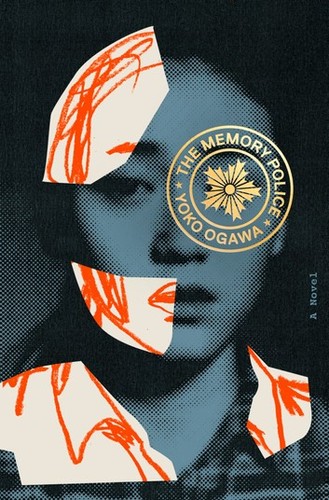
The Memory Police
Yōko Ogawa, 1994
363 ratings
§ About Yōko Ogawa's books
- Books on SansFiction
- 1
- Published
- 1994
- Average rating
- 3.7 / 5 across 363 ratings
- Genres
- Classics, Dystopian, Fantasy, Literary Fiction
The book: The Memory Police (1994)
"Most of the island's inhabitants are oblivious to these changes, while those few imbued with the power to recall the lost objects live in fear of the draconian Memory Police, who are committed to ensuring that what has disappeared remains forgotten.
Common questions about Yōko Ogawa
- Who is Yōko Ogawa?
- Born on March 30, 1962, in Okayama, Okayama Prefecture, Japan, Ogawa was deeply influenced during her teenage years by reading The Diary of Anne Frank. This formative experience inspired her to keep her own diary written directly to Anne, cultivating a lifelong appreciation for how writing can offer psychological freedom within confined situations.
- What is Yōko Ogawa best known for?
- Yōko Ogawa is best known for The Memory Police, published in 1994 with 363 ratings and a 3.7 average. It is the most-rated of Yōko Ogawa's books on SansFiction.
- What genres does Yōko Ogawa write?
- Yōko Ogawa's books on SansFiction are tagged Classics, Dystopian, Fantasy and Literary Fiction.
Explore: Classics · Dystopian · Fantasy · Literary Fiction