WB
§Author· 2 books
William B. Irvine
Also known as Bill Irvine, William Irvine
Practical applications of ancient Stoic philosophy offer accessible strategies for managing modern stress, emotional turbulence, and unexpected life setbacks. Works like A Guide to the Good Life have been instrumental in leading a contemporary Stoic renaissance by translating classic Hellenistic teachings into clear habits for daily tranquility.
Authored by William B. Irvine, these writings bridge historical philosophy with psychological insights to help readers build resilience, master desire, and cultivate reasoned thinking in daily life.
Career & Background
William B. Irvine spent his childhood moving across mining communities in Montana, Nevada, Minnesota, and Tocopilla, Chile, as his father worked as a construction engineer for the Anaconda Copper Company. He began his early schooling in a two-room schoolhouse before earning a Bachelor of Arts in mathematics and philosophy from the University of Michigan, followed by an MA and PhD in philosophy. Irvine subsequently built his academic career at Wright State University in Dayton, Ohio, where he served as a professor and later emeritus professor of philosophy.
Throughout his career, Irvine expanded his reach beyond academia by contributing articles to public outlets such as the Wall Street Journal, Time, Salon, the Huffington Post, and the BBC. He has authored several influential books that have been translated into more than twenty languages, establishing him as a prominent public philosopher.
Writing Style & Themes
Irvine's writing style is characterized by clear, actionable prose that synthesizes ancient Hellenistic philosophy—particularly Stoicism—with modern psychological research. His work emphasizes structured, evidence-based reasoning over emotional reactions, guiding readers on how to overcome cognitive biases, process insults, handle life setbacks, and examine the psychological roots of human desire.
Major Works
- A Guide to the Good Life — Published in 2008 as A Guide to the Good Life: The Ancient Art of Stoic Joy, this seminal work explores how ancient Stoic philosophy can be applied to modern life to minimize chronic anxiety and achieve psychological tranquility.
- Musonius Rufus: Lectures and Sayings — This volume brings to light the teachings and practical moral advice of the Roman Stoic philosopher Musonius Rufus, making his lectures and sayings accessible to contemporary readers.
- The Stoic Challenge — Serving as a practical sequel to his earlier Stoic overview, The Stoic Challenge combines ancient Stoicism with modern psychology to offer strategies for transforming daily setbacks into opportunities for building psychological resilience.
- On Desire: Why We Want What We Want — Published by Oxford University Press in 2006, this book investigates the philosophical and psychological nature of human desire, exploring why people want what they want and how to manage unhelpful cravings.
- A Slap in the Face: Why Insults Hurt—And Why They Shouldn’t — Released in 2013, this work examines the social psychology and philosophy behind insults, offering Stoic-inspired techniques to lessen their emotional impact.
§All Books
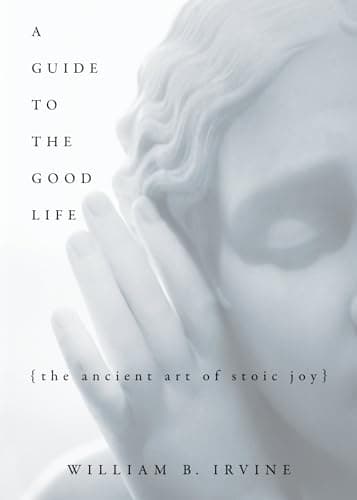
A Guide to the Good Life
William B. Irvine, 2008
116 ratings

Musonius Rufus: Lectures and Sayings
Musonius Rufus, 80
4 ratings