
§Author· 2 books
Victor Hugo
Also known as Victor-Marie Hugo, Victor Marie Hugo, vicomte Hugo
French epic historical fiction and Romantic drama reached new heights through nineteenth-century narratives that exposed social injustice and preserved architectural heritage, most famously realized in the narrative The Hunchback of Notre-Dame. Victor Hugo produced an extensive body of work spanning poetry, drama, essays, and prose fiction that reshaped European literature. In France, his reputation rests heavily on his poetic collections and stage plays, while international audiences know him best for his sweeping social novels including Les Misérables.
Career & Background
Victor-Marie Hugo was born on February 26, 1802, in Besançon, France, to a mother who raised him in Paris and a father who served as a general in Napoléon's army. Encouraged by his early passion for literature, he began writing poetry in adolescence and gained critical acclaim before turning twenty. His verse drama Cromwell (1827) established him as a prominent figure in the French Romantic movement. Over his long career, Hugo worked as a novelist, poet, playwright, essayist, journalist, visual artist, statesman, and human rights activist. Initially a committed conservative royalist in his youth, his political views shifted steadily toward liberalism and republicanism as he engaged deeply with the political and social issues of his time. Following his death on May 22, 1885, he was buried in the Panthéon in Paris.
Writing Style & Themes
Hugo's writing blends intense emotional expression, grand moral themes, and sharp social commentary. As a leading exponent of French Romanticism, he rejected strict neoclassical constraints in favor of vivid characterization, historical immersion, and poetic versatility. His novels systematically address systemic poverty, criminal justice, institutional hypocrisy, and human redemption, turning complex sociopolitical debates into deeply personal human dramas. Within France, poetry collections such as Les Contemplations and La Légende des siècles display his mastery of lyricism and epic scope, while his dramatic works transformed nineteenth-century theatrical traditions.
Major Works
- The Hunchback of Notre-Dame — Published in 1831 as Notre-Dame de Paris, this historical novel centers on the cathedral of Notre-Dame and explores themes of fate, societal exclusion, and gothic architecture in medieval Paris.
- Les Misérables — Published in 1862, this epic novel follows ex-convict Jean Valjean through decades of French history, examining moral redemption, social inequality, law, and revolution.
- Les Contemplations — This major poetry collection reflects on personal tragedy, love, memory, and spiritual contemplation, cementing Hugo's stature in French lyric poetry.
- La Légende des siècles — An ambitious epic poem cycle that depicts the history and moral evolution of humanity through legend and historical verse.
§All Books
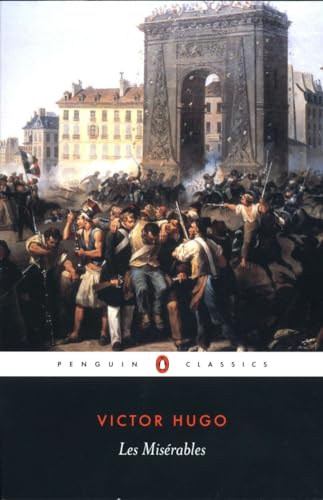
Les Misérables
Victor Hugo, 1800
520 ratings

The Hunchback of Notre-Dame
Victor Hugo, 1831
161 ratings
§ About Victor Hugo's books
- Books on SansFiction
- 2
- Published
- 1800–1831
- Average rating
- 4.1 / 5 across 681 ratings
- Genres
- Adventure, Classics, Comics, History
Start here: Les Misérables (1800)
*Les Misérables* is an epic story of redemption and justice in 19th century France.
Common questions about Victor Hugo
- Who is Victor Hugo?
- Victor-Marie Hugo was born on February 26, 1802, in Besançon, France, to a mother who raised him in Paris and a father who served as a general in Napoléon's army. Encouraged by his early passion for literature, he began writing poetry in adolescence and gained critical acclaim before turning twenty. His verse drama Cromwell (1827) established him as a prominent figure in the French Romantic movement.
- What is Victor Hugo best known for?
- Victor Hugo is best known for Les Misérables, published in 1800 with 520 ratings and a 4.2 average. It is the most-rated of Victor Hugo's books on SansFiction.
- How many books has Victor Hugo written?
- SansFiction lists 2 books by Victor Hugo, published between 1800 and 1831. The most popular are Les Misérables and The Hunchback of Notre-Dame.
- Which Victor Hugo book should I read first?
- Les Misérables is the usual place to start: it is Victor Hugo's most-rated book here, with a 4.2 average.
- What genres does Victor Hugo write?
- Victor Hugo's books on SansFiction are tagged Adventure, Classics, Comics and History.