
§Author· 2 books
Sylvia Plath
Mid-twentieth-century American poetry and autobiographical fiction were profoundly shaped by confessional writing that candidly examined personal anguish, mental health, and identity, exemplified by the landmark novel The Bell Jar. The American poet, novelist, short story author, and children's writer Sylvia Plath established a pioneering voice in modern literature through her searing, image-dense verse and intimate prose. Her extensive personal writings, later published in The Unabridged Journals of Sylvia Plath, offer an unprecedented look into her creative process, personal struggles, and literary ambitions.
Career & Background
Born in Boston, Massachusetts, in 1932 to Aurelia Schober and Otto Plath, a professor of biology and German, Sylvia Plath spent her early childhood in Massachusetts. Following the death of her father in 1940 when she was eight years old, her family faced financial difficulties. Plath demonstrated early academic and literary distinction, enrolling at Smith College in 1951, where she graduated in 1955 after serving as an editor and correspondent for student publications. She subsequently attended Newnham College, Cambridge, on a Fulbright scholarship. While studying in England, she met the British poet Ted Hughes, whom she married in 1956. The couple settled permanently in England and had two children, a daughter and a son. After their separation in 1962, Plath moved to London with her children during a period of intense creative activity. Having suffered from clinical depression for most of her adulthood, she lost her life to it in 1963.
Writing Style & Themes
Plath's writing is central to the movement of confessional poetry, characterized by stark expressions of alienation, psychological despair, personal vulnerability, and self-destruction. Her poetic technique relied on dense imagery, meticulous craft, and sharp rhythmic intensity, contrasting brutal emotional honesty with rigorous formal skill. In both her poetry and prose, she explored themes of female identity, societal expectations imposed on women, family dynamics, and mortality. Her semi-autobiographical novel The Bell Jar and posthumous poetry collection Ariel broke ground in addressing mental illness and domestic constraint, while her private diary entries compiled in The Unabridged Journals of Sylvia Plath provide critical insights into her artistic discipline and inner turmoil.
Major Works
- The Bell Jar — Published in 1963, this semi-autobiographical novel details a young woman's descent into severe depression and her experience with psychiatric treatment, capturing the social pressures confronting women in the 1950s.
- The Unabridged Journals of Sylvia Plath — A comprehensive collection of Plath's intimate daily diaries kept from her college years through her final months, providing an unvarnished window into her personal life, mental health, and creative process.
- The Colossus and Other Poems — Published in 1960, this was the only collection of Plath's poetry released during her lifetime, featuring meticulously crafted poems that laid the groundwork for her later confessional verse.
- Ariel — Published posthumously in 1965, this acclaimed poetry collection contains some of her most famous and fierce poems, including 'Daddy' and 'Lady Lazarus', cementing her position in confessional literature.
- The Collected Poems — Published in 1981, this volume gathers Plath's poetry written from 1956 until her death and earned her a posthumous Pulitzer Prize for Poetry in 1982.
§All Books

The Bell Jar
Sylvia Plath, 1963
1,142 ratings
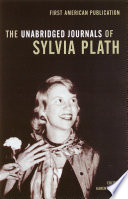
The Unabridged Journals of Sylvia Plath
Sylvia Plath, 2000
22 ratings
§ About Sylvia Plath's books
- Books on SansFiction
- 2
- Published
- 1963–2000
- Average rating
- 4.0 / 5 across 1,164 ratings
- Genres
- Classics, Poetry, Autobiographical Fiction, Fiction
Start here: The Bell Jar (1963)
Working in New York one hot summer, Esther Greenwood is on the brink of her future. Yet she is also on the edge of a darkness that makes her world increasingly unreal.
Common questions about Sylvia Plath
- Who is Sylvia Plath?
- Born in Boston, Massachusetts, in 1932 to Aurelia Schober and Otto Plath, a professor of biology and German, Sylvia Plath spent her early childhood in Massachusetts. Following the death of her father in 1940 when she was eight years old, her family faced financial difficulties.
- What is Sylvia Plath best known for?
- Sylvia Plath is best known for The Bell Jar, published in 1963 with 1,142 ratings and a 4.0 average. It is the most-rated of Sylvia Plath's books on SansFiction.
- How many books has Sylvia Plath written?
- SansFiction lists 2 books by Sylvia Plath, published between 1963 and 2000. The most popular are The Bell Jar and The Unabridged Journals of Sylvia Plath.
- Which Sylvia Plath book should I read first?
- The Bell Jar is the usual place to start: it is Sylvia Plath's most-rated book here, with a 4.0 average.
- What genres does Sylvia Plath write?
- Sylvia Plath's books on SansFiction are tagged Classics, Poetry, Autobiographical Fiction and Fiction.
Explore: Classics · Poetry · Autobiographical Fiction · Fiction