Sulari Gentill
Also known as S. D. Gentill
Historical crime fiction and complex meta-mysteries form the core of a distinctive body of Australian mystery literature. Author Sulari Gentill has written numerous novels, including historical detective stories set during the 1930s and layered narrative puzzles that examine the creative process of writing crime fiction itself.
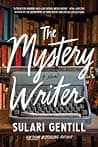
Gentill gained wide readership with her long-running Rowland Sinclair Mysteries before expanding into standalone psychological and meta-fictional thrillers such as The Woman in the Library and The Mystery Writer.
Career & Background
Sulari Gentill was born in Sri Lanka and spent her childhood in Zambia before moving to Brisbane, Australia. She initially pursued studies in astrophysics at the Australian National University before transitioning to law, eventually establishing a career as a corporate lawyer. Gentill later left the legal profession to write full-time. Aside from her literary career, she operates a farm in the foothills of the Snowy Mountains in New South Wales, where she grows French black truffles and breeds miniature cattle.
Gentill published her debut novel in 2010, initiating the Rowland Sinclair Mysteries under her primary name while also publishing the fantasy-oriented Hero Trilogy under the pen name S. D. Gentill. Her career expanded through short fiction collaborations, including audio and print work for the National Gallery of Victoria's Fashion Detective exhibition, as well as non-fiction articles for publications such as Inside History and Southerly. In 2015, she was named Eminent Writer in Residence at the Museum of Australian Democracy.
Writing Style & Themes
Gentill's crime fiction spans traditional historical mystery structures and contemporary meta-fictional experiments. Her Rowland Sinclair Mysteries draw upon extensive historical research to depict the political and cultural backdrop of 1930s Australia, following an aristocrat artist who investigates murders alongside a circle of bohemian friends. The series balances period-accurate social commentary with classic whodunit plotlines.
In her standalone works, Gentill explores structural boundary-pushing and meta-narrative devices. Works such as Crossing the Lines (published in North America as After She Wrote Him), The Woman in the Library, and The Mystery Writer feature stories within stories, unreliable framing, and correspondence between characters or authors. These novels examine the relationship between creators, readers, and fictional characters, turning the mechanics of mystery writing into central elements of the plot.
Major Works
- The Woman in the Library — A standalone meta-mystery centered on four strangers sitting at a table in the Boston Public Library when a scream shatters the silence. The narrative unfolds through a story within a story, incorporating letters between an Australian author and a reader who offers feedback on the manuscript.
- The Mystery Writer — A psychological mystery exploring literary ambitions, hidden motives, and the dark realities behind the publishing industry, centering on an aspiring writer who becomes entangled in a murder investigation.
- Rowland Sinclair Mysteries — A historical crime series set in 1930s Australia following gentleman artist Rowland Sinclair as he investigates crimes while navigating the social, political, and economic upheavals of the interwar era.
- Crossing the Lines — Also published as After She Wrote Him, this novel won the 2018 Ned Kelly Award for Best Crime Novel. It features an intricate meta-fictional structure in which a crime writer and her fictional detective appear to write each other into existence.
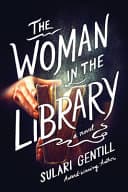
The Woman in the Library