Stanisław Lem
Also known as Stanisław Herman Lem, Stanislaw Lem
Philosophical science fiction often explores the limits of human cognition, artificial intelligence, and the daunting challenges of communicating with non-human intelligence. Works within this domain examine how technology intersects with human nature, offering deep critiques of scientific arrogance and epistemological certainty. The celebrated 1961 novel Solaris exemplarizes this tradition by depicting scientists struggling to comprehend an enigmatic, sentient planetary ocean.
Stanisław Lem authored numerous groundbreaking books, essays, and satirical stories that sold over forty million copies and were translated into more than fifty languages. His intellectual depth and vast imagination established him as a premier voice in world speculative literature and futurology.
Career & Background
Born in Lvov on September 12, 1921, to the family of a laryngologist, Lem grew up in an affluent environment before his medical education was disrupted by World War II. He studied medicine at the Lvov Medical Institute from 1940 to 1941 during the Soviet occupation, later working as a mechanic's assistant and welder for a German raw-materials recycling firm during the Nazi occupation. Following the return of Soviet forces in 1944, he resumed his medical studies, but moved to Kraków in 1946 when Lvov was incorporated into Ukrainian territory.
In Kraków, Lem transitioned from medicine to writing, producing science fiction novels, philosophical treatises, and literary criticism. Following the declaration of martial law in Poland, he lived in exile in Vienna with his family from 1983 to 1988, returning home as political reforms unfolded. His extensive literary contributions earned him international acclaim, including a nomination for the inaugural Man Booker International Prize in 2005, before his death in 2006.
Writing Style & Themes
Lem's writing bridges rigorous hard science fiction, satirical cybernetic fables, and deep philosophical inquiry. His narratives repeatedly investigate the limitations of human reason, the absurdities of bureaucracy, and the unintended consequences of advanced technology. In works like The Cyberiad, he employed playful storytelling and robot protagonists to satire human flaw, while The Futurological Congress presented a dark, surreal vision of a society conditioned by mind-altering chemicals.
Major Works
- Solaris — Published in 1961, this novel follows a psychologist on a space station orbiting a living ocean planet that manifests the deep, repressed memories of the crew.
- The Cyberiad — A collection of humorous cybernetic fables following the competitive constructor engineers Trurl and Klapaucius across a futuristic cosmos.
- The Futurological Congress — A satirical story starring space explorer Ijon Tichy, who uncovers a dystopian reality masked by omnipresent, state-administered hallucinogens.

Solaris
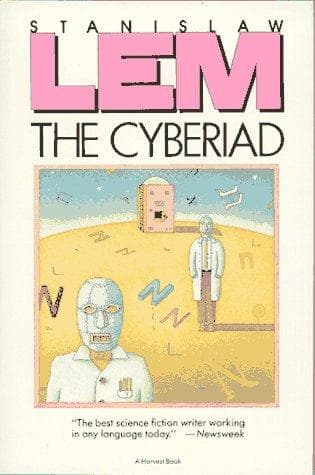
The Cyberiad