Sōsuke Natsukawa
Also known as 夏川草介, Sosuke Natsukawa, Nacukava Szószuke
Contemporary Japanese fiction frequently bridges quiet everyday reality with philosophical reflection and gentle fantasy. Sōsuke Natsukawa has reached international readers by combining his professional background in medicine with allegorical storytelling centered on human compassion and the power of literature.
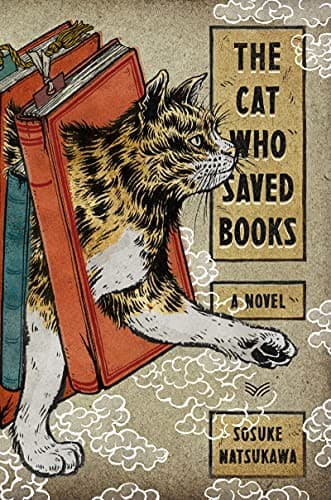
His celebrated novel The Cat Who Saved Books established his international presence, translating his signature warmth and philosophical inquiry for audiences in more than thirty countries.
Career & Background
Born in Japan in 1978, Sōsuke Natsukawa pursued a career in medicine while nurturing a deep engagement with literature. Working as a practicing physician, he experienced firsthand the intense emotional demands and human vulnerabilities of healthcare. Motivated in part by a desire to explore how individuals can treat one another with greater empathy and kindness in demanding environments, he turned to fiction writing alongside his clinical work.
Natsukawa achieved immediate literary acclaim in Japan with his debut novel, Kamisama no Karute (God's Medical Records). The book, which explores the delicate balance between medical ethics, clinical care, and human warmth, sold over one and a half million copies domestically. His work earned prominent accolades, including the Japan Booksellers' Award and the Shogakukan Fiction Award. Over his career, his novels have sold over three million copies. Despite his commercial success, Natsukawa continues to practice medicine, allowing his clinical experiences to inform his narrative vision.
Writing Style & Themes
Natsukawa's writing is characterized by an empathetic, reflective tone that seamlessly weaves grounded medical or domestic settings with gentle, fable-like elements. His narratives frequently center on introspective protagonists navigating emotional exhaustion, grief, or ethical dilemmas, offering thoughtful meditations on human connection, friendship, and moral responsibility.
A recurring theme across his catalog is the transformative value of reading and literature itself. In works like The Cat Who Saved Books, Natsukawa utilizes magical realism—such as speaking cats and surreal labyrinths—to critique the commercialization of reading and advocate for a deeper, more personal relationship with books. His prose emphasizes patience, emotional authenticity, and the idea that literature serves as a vital sanctuary for the human spirit.
Major Works
- The Cat Who Saved Books — Translated into English by Louise Heal Kawai and published in over thirty countries, this international bestseller follows a high school student and a speaking cat on a quest to rescue endangered books, serving as an allegory for the enduring value of reading.
- Kamisama no Karute (God's Medical Records) — Natsukawa's acclaimed debut novel draws on his medical practice to tell the story of a dedicated physician confronting the emotional realities of patient care, winning the Shogakukan Fiction Award and recognition from the Japan Booksellers' Award.
- The Cat Who Saved the Library — A companion novel translated by Louise Heal Kawai that continues the author's whimsical and reflective exploration of books, libraries, and the preservation of written culture.