
Seth Dickinson
Exploring imperial bureaucracy, economic intrigue, and psychological warfare, political fantasy fiction received a distinct addition with the publication of The Traitor Baru Cormorant. Seth Dickinson gained wide recognition for this hard fantasy debut, which follows a brilliant accountant attempting to dismantle an oppressive empire from within its financial machinery.
Beyond his original book series, Dickinson has contributed worldbuilding lore to high-profile interactive franchises and written short fiction across major speculative magazines and anthologies.
Career & Background
Dickinson grew up in the Vermont hills, spending his childhood reading speculative paperbacks such as George Orwell's 1984 and Lois Lowry's The Giver, while also playing complex strategy board games. He began writing stories at a young age before attending the University of Chicago, where he earned the Dell Magazines Award for Undergraduate Excellence in Science Fiction and Fantasy Writing in 2011 for his short story "The Immaculate Conception of Private Ritter." He later became a doctoral candidate at New York University studying racial bias in police decision-making before focusing his career full-time on fiction writing and narrative design.
In addition to his novel-length fantasy, Dickinson spent significant time as a narrative writer and lore consultant for Bungie Studios, shaping backstory and universe lore for the video game Destiny. He has also served as an instructor for the Alpha Workshop for Young Writers and published short stories in major genre venues including Clarkesworld, Lightspeed, Asimov's, Analog, Strange Horizons, and Beneath Ceaseless Skies.
Writing Style & Themes
Dickinson's fiction frequently investigates the mechanics of statecraft, systemic oppression, high finance, and moral compromise. Rather than relying primarily on traditional magic systems, his narratives emphasize political strategy, economic leverage, social engineering, and institutional power. His characters regularly face harrowing ethical dilemmas where personal loyalty directly conflicts with administrative necessity and survival.
Major Works
- The Traitor Baru Cormorant — Published in 2015, this debut novel introduces a brilliant young woman from a conquered island who uses accountancy, economics, and political maneuvering to infiltrate and attempt to undermine the empire known as the Masquerade.
- From a Certain Point of View: The Empire Strikes Back — Dickinson contributed short fiction to this officially licensed Star Wars anthology celebrating the film's forty-year anniversary by exploring background events from alternative perspectives.
- The Monster Baru Cormorant — The second installment in the Baru Cormorant series deepens the protagonist's struggle against imperial control while expanding the political and geographic scope of the fantasy world.
- The Tyrant Baru Cormorant — The third novel in the series continues the central story arc, focusing on the high-stakes consequences of financial subversion and geopolitical conflict.
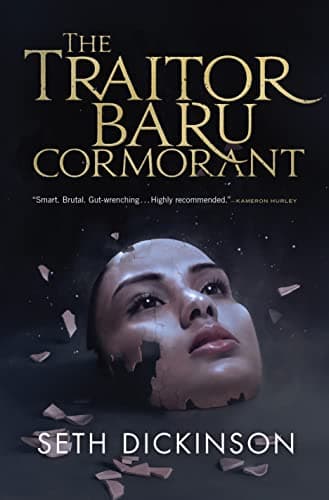
The Traitor Baru Cormorant
