
§Author· 7 books
Samuel Beckett
Also known as Samuel Barclay Beckett
The tragicomedy Waiting for Godot transformed mid-twentieth-century drama through its stark portrayal of two men waiting on a desolate road for an entity who never arrives. Irish avant-garde writer, dramatist, and poet Samuel Barclay Beckett constructed a body of work across fiction, poetry, and theatre that redefined theatrical structure and fictional prose by stripping narrative down to its fundamental elements. Writing in both English and French, his texts probe human consciousness, physical decay, and the search for meaning in an uncertain universe.
By reducing dramatic action to stripped-back dialogue and minimal movement, Beckett created a distinct tragicomic idiom that blends dark comedy with philosophical inquiry. His prose fiction and stage works established new possibilities for post-war drama and the novel, making his writings central to modern literary history.
Career & Background
Born in Foxrock, County Dublin, in 1906, Beckett studied at Earlsfort House in Dublin and Portora Royal School in Enniskillen before earning his degree from Trinity College, Dublin, in 1927. He served as an English reader at the École Normale Supérieure in Paris from 1928 to 1929 and later returned briefly to Trinity College as a French reader in 1930. During his time in Paris, he worked closely with James Joyce as a student, assistant, and friend, an experience that deeply influenced his artistic development. Beckett settled permanently in France in 1938. During World War II, his Irish citizenship allowed him to remain in Paris, where he joined the French Resistance; after narrowly escaping the Gestapo in 1942, he fled to the unoccupied zone and was later awarded the Croix de Guerre for bravery.
After the war, Beckett began writing extensively in French in 1945, producing an influential sequence of novels and plays. His theatrical production Waiting for Godot premiered in 1953, bringing his work to international attention. In 1969, Beckett was awarded the Nobel Prize in Literature for his "writing, which—in new forms for the novel and drama—in the destitution of modern man acquires its elevation". He was elected Saoi of Aosdána in 1984. Beckett continued writing novellas, poetry, and short drama until his death in Paris in 1989 from respiratory problems.
Writing Style & Themes
Beckett's writing offers a bleak outlook on human culture and became formally and philosophically minimalist over the course of his career. As a bridge between literary eras, Beckett is considered one of the last modernists and an inspiration for postmodernism. Critic Martin Esslin categorized his dramatic work as central to the "Theatre of the Absurd," a movement characterized by existential questioning, fragmented dialogue, black comedy, and literary nonsense. By composing many of his major works in French before translating them into English, Beckett deliberately pared away stylistic ornamentation to achieve a lean, precise, and impersonal expression.
His prose fiction frequently features solitary narrators trapped in decaying bodies or confined spaces, grappling with memory, selfhood, and language itself. Early novels like Murphy balance satirical wit with philosophical skepticism, while his mature works discard conventional plot structures entirely to explore the mechanics of thought and isolation.
Major Works
- Waiting for Godot — First performed in French as En attendant Godot and published in English in 1953, this famous tragicomedy play follows two characters, Vladimir and Estragon, as they engage in cyclical conversations while awaiting the mysterious Godot.
- Murphy — Published in 1938, Beckett's early English-language novel follows an Irishman in London who seeks complete physical and mental stillness while working as an attendant in a psychiatric hospital.
- Molloy — Published in French in 1951 as the first installment of Beckett's novel trilogy, Molloy consists of two internal monologues detailing an aging wanderer's journey and a detective sent to track him down.
- Malone Dies — Published in French in 1951 as Malone meurt, the second book in the prose trilogy features an expiring narrator lying alone in a room, telling stories to pass his final hours.
- The Unnamable — Published in 1953 as L'Innommable, the final volume of the novel trilogy abandons traditional character and setting entirely, focusing on a disembodied voice struggling to articulate its own existence.
- Mercier and Camier — Written in French in 1946, this comic novella recounts the meandering journey of two companions through a nameless city and countryside, serving as a prose precursor to Waiting for Godot.
- How It Is — Published in French in 1961 as Comment c'est, this minimalist novel portrays a solitary figure crawling through endless mud, reflecting on consciousness, pain, and human connection.
§All Books

Waiting for Godot
Samuel Beckett, 1951
302 ratings

Molloy
Samuel Beckett, 1958
13 ratings

Malone Dies
Samuel Beckett, 1951
9 ratings

Murphy
Samuel Beckett, 1938
9 ratings
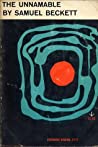
The Unnamable
Samuel Beckett, 1953
7 ratings

How It Is
Samuel Beckett, 1961
1 ratings

Mercier and Camier
Samuel Beckett, 1970
§ About Samuel Beckett's books
- Books on SansFiction
- 7
- Published
- 1938–1970
- Average rating
- 3.9 / 5 across 341 ratings
- Genres
- Classics, Philosophy
- Series
- The Trilogy
Start here: Waiting for Godot (1951)
The story revolves around two seemingly homeless men simply waiting for someone—or something—named Godot. Vladimir and Estragon wait near a tree, inhabiting a drama spun of their own consciousness. The result is a comical wordplay of poetry, dreamscapes, and nonsense, which has been interpreted as mankind’s inexhaustible search for meaning.
The Trilogy: reading order
Common questions about Samuel Beckett
- Who is Samuel Beckett?
- Born in Foxrock, County Dublin, in 1906, Beckett studied at Earlsfort House in Dublin and Portora Royal School in Enniskillen before earning his degree from Trinity College, Dublin, in 1927. He served as an English reader at the École Normale Supérieure in Paris from 1928 to 1929 and later returned briefly to Trinity College as a French reader in 1930.
- What is Samuel Beckett best known for?
- Samuel Beckett is best known for Waiting for Godot, published in 1951 with 302 ratings and a 3.8 average. It is the most-rated of Samuel Beckett's books on SansFiction.
- How many books has Samuel Beckett written?
- SansFiction lists 7 books by Samuel Beckett, published between 1938 and 1970. The most popular are Waiting for Godot, Molloy, Malone Dies, Murphy and The Unnamable.
- What order should I read Samuel Beckett's The Trilogy books in?
- Read the The Trilogy books in series order: 1. Molloy, 2. Malone Dies, 3. The Unnamable.
- What genres does Samuel Beckett write?
- Samuel Beckett's books on SansFiction are tagged Classics and Philosophy.
Explore: Classics · Philosophy