
§Author· 11 books
Robert J. Sawyer
Also known as Robert Sawyer, Robert James Sawyer
Hard science fiction exploring consciousness, quantum physics, and human morality defines a major branch of contemporary speculative fiction, exemplified by the Hugo Award-winning novel Hominids. Canadian-American author Robert J. Sawyer built a celebrated body of work around these thought experiments, merging high-concept scientific hypotheses with philosophical drama.
Career & Background
Born in Ottawa, Ontario, in 1960 and raised in Toronto, Robert J. Sawyer published 25 novels alongside numerous short stories in publications such as Analog Science Fiction and Fact, Amazing Stories, On Spec, and Nature. Over his career, he became one of only eight authors to win all three major international honors for science fiction novels: the Nebula Award for The Terminal Experiment in 1995, the Hugo Award for Hominids in 2003, and the John W. Campbell Memorial Award for Mindscan in 2006.
His contributions to literature and culture earned him appointments to the Order of Canada and the Order of Ontario, as well as the Queen Elizabeth II Diamond Jubilee Medal and the 2017 Robert A. Heinlein Award. In addition to his novel-length fiction and short stories, Sawyer has worked as a scriptwriter and speaker, and his novel Flashforward was adapted into a major network television series.
Writing Style & Themes
Sawyer's fiction frequently investigates fundamental questions surrounding artificial intelligence, human evolution, paleontology, quantum physics, and the nature of consciousness. His narratives blend detailed scientific research with relatable human conflict, examining how technological breakthroughs impact legal systems, personal ethics, and society at large.
Many of his stories employ mystery structures and courtroom proceedings to debate complex ethical dilemmas, using alien or alternative evolutionary perspectives to reframe human social norms. Works like Starplex, Frameshift, and Factoring Humanity demonstrate his signature approach of grounding speculative scientific principles in fast-paced, character-driven plots.
Major Works
- Hominids — This 2003 Hugo Award winner opens the Neanderthal Parallax trilogy, exploring a parallel Earth where Neanderthal society survived and modern humans died out.
- The Terminal Experiment — Winner of the 1995 Nebula Award, this novel follows a biomedical researcher who discovers physical proof of the human soul while testing a bio-presence monitor.
- Flashforward — This novel depicts global chaos when a high-energy physics experiment unexpectedly causes humanity to glimpse two minutes into their personal futures, later adapted into a television series.
- Calculating God — A paleontologist at the Royal Ontario Museum is approached by an alien scientist seeking evidence of a supreme creator recorded in fossil records across different worlds.
- Rollback — This narrative focuses on a moral and emotional examination of youth restoration technology provided by alien communication, testing the bond between an aging couple.
- Wake — The first book in the WWW trilogy examines the emergence of consciousness within the World Wide Web through the eyes of a blind teenager receiving a neural implant.
- The Downloaded — This novel explores consciousness digitized into virtual reality and the unexpected complications when physical bodies and digital minds reconverge.
- Starplex — A deep-space exploration novel following a space station commander investigating mysterious shortcut wormholes and ancient alien civilizations.
- Frameshift — A geneticist investigating Huntington's disease uncovers evidence of prehistoric Neanderthal genetics and a series of murders.
- Factoring Humanity — An artificial intelligence researcher deciphering signals from an alien civilization discovers a method to access collective human memory.
§All Books

Flashforward
Robert J. Sawyer, 1999
84 ratings

Calculating God
Robert J. Sawyer, 2000
59 ratings

Hominids
Robert J. Sawyer, 2002
50 ratings

The Downloaded
Robert J. Sawyer, 2023
27 ratings
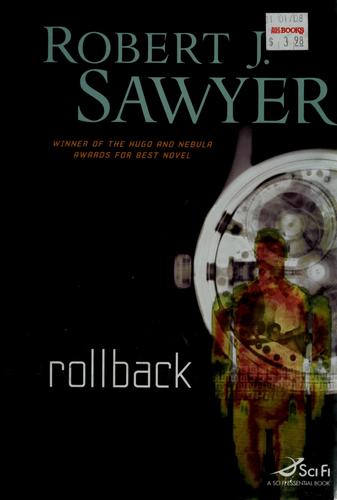
Rollback
Robert J. Sawyer, 2007
23 ratings

Humans
Robert J. Sawyer, 2003
23 ratings

The Terminal Experiment
Robert J. Sawyer, 1995
21 ratings

Factoring Humanity
Robert J. Sawyer, 2012
17 ratings

Starplex
Robert J. Sawyer, 1996
16 ratings
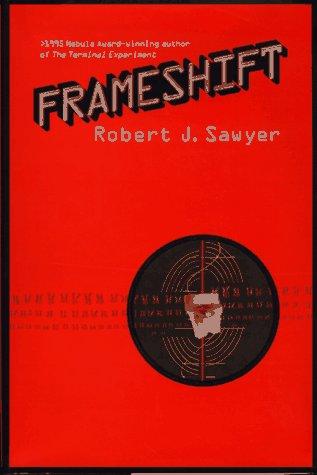
Frameshift
Robert J. Sawyer, 1997
9 ratings

Wake
Robert J. Sawyer, 2009
5 ratings
§ About Robert J. Sawyer's books
- Books on SansFiction
- 11
- Published
- 1995–2023
- Average rating
- 3.7 / 5 across 334 ratings
- Genres
- Science Fiction, Fantasy, Fiction, Adventure
- Series
- Neanderthal Parallax
Start here: Flashforward (1999)
Robert J. Sawyer's award-winning science fiction has garnered both popular and critical acclaim. The New York Times Book Review called Frameshift "filled to bursting with ideas, characters and incidents". His novels are fixtures on the Hugo and Nebula ballots. Sawyer now brings us Flashforward, the story of a world-shattering discovery.
Common questions about Robert J. Sawyer
- Who is Robert J. Sawyer?
- Born in Ottawa, Ontario, in 1960 and raised in Toronto, Robert J. Sawyer published 25 novels alongside numerous short stories in publications such as Analog Science Fiction and Fact, Amazing Stories, On Spec, and Nature.
- What is Robert J. Sawyer best known for?
- Robert J. Sawyer is best known for Flashforward, published in 1999 with 84 ratings and a 3.6 average. It is the most-rated of Robert J. Sawyer's books on SansFiction.
- How many books has Robert J. Sawyer written?
- SansFiction lists 11 books by Robert J. Sawyer, published between 1995 and 2023. The most popular are Flashforward, Calculating God, Hominids, The Downloaded and Rollback.
- What order should I read Robert J. Sawyer's Neanderthal Parallax books in?
- Read the Neanderthal Parallax books in series order: 1. Hominids, 2. Humans.
- What genres does Robert J. Sawyer write?
- Robert J. Sawyer's books on SansFiction are tagged Science Fiction, Fantasy, Fiction and Adventure.
Explore: Science Fiction · Fantasy · Fiction · Adventure