RC
§Author· 1 book
Raymond Carver
Also known as Raymond Clevie Carver, Raymond Clevie Carver Jr.
Short stories depicting the quiet desperation of working-class lives revitalized twentieth-century American fiction, particularly through the understated power of What We Talk About When We Talk About Love. Author Raymond Carver brought a spare realism to tales of blue-collar workers, strained marriages, and financial anxiety across the Pacific Northwest. His fiction captures moments of vulnerability and unexpressed anguish among people facing everyday domestic crises.
Career & Background
Born on May 25, 1938, in Clatskanie, Oregon, Carver grew up in Yakima, Washington, in a modest working-class family. He married young and became a father of two before turning twenty, balancing his early literary ambitions with low-paying jobs that included pumping gas, picking tulips, sweeping hospital corridors, and managing an apartment complex. After studying writing at Chico State University, he published his debut short story collection, Will You Please Be Quiet, Please?, in 1976. His breakout collection, What We Talk About When We Talk About Love, arrived in 1981 and earned immediate acclaim. He followed this success with Cathedral in 1983, a collection he considered a watershed in his development and which is widely regarded as his masterpiece. Shortly before his death on August 2, 1988, in Port Angeles, Washington, he published the definitive collection Where I'm Calling From. In their 1989 nomination of Carver for the Pulitzer Prize for Fiction, the jury concluded that the revival of the short story form was attributable in great measure to his mastery.
Writing Style & Themes
Carver's narrative approach is widely associated with minimalism and dirty realism, characterized by stripped-down prose and unvarnished portrayals of blue-collar struggles. His stories frequently explore themes of marital breakdown, alcoholism, financial hardship, and the difficulty of communicating emotional pain. Rather than relying on dramatic plots or elaborate ornament, his prose relies on concise dialogue, heavy subtext, and subtle shifts in perspective, capturing ordinary individuals in moments of profound realization.
Major Works
- Will You Please Be Quiet, Please? — Published in 1976, Carver's debut short story collection introduced his focus on blue-collar domestic tensions and narrative restraint.
- What We Talk About When We Talk About Love — Released in 1981, this breakout collection established Carver's reputation through its stripped-down prose and stark examinations of human relationships.
- Cathedral — Published in 1983, this collection represents a watershed moment in Carver's fiction, offering expanded emotional depth and moments of unexpected connection.
- Where I'm Calling From — Published in 1988 shortly before his death, this definitive retrospective gathering selected and new stories showcases the full range of his short fiction.
§All Books
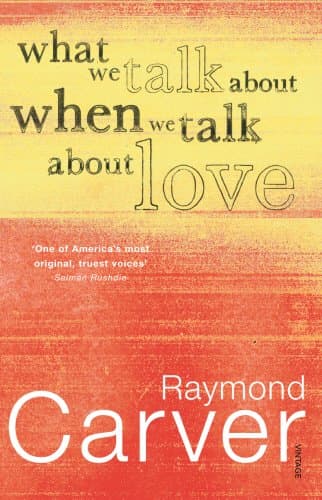
What We Talk About When We Talk About Love
Raymond Carver, 1981
119 ratings