
§Author· 1 book
qntm
Also known as Sam Hughes
Exploring concepts of self-containing information, cognitive hazards, and mind-bending speculative logic, serial science fiction has found a distinctive voice in modern digital publishing. Writing under the pseudonym qntm (pronounced "quantum"), British author Sam Hughes began sharing web serials and short fiction in the early 2000s before reaching widespread recognition with the supernatural sci-fi thriller There Is No Antimemetics Division: A Novel.
Career & Background
Born in 1983, Hughes was educated in mathematics and works professionally as a software developer in the United Kingdom, working primarily with TypeScript. He began writing science fiction in his spare time during secondary school, initially treating it as a hobby before expanding his readership through his personal website, Things Of Interest. His work gained significant traction through his contributions to the collaborative SCP Foundation wiki, where he created popular storylines centered on the concept of antimemes—entities and ideas that actively prevent themselves from being remembered or communicated.
Hughes initially self-published his long-form fiction, releasing the ebook Ed in 2013 and writing online serial novels including Ra and Fine Structure. Following the grassroots success of There Is No Antimemetics Division: A Novel, major publishers acquired traditional distribution rights in 2024, with Del Rey Books securing UK and Commonwealth rights and Ballantine Books acquiring US rights.
Writing Style & Themes
qntm has been writing science fiction for most of this millennium. His works start from elegant, deep hypotheticals and wind entire universes around them, pushing science, technology, logic and possibility to breaking point and far beyond. Often blending hard science fiction with cosmic horror, logic puzzles, and dark humor, his narratives treat complex technological and theoretical premises with strict internal consistency and analytical precision.
Recurring themes across his bibliography include information security, memory alteration, simulated reality, and human persistence against incomprehensible threats. His short fiction demonstrates similar conceptual intensity; notable stories such as "Lena" explore the ethical, economic, and existential implications of the first digital snapshot of a human brain, while pieces like "The Difference" and "I Don't Know, Timmy, Being God Is A Big Responsibility" address theological and computational hypotheticals.
Major Works
- There Is No Antimemetics Division: A Novel — Originally published as a serial on the SCP Foundation wiki, this thriller explores a secret containment division fighting invasive, self-censoring ideas that erase knowledge of their own existence from human minds.
- Ra — A hard speculative novel set in an alternate world where magic is not mystical, but a complex, mathematically rigorous branch of physical science discovered in the twentieth century.
- Fine Structure — A web serial novel following a group of scientists and engineers whose breakthrough unifying equations open the universe to strange alien phenomena.
- Ed — A near-future science fiction novel depicting a young protagonist versed in advanced science who must navigate a sudden alien encounter.
- Valuable Humans in Transit and Other Stories — A short fiction collection featuring prominent online pieces including "Lena", "The Difference", and "I Don't Know, Timmy, Being God Is A Big Responsibility".
§All Books
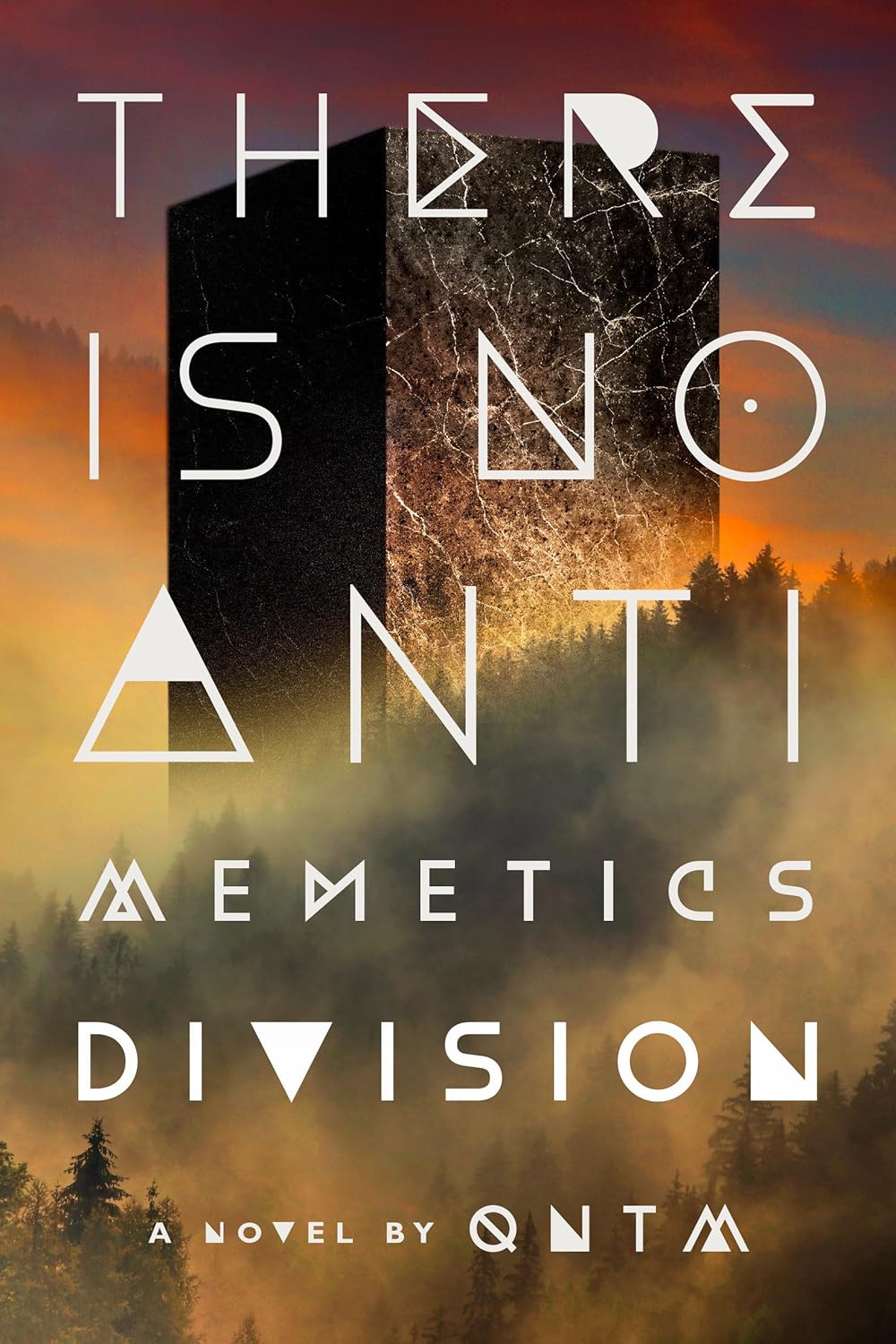
There Is No Antimemetics Division: A Novel
qntm, 2020
251 ratings
§ About qntm's books
- Books on SansFiction
- 1
- Published
- 2020
- Average rating
- 4.1 / 5 across 251 ratings
- Genres
- Dystopian, Fantasy, Fiction, Horror
The book: There Is No Antimemetics Division: A Novel (2020)
"They’re all around us, hiding in plain sight. One could be in the room with you now, just to your left. You could be seeing it right now—but from this second to the next, you’ll forget that you did. If you managed to jot down a note, the paper would look blank to you afterward.
Common questions about qntm
- Who is qntm?
- Born in 1983, Hughes was educated in mathematics and works professionally as a software developer in the United Kingdom, working primarily with TypeScript. He began writing science fiction in his spare time during secondary school, initially treating it as a hobby before expanding his readership through his personal website, Things Of Interest.
- What is qntm best known for?
- qntm is best known for There Is No Antimemetics Division: A Novel, published in 2020 with 251 ratings and a 4.1 average. It is the most-rated of qntm's books on SansFiction.
- What genres does qntm write?
- qntm's books on SansFiction are tagged Dystopian, Fantasy, Fiction and Horror.