
§Author· 7 books
Pierce Brown
Also known as Pierce Elliott Brown
Reimagining futuristic society through the lens of classical antiquity and brutal class warfare, the dystopian science fiction saga Red Rising Saga presents a color-coded caste system where low-caste miners labor under the illusion of a better future. American novelist and screenwriter Pierce Brown, whose full name is Pierce Elliott Brown, established this expansive solar system setting in his 2014 debut novel Red Rising. The narrative follows Darrow, a low-caste Helix miner who undergoes radical alteration to infiltrate the ruling Gold class and dismantle a tyrannical empire from within. Translated into over thirty languages, the series combines military strategy, political intrigue, and visceral action to examine the moral compromises required to overthrow an oppressive regime.
By grounding sweeping space opera mechanics in historical precedents from ancient Greece and Rome, Pierce Brown offers a rigorous examination of power dynamics, revolutionary sacrifice, and systemic collapse. Rather than treating technology as the primary driver of drama, his books prioritize the human motivations behind ideological conflict and the cyclical nature of authoritarian rule. The overarching narrative spans two distinct story arcs: an initial trilogy detailing the spark of interstellar rebellion and a subsequent sequel series addressing the messy, perilous realities of building a functioning democracy in the aftermath of war.
Career & Background
Born in Denver, Colorado, on January 28, 1988, Pierce Brown experienced a nomadic childhood that saw his family relocate across eight different states. This frequent movement sparked an early appreciation for narrative as a tool for connecting with new surroundings, a creative inclination further shaped by listening to his grandfather tell passionate, exaggerated stories on the patio. He later attended Pepperdine University, graduating in 2010 with a Bachelor of Arts in political science and economics. During his collegiate years and immediate post-graduation period, Brown wrote six distinct book manuscripts between the ages of 18 and 22, enduring more than 100 rejections from literary agents before securing publication.
To support his writing efforts, Pierce Brown worked from a converted garage while balancing a series of entry-level positions across political and media organizations. He served as an aide on a U.S. Senate campaign, worked as an NBC page, and managed social media strategy for a tech startup. These varied professional roles in institutional environments provided him with first-hand insight into organizational hierarchies, political manipulation, and bureaucratic power struggles. This practical exposure directly informed the legal structures, societal mechanics, and institutional dynamics that characterize his fictional universe. Following the breakthrough publication of Red Rising in 2014, he expanded his literary scope by writing the six-issue prequel comic book series Red Rising: Sons of Ares in 2015, which explores the origin of the underground resistance movement.
Writing Style & Themes
The literary style of Pierce Brown is distinguished by its fast-paced, first-person present-tense point of view, immersing readers directly into the immediate physical danger and psychological strain experienced by his characters. Drawing heavily on classical Roman history, Greek mythology, and military strategy, his world-building constructs a rigid, color-coded hierarchy where society is stratified into specialized functional castes ranging from manual labor Reds to ruling Gold elites. His narratives adopt a dark, high-stakes tone that scrutinizes the grim logistics of warfare, the corrupting influence of absolute power, and the ethical burdens carried by political leaders.
Central to the work of Pierce Brown is the persistent conflict between justice and vengeance, alongside the ongoing challenge of retaining personal integrity within coercive systems. His stories move beyond the triumph of overthrowing a dictator to interrogate the chaotic aftermath of revolution, showing how noble intentions can yield unforeseen destruction, civil fragmentation, and lingering trauma. By highlighting the structural friction between competing political factions, his books explore whether lasting social reform can be achieved through violence or if revolutionary movements inevitably replicate the authoritarian structures they set out to destroy.
Major Works
- Red Rising Saga — The overarching epic science fiction series that details the fall of a color-coded dystopian solar system and the chaotic struggle to build a democracy. Beginning with the initial trilogy—Red Rising, Golden Son, and Morning Star—the story charts Darrow's transformation from a low-caste miner into a revolutionary leader. The subsequent expanded narrative arc—comprising Iron Gold, Dark Age, and Light Bringer—explores the geopolitical instability, ethical compromises, and devastating costs of governing in the wake of total war.
- Red Rising — Published in 2014 as the author's debut novel, Red Rising introduces Darrow, a low-caste Red working beneath the surface of Mars. After suffering personal tragedy and learning that humanity has lived on the surface for generations in luxury, Darrow undergoes physical reshaping to infiltrate the elite Gold ruling class and ignite a rebellion from within.
- Golden Son — Released in 2015 as the second installment of the original trilogy, Golden Son follows Darrow as he navigates the deadly political alliances and military academies of the ruling Golds, escalating his clandestine war to shatter the Society's caste system from its highest halls of power.
- Morning Star — Published in 2016, Morning Star concludes the initial trilogy as Darrow and his allies launch a full-scale interstellar revolution across the solar system, risking everything to break the chains of tyrannical rule and secure freedom for all low castes.
- Iron Gold — Published in 2018, Iron Gold begins a new decade-later narrative arc that expands the perspective to multiple point-of-view characters, examining the fragile peace, rising corruption, and bitter insurgencies threatening the newly established Solar Republic.
- Dark Age — Published in 2019, Dark Age continues the secondary arc with a harrowing portrayal of military escalation, political betrayal, and grim sacrifice as the forces of democracy fight a grueling war against ruthless counter-revolutionary factions.
- Light Bringer — Published in 2023, Light Bringer (also referenced in local catalogs as Lightbringer) sees Darrow searching for redemption and unity across the solar system while facing formidable new enemies and alliances in the ongoing struggle for peace.
- Iron Gold II — Representing a catalog volume in the extended sequence of the Red Rising Saga, Iron Gold II continues the multi-perspective exploration of the Solar Republic's ongoing military conflicts and internal political struggles.
§All Books
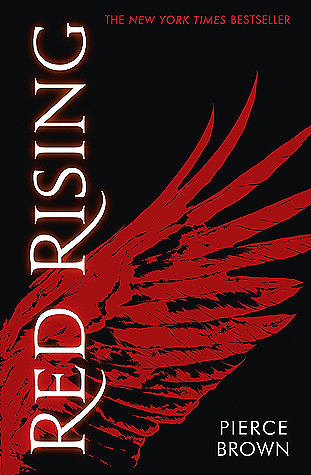
Red Rising
Pierce Brown, 2014
2,441 ratings
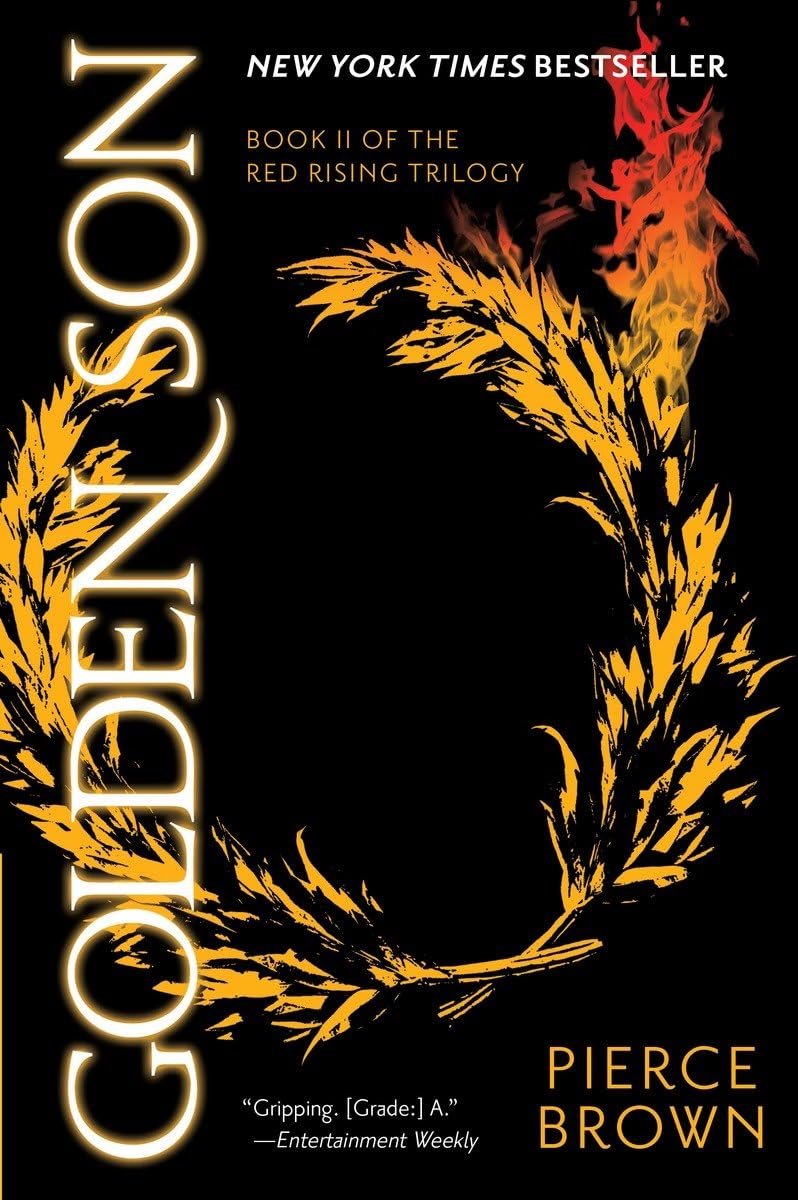
Golden Son
Pierce Brown, 2014
1,693 ratings
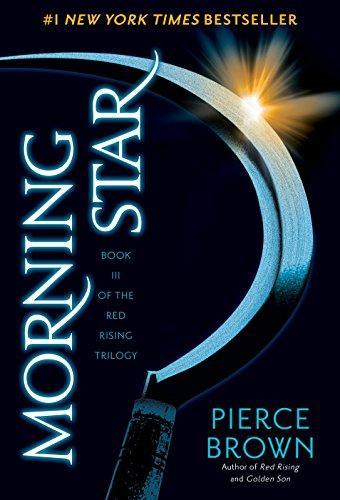
Morning Star
Pierce Brown, 2016
1,378 ratings

Iron Gold
Pierce Brown, 2018
637 ratings

Dark Age
Pierce Brown, 2019
466 ratings
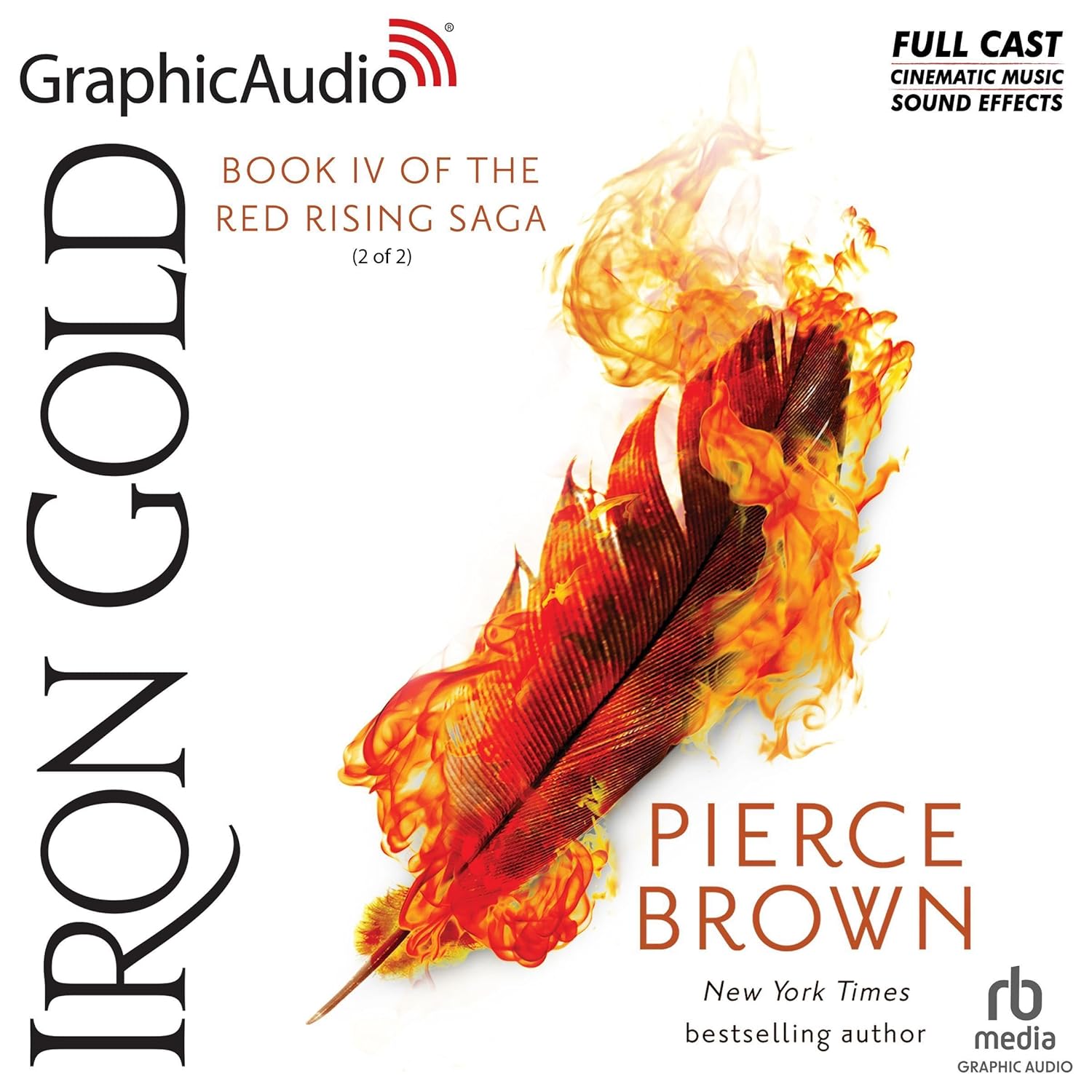
Iron Gold II
Pierce Brown, 2018
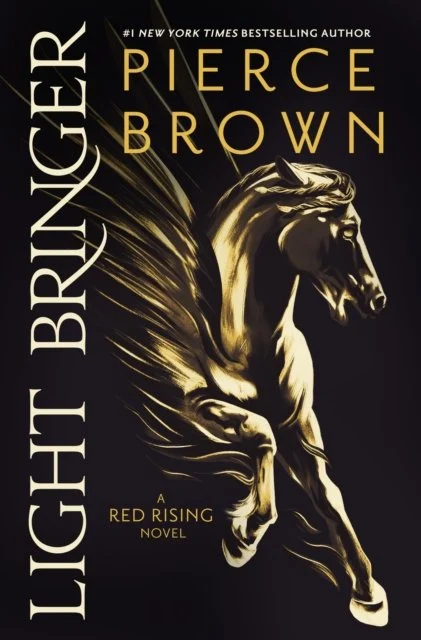
Lightbringer
Pierce Brown, 2022
§ About Pierce Brown's books
- Books on SansFiction
- 7
- Published
- 2014–2022
- Average rating
- 4.3 / 5 across 6,615 ratings
- Genres
- Dystopian, Young Adult, Fantasy, Adult
- Series
- Red Rising Saga
Start here: Red Rising (2014)
In the pressurized tunnels beneath the Martian crust, the Reds labor in pursuit of a dream they will never see. As "Helldivers," they are told they are the vanguard of humanity, sacrificing their health and lives to mine the Helium-3 necessary to terraform a hostile planet for future generations.
Red Rising Saga: reading order
Common questions about Pierce Brown
- Who is Pierce Brown?
- Born in Denver, Colorado, on January 28, 1988, Pierce Brown experienced a nomadic childhood that saw his family relocate across eight different states. This frequent movement sparked an early appreciation for narrative as a tool for connecting with new surroundings, a creative inclination further shaped by listening to his grandfather tell passionate, exaggerated stories on the patio.
- What is Pierce Brown best known for?
- Pierce Brown is best known for Red Rising, published in 2014 with 2,441 ratings and a 4.2 average. It is the most-rated of Pierce Brown's books on SansFiction.
- How many books has Pierce Brown written?
- SansFiction lists 7 books by Pierce Brown, published between 2014 and 2022. The most popular are Red Rising, Golden Son, Morning Star, Iron Gold and Dark Age.
- What order should I read Pierce Brown's Red Rising Saga books in?
- Read the Red Rising Saga books in series order: 1. Red Rising, 2. Golden Son, 3. Morning Star, 4. Iron Gold, 4.5. Iron Gold II, 5. Dark Age, 6. Lightbringer.
- What genres does Pierce Brown write?
- Pierce Brown's books on SansFiction are tagged Dystopian, Young Adult, Fantasy and Adult.
Explore: Dystopian · Young Adult · Fantasy · Adult