Philip Reeve
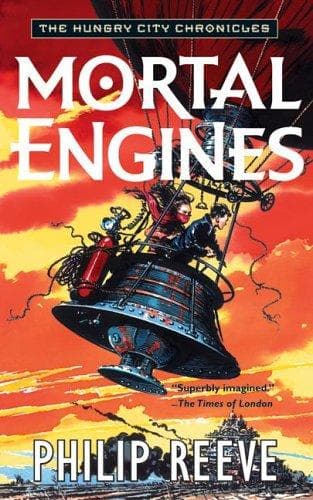
Post-apocalyptic steampunk fantasy and speculative fiction gained a distinctive landmark with the invention of traction cities—mobile, engine-driven metropolises roaming a devastated Earth to consume smaller settlements for resources. British author and illustrator Philip Reeve introduced this dystopian vision in his 2001 novel, Mortal Engines, establishing an acclaimed body of children's and young adult fiction marked by inventive worldbuilding, satirical wit, and sweeping scope.
Career & Background
Born in Brighton, England, on February 28, 1966, Reeve studied illustration and spent years working in a bookshop before launching his artistic career. He initially worked as an illustrator and cartoonist, providing artwork for popular educational series such as Horrible Histories and Kjartan Poskitt's Murderous Maths books. This extensive background in visual narrative and humorous illustration deeply influenced his approach to literary pace, comedic timing, and evocative descriptive detail.
Reeve's transition to novelist occurred with Mortal Engines in 2001, which won the Nestlé Smarties Book Prize Gold Award, the Blue Peter Book of the Year Award, and the Blue Peter Book I Couldn't Put Down Award. He expanded the story into the Mortal Engines Quartet alongside Predator's Gold, Infernal Devices, and A Darkling Plain, the latter earning both the Guardian Children's Fiction Prize and the Los Angeles Times Book Prize in 2006. In 2018, Mortal Engines was adapted into a major motion picture directed by Christian Rivers and produced by Peter Jackson. Reeve further broadened the fictional universe through the Fever Crumb prequel trilogy, the short story collection Night Flights, and the novella Bridge of Storms.
Writing Style & Themes
Reeve's narrative style combines epic worldbuilding with sharp social satire and emotionally grounded character relationships. His work frequently examines environmental destruction, municipal imperialism, political propaganda, and the personal cost of war. Through imaginative constructs like Municipal Darwinism—where mobile cities devour one another for fuel—he creates vivid metaphors for greed and resource consumption while maintaining accessible, fast-paced adventures for young readers.
In addition to post-apocalyptic science fiction, Reeve has worked extensively in historical fantasy and Victorian space opera. His Larklight trilogy presents a retro-futuristic alternate universe where Victorian travelers explore steam-powered space travel. His 2007 novel Here Lies Arthur offers a grounded retelling of the King Arthur myth set in Dark Age Britain, deconstructing the mechanics of legend and political propaganda to earn him the prestigious Carnegie Medal.
Major Works
- Mortal Engines — Published in 2001, this award-winning novel introduced a post-apocalyptic world of moving traction cities and launched the four-volume Mortal Engines Quartet.
- A Darkling Plain — The concluding volume of the Mortal Engines Quartet, winner of the 2006 Guardian Children's Fiction Prize and the Los Angeles Times Book Prize.
- Here Lies Arthur — A 2007 Carnegie Medal-winning historical novel that reimagines Arthurian legend in Dark Age Britain through the lens of myth-making and propaganda.
- Fever Crumb — The opening novel of a prequel trilogy exploring the origins of London's transition into a mobile city centuries before Mortal Engines.
- Larklight — The first book in a trilogy of steam-powered Victorian space adventures featuring retro-futuristic exploration across the solar system.