
§Author· 2 books
Percival Everett
Also known as Percival L. Everett, Percival Leonard Everett II, Percival Leonard Everett
Satirical fiction, philosophical parables, revisionist westerns, and reimagined American classics reflect a wide range of storytelling traditions, notably seen in novels like Erasure and James. Percival Everett has built an extensive bibliography across multiple decades, consistently examining issues of race, identity, logic, and literary form in the United States while defying traditional genre boundaries.
Career & Background
Born in Fort Gordon, Georgia, in 1956 and raised in Columbia, South Carolina, Everett earned a bachelor's degree in philosophy from the University of Miami before completing graduate coursework in philosophy at the University of Oregon and earning a Master of Arts in fiction from Brown University in 1982. He subsequently joined academia, serving on the faculties of the University of Kentucky, the University of Notre Dame, and the University of California, Riverside, before becoming a Distinguished Professor of English at the University of Southern California. In his university role, he teaches courses in creative writing, American studies, and critical theory, describing himself as a demanding instructor who learns alongside his students. Over his career, he has earned prestigious recognition, including the Academy Award for Literature of the American Academy of Arts and Letters, the New American Writing Award for his 1990 novel Zulus, the PEN/Oakland-Josephine Miles Award for Excellence in Literature for his 1996 story collection Big Picture, the Hurston/Wright Legacy Award for his 2001 novel Erasure, and the PEN USA 2006 Literary Award for his 2005 novel Wounded. Additionally, he served as a judge for the PEN/Faulkner Award for Fiction in 1991 and the 1997 National Book Award for fiction.
Writing Style & Themes
Characterized by structural experimentation and ironical humor, Everett's writing spans a remarkable range of forms, including a farcical Western, a savage satire of the publishing industry, a children's story spoofing counting books, retellings of Greek myths involving Medea and Dionysus, and a philosophical tract narrated by a four-year-old child. Critics have frequently noted his adventurous narrative approach; The Washington Post described him as 'one of the most adventurously experimental of modern American novelists,' while The Boston Globe wrote that 'He's literature's NASCAR champion, going flat out, narrowly avoiding one seemingly inevitable crash only to steer straight for the next.' Everett writes extensively about subjects that provoke his curiosity, frequently blending semiotics, critical theory, absurd humor, and sharp social commentary to challenge readers' expectations regarding African American identity and cultural categorization.
Major Works
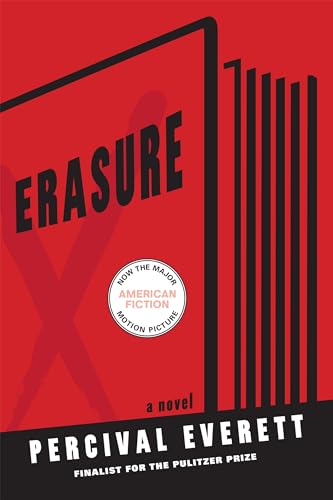
- Erasure — Published in 2001, this satirical novel critiques the commercial publishing industry and systemic racial stereotyping through the story of an intellectual Black author who writes a parody of ghetto fiction that unexpectedly becomes a massive commercial hit. The novel won the Hurston/Wright Legacy Award.
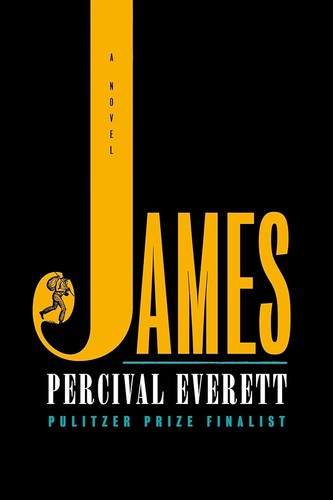
- James — A reimagining of Mark Twain's Adventures of Huckleberry Finn, this novel reframes the classic narrative through the perspective and agency of Jim, combining sharp intelligence, survival strategy, and subversion of racial tropes.
- Wounded — A 2005 novel set in the American West that explores themes of hate crimes, violence, and isolation, earning the PEN USA 2006 Literary Award.
- Zulus — A post-apocalyptic dystopian novel published in 1990 that earned the New American Writing Award.
- Big Picture — A 1996 short story collection that earned the PEN/Oakland-Josephine Miles Award for Excellence in Literature.
- Suder — Everett's debut 1983 comic novel following a third baseman for the Seattle Mariners who embarks on a surreal journey across the Pacific Northwest.
§ About Percival Everett's books
- Books on SansFiction
- 2
- Published
- 2001–2024
- Average rating
- 4.4 / 5 across 466 ratings
- Genres
- Fiction, Action & Adventure, Adventure, Friendship
Start here: James (2024)
#1 NEW YORK TIMES BESTSELLER - NATIONAL BOOK AWARD WINNER - ONE OF THE NEW YORK TIMES BOOK REVIEW'S 10 BEST BOOKS OF THE YEAR - SHORTLISTED FOR THE BOOKER PRIZE - KIRKUS PRIZE WINNER - A brilliant, action-packed reimagining of Adventures of Huckleberry Finn, both harrowing and darkly humorous, told from the enslaved Jim's point of view In development as a…
Common questions about Percival Everett
- Who is Percival Everett?
- Born in Fort Gordon, Georgia, in 1956 and raised in Columbia, South Carolina, Everett earned a bachelor's degree in philosophy from the University of Miami before completing graduate coursework in philosophy at the University of Oregon and earning a Master of Arts in fiction from Brown University in 1982.
- What is Percival Everett best known for?
- Percival Everett is best known for James, published in 2024 with 405 ratings and a 4.4 average. It is the most-rated of Percival Everett's books on SansFiction.
- How many books has Percival Everett written?
- SansFiction lists 2 books by Percival Everett, published between 2001 and 2024. The most popular are James and Erasure.
- Which Percival Everett book should I read first?
- James is the usual place to start: it is Percival Everett's most-rated book here, with a 4.4 average.
- What genres does Percival Everett write?
- Percival Everett's books on SansFiction are tagged Fiction, Action & Adventure, Adventure and Friendship.
Explore: Fiction · Action & Adventure · Adventure · Friendship