
§Author· 7 books
Paul Auster
Also known as Paul Benjamin, Paul Benjamin Auster
Combining elements of mystery, meta-fiction, and existential philosophy, the traditional detective story is radically reimagined to probe identity, coincidence, and human isolation in The New York Trilogy. Paul Benjamin Auster was an American novelist, poet, translator, memoirist, and director whose extensive body of work has been translated into more than forty languages.
Career & Background
Born in Newark, New Jersey, in 1947, Paul Auster earned undergraduate and Master's degrees from Columbia University before moving to Paris, where he supported himself by translating French literature. Returning to the United States in 1974, he developed a versatile literary career spanning fiction, poetry, essays, and film scripts, becoming a central figure in the Brooklyn literary community. Over a career lasting five decades, he wrote more than twenty books and earned significant international recognitions, including the Prince of Asturias Prize for Literature in 2006, the Prix Médicis Étranger for Leviathan, and a shortlist position for the 2017 Man Booker Prize for 4 3 2 1.
Writing Style & Themes
Auster's writing blends absurdism, existentialism, crime fiction, and meta-narrative techniques to examine the search for identity and personal meaning. His novels frequently call attention to the artifice of storytelling, constructing intricate mysteries around chance encounters, unexpected catastrophes, and deep solitude. Rather than resolving traditional procedural plots, his narratives leverage investigative frameworks to explore philosophical questions about memory, destiny, and the human condition.
Major Works
- The New York Trilogy — Published in 1987, this collection of three interconnected novellas deconstructs classic detective tropes to investigate themes of obsession, language, and identity.
- Moon Palace — Published in 1989, this novel follows a young man searching for self-discovery, familial heritage, and survival across mid-twentieth-century New York and the American West.
- The Music of Chance — Published in 1990, this absurdist narrative explores themes of freedom, debt, and fate through two men forced to build a stone wall after losing a high-stakes poker game.
- The Book of Illusions — Published in 2002, this novel probes grief and artistic creation through a grieving professor who immerses himself in the life of a forgotten silent-film actor.
- The Brooklyn Follies — Published in 2005, this narrative offers an affectionate look at human resilience, family ties, and small triumphs set against a Brooklyn neighborhood.
- Oracle Night — A meta-fictional story centering on a writer who purchases a blue notebook that appears to exert a eerie influence on his life and imagination.
- Invisible — A multi-layered novel spanning several decades and international locations that examines youth, obsession, and moral responsibility.
- Timbuktu — A touching story narrated from the perspective of a loyal dog reflecting on his life with his homeless, poet master.
- Mr. Vertigo — An inventive tale set in 1920s America chronicling a young orphan who is trained by an enigmatic master to perform levitation.
§All Books

The New York Trilogy
Paul Auster, 1987
125 ratings

Moon Palace
Paul Auster, 1989
47 ratings
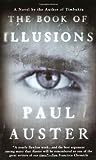
The Book of Illusions
Paul Auster, 2002
41 ratings

Timbuktu
Paul Auster, 1999
29 ratings

Invisible
Paul Auster, 2009
27 ratings

Mr. Vertigo
Paul Auster, 1994
27 ratings

Oracle Night
Paul Auster, 2004
19 ratings
§ About Paul Auster's books
- Books on SansFiction
- 7
- Published
- 1987–2009
- Average rating
- 3.8 / 5 across 315 ratings
- Genres
- Adventure, City And Town Life, Absence And Presumption Of Death, General
Start here: The New York Trilogy (1987)
Common questions about Paul Auster
- Who is Paul Auster?
- Born in Newark, New Jersey, in 1947, Paul Auster earned undergraduate and Master's degrees from Columbia University before moving to Paris, where he supported himself by translating French literature. Returning to the United States in 1974, he developed a versatile literary career spanning fiction, poetry, essays, and film scripts, becoming a central figure in the Brooklyn literary community.
- What is Paul Auster best known for?
- Paul Auster is best known for The New York Trilogy, published in 1987 with 125 ratings and a 3.9 average. It is the most-rated of Paul Auster's books on SansFiction.
- How many books has Paul Auster written?
- SansFiction lists 7 books by Paul Auster, published between 1987 and 2009. The most popular are The New York Trilogy, Moon Palace, The Book of Illusions, Timbuktu and Invisible.
- Which Paul Auster book should I read first?
- The New York Trilogy is the usual place to start: it is Paul Auster's most-rated book here, with a 3.9 average.
- What genres does Paul Auster write?
- Paul Auster's books on SansFiction are tagged Adventure, City And Town Life, Absence And Presumption Of Death and General.
Explore: Adventure · City And Town Life · Absence And Presumption Of Death · General