
§Author· 1 book
P. L. Travers
Also known as Helen Lyndon Goff, Pamela Lyndon Travers, P. T., Milo Reeve, PLT
Stories about extraordinary, stern nannies who arrive on east winds and transform suburban households with quiet enchantment hold a unique place in twentieth-century children's literature. The iconic eight-book series beginning with Mary Poppins introduced readers to an unbending yet magical governess who effortlessly blurs the boundary between everyday domestic routine and mythic wonder. P. L. Travers, born Helen Lyndon Goff in Queensland, Australia, crafted this beloved figure while drawing on deep folklore, theatrical experience, and personal observation.
Career & Background
Born in Maryborough, Queensland, in 1899 to a bank manager and his wife, Travers grew up in Australia before embarking on a career in the arts. As a young woman, she worked briefly as a secretarial assistant, wrote published poetry as a teenager, and toured professionally as a Shakespearean actress under the stage name Pamela Lyndon Travers. In her early twenties, she immigrated to England, settling in London where she worked as a journalist and associate of prominent literary figures while continuing to publish poems and essays.
Adopting the pen name P. L. Travers in 1933, she published the original Mary Poppins novel the following year to immediate international acclaim. Over the subsequent decades, Travers expanded the series into eight books, while also writing essays, mythological studies, and travel literature. Her work earned her an appointment as an Officer of the Order of the British Empire (OBE). Her famous nanny was adapted into a celebrated 1964 film starring Julie Andrews, as well as a popular stage musical that originated in London's West End before running on Broadway.
Writing Style & Themes
Travers distinguished her fantasy writing through a subtle blending of sharp social satire, precise observational humor, and rich mythological allusion. Rather than presenting magic as a sentimental escape, her narratives treat mysterious phenomena as an integral, unexplained aspect of the everyday world. The fraught relationship between children and adults is explored with unsentimental insight, highlighting the contrast between adult literalism and childhood receptivity to wonder.
Major Works
- Mary Poppins — Published in 1934, this foundational novel introduces the enigmatic nanny who arrives at Number Seventeen Cherry Tree Lane to care for the Banks children. Blending practical discipline with fantastical adventures, the book established the core characters and episodic format that inspired the famous 1964 film adaptation and West End stage musical.
- Mary Poppins in Cherry Tree Lane — This later entry in the series revisits the Banks family and their whimsical neighborhood, showcasing Travers's enduring interest in local folklore, astronomy, and the quiet magic embedded in suburban English life.
§All Books
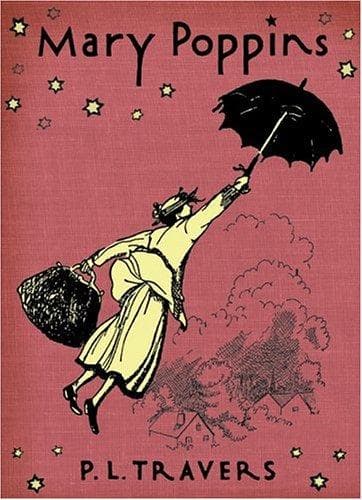
Mary Poppins
P. L. Travers, 1934
118 ratings