
§Author· 1 book
Osamu Dazai
Also known as Shūji Tsushima, Tsushima Shūji, Dazai Osamu, 太宰 治, 津島 修治
Japanese postwar literature reached some of its most honest personal expression in No Longer Human, a modern classic that continues to sell tens of thousands of copies annually and has been translated into more than 60 languages. Written by Shūji Tsushima under the pen name Osamu Dazai, this prominent body of mid-twentieth-century fiction explores themes of alienation, personal isolation, and self-destruction with direct psychological clarity.
Career & Background
Born in 1909 into a powerful landowning family in Kanagi, Aomori Prefecture, Tsushima attended school in Kanagi, middle school in Aomori City, and Hirosaki Higher School before entering the French Department at Tokyo Imperial University in 1930. He left the university without earning a degree after boasting that he had never attended a single lecture during his five years there. His early life was complicated by addiction, financial instability, illness, and recurring suicide attempts. He married Oyama Hatsuyo in 1931 and later married Ishihara Michiko in 1939, with whom he had three children, including the writer Yūko Tsushima.
Adopting the pen name Osamu Dazai, he published his early novel Gyofukuki in 1933 and assembled his early short stories in the 1936 collection Bannen (The Declining Years), expecting posthumous publication following a 1935 suicide attempt. After World War II, Dazai established himself as a leading member of the Burai-ha (Decadent School) literary group, gaining significant attention with short works like 'Villon's Wife' and major postwar novels. On June 13, 1948, Dazai died by drowning in Tokyo's Tamagawa Josui canal in a double suicide with Tomie Yamazaki at age 38, six days before his body was found on his 39th birthday.
Writing Style & Themes
Dazai's literary work is noted for its ironic wit, gloomy humor, brilliant fantasy, and deeply autobiographical perspective. Influenced by Ryūnosuke Akutagawa, Murasaki Shikibu, and Fyodor Dostoevsky, his narratives frequently address emotional isolation, personal debauchery, and social disillusionment. He demonstrated versatility across forms, publishing subtle autobiographical fiction as well as works like Otogi Zoshi (1945), which reinterpreted traditional Japanese tales. His candid portrayal of psychological struggle and alienation continues to attract readers across multiple generations.
Major Works
- Gyofukuki — Published in 1933, this grim fantasy exploring themes of suicide was Dazai's first novel.
- Bannen — Also known as The Declining Years, this 1936 story collection compiled Dazai's inventive early short fiction written during a period of deep personal crisis.
- Otogi Zoshi — Published in 1945, this collection retold traditional Japanese folklore with psychological insight and ironic wit.
- The Setting Sun — This postwar novel details the decline of Japan's aristocracy following World War II and became recognized as a modern classic.
- No Longer Human — Originally titled Ningen Shikkaku, this autobiographical modern classic examines extreme social alienation and personal collapse, remaining one of modern Japanese literature's most widely translated novels.
§All Books
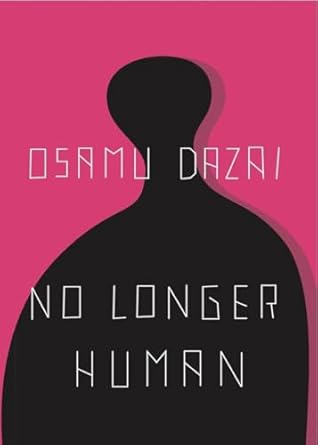
No Longer Human
Osamu Dazai, 1948
633 ratings
§ About Osamu Dazai's books
- Books on SansFiction
- 1
- Published
- 1948
- Average rating
- 3.8 / 5 across 633 ratings
- Genres
- Comics, Historical Fiction, Juvenile Nonfiction, Literature
The book: No Longer Human (1948)
"Oba Yozo's attempts to reconcile himself to the world around him begin in early childhood, continue through high school, where he becomes a "clown" to mask his alienation, and eventually lead to a failed suicide attempt as an adult.
Common questions about Osamu Dazai
- Who is Osamu Dazai?
- Born in 1909 into a powerful landowning family in Kanagi, Aomori Prefecture, Tsushima attended school in Kanagi, middle school in Aomori City, and Hirosaki Higher School before entering the French Department at Tokyo Imperial University in 1930. He left the university without earning a degree after boasting that he had never attended a single lecture during his five years there.
- What is Osamu Dazai best known for?
- Osamu Dazai is best known for No Longer Human, published in 1948 with 633 ratings and a 3.8 average. It is the most-rated of Osamu Dazai's books on SansFiction.
- What genres does Osamu Dazai write?
- Osamu Dazai's books on SansFiction are tagged Comics, Historical Fiction, Juvenile Nonfiction and Literature.
Explore: Comics · Historical Fiction · Juvenile Nonfiction · Literature