
§Author· 2 books
Omar El Akkad
Also known as عمر العقاد, ʿUmar al-ʿAqqād
Speculative fiction and investigative journalism intersect in a body of work that addresses global conflict, displacement, and political crisis, exemplified by the dystopian debut novel American War. Omar El Akkad is an Egyptian-Canadian-American author and journalist whose books have been translated into 13 languages. His debut novel was named by the BBC as one of 100 novels that shaped our world, establishing his standing in contemporary fiction.
Career & Background
Born in Cairo, Egypt, in 1982, El Akkad grew up in Doha, Qatar, before moving to Canada with his family as a teenager. He completed his undergraduate studies at Queen's University at Kingston and went on to work as a staff reporter for The Globe and Mail. The start of his journalism career coincided with the beginning of the war on terror, and over the following decade he reported on major international stories, including the NATO-led war in Afghanistan, military trials at Guantanamo Bay, the Arab Spring revolution in Egypt, and the Black Lives Matter movement in Ferguson, Missouri. For his investigative reporting, he earned a National Newspaper Award and the Edward Goff Penny Memorial Prize for Young Canadian Journalists, alongside three National Magazine Award honorable mentions.
Transitioning from full-time reporting to book-length projects and literary work, El Akkad moved to the United States and settled in Portland, Oregon. His essays and prose have appeared in publications such as The New York Times, The Guardian, Le Monde, Guernica, and GQ. Over the course of his literary career, he has become a two-time winner of both the Pacific Northwest Booksellers Association Award and the Oregon Book Award for fiction.
Writing Style & Themes
Informed by his extensive field reporting on war, migration, and civil unrest, El Akkad writes fiction and nonfiction examining geopolitical power, state-sanctioned violence, and human displacement. His work analyzes how systemic policy decisions impact individual lives, blending documentary observation with narrative storytelling to explore themes of exile, justice, and historical memory.
Major Works
- American War — Published in 2017, this debut novel set in a future United States torn apart by climate disaster and a second civil war was named by the BBC as one of 100 novels that shaped our world. The book received both the Pacific Northwest Booksellers Association Award and the Oregon Book Award for fiction.
- What Strange Paradise — Published in 2021, this novel examines the global refugee crisis through the eyes of a young Syrian child who survives a shipwreck off a Mediterranean island. The book won the 2021 Scotiabank Giller Prize, the Oregon Book Award for fiction, and the Pacific Northwest Booksellers Association Award.
- One Day, Everyone Will Have Always Been Against This — Published in 2025, this nonfiction work addresses political conscience, war, and collective complicity. The book was awarded the 2025 National Book Award for Nonfiction.
§All Books
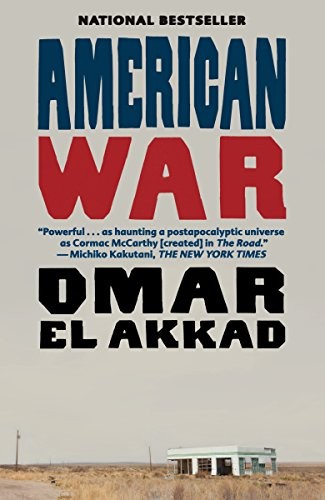
American War
Omar El Akkad, 2017
129 ratings
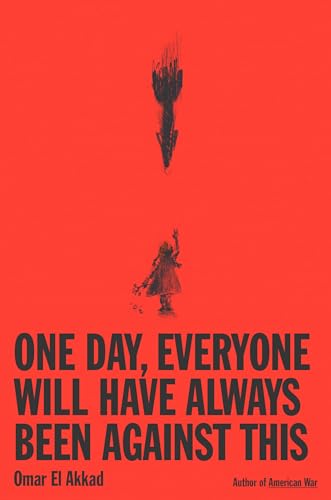
One Day, Everyone Will Have Always Been Against This
Omar El Akkad, 2025
82 ratings
§ About Omar El Akkad's books
- Books on SansFiction
- 2
- Published
- 2017–2025
- Average rating
- 4.2 / 5 across 211 ratings
- Genres
- Adulte, Civil War, Dystopian, Fantasy
Start here: American War (2017)
NATIONAL BESTSELLER • A second American Civil War, a devastating plague, and one family caught deep in the middle—this gripping debut novel asks what might happen if America were to turn its most devastating policies and deadly weapons upon itself. From the author of What Strange Paradise "Powerful ...
Common questions about Omar El Akkad
- Who is Omar El Akkad?
- Born in Cairo, Egypt, in 1982, El Akkad grew up in Doha, Qatar, before moving to Canada with his family as a teenager. He completed his undergraduate studies at Queen's University at Kingston and went on to work as a staff reporter for The Globe and Mail.
- What is Omar El Akkad best known for?
- Omar El Akkad is best known for American War, published in 2017 with 129 ratings and a 3.8 average. It is the most-rated of Omar El Akkad's books on SansFiction.
- How many books has Omar El Akkad written?
- SansFiction lists 2 books by Omar El Akkad, published between 2017 and 2025. The most popular are American War and One Day, Everyone Will Have Always Been Against This.
- Which Omar El Akkad book should I read first?
- American War is the usual place to start: it is Omar El Akkad's most-rated book here, with a 3.8 average.
- What genres does Omar El Akkad write?
- Omar El Akkad's books on SansFiction are tagged Adulte, Civil War, Dystopian and Fantasy.