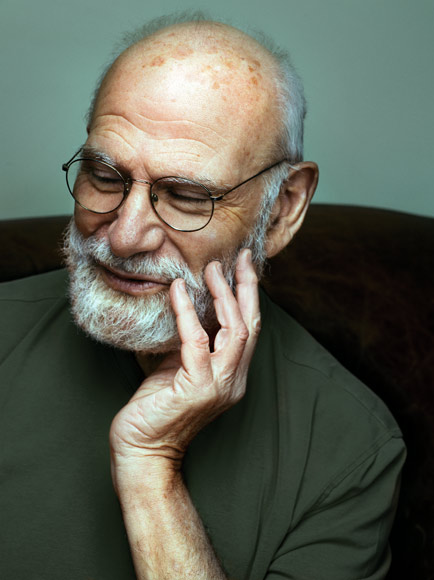
Oliver Sacks
Also known as Oliver Wolf Sacks, Oliver Sacks, M.D.
Clinical case studies of complex neurological conditions offered readers an unprecedented window into the human mind through narrative medical non-fiction. Physician and author Oliver Sacks gained international acclaim by documenting the lived experiences of patients navigating conditions ranging from visual agnosia to Tourette's syndrome, most famously in his landmark collection The Man Who Mistook His Wife for a Hat. Described by The New York Times as 'the poet laureate of medicine,' his writing bridged clinical science and humanistic storytelling.
Career & Background
Born on July 9, 1933, in London, England, Oliver Wolf Sacks was raised in a medical family; his father, Samuel Sacks, was a physician, and his mother, Muriel Elsie Landau, was one of the first female surgeons in England. Sacks earned his medical degrees from Queen's College, Oxford, before immigrating to the United States in 1960. After completing residencies at the University of California, San Francisco, and UCLA, he relocated to New York City, where he served as a practicing clinical neurologist for hospitals and nursing homes while holding academic appointments at institutions such as the Albert Einstein College of Medicine, Columbia University, and the NYU School of Medicine.
Sacks's clinical work with survivors of the early twentieth-century encephalitis lethargica epidemic formed the basis for his major early book Awakenings. The work detailed the dramatic reactions of catatonic patients treated with L-Dopa and inspired the 1990 Academy Award-nominated feature film starring Robert De Niro and Robin Williams. Beyond his standalone books, Sacks was a prolific essayist and frequent contributor to publications such as the New Yorker and the New York Review of Books.
Writing Style & Themes
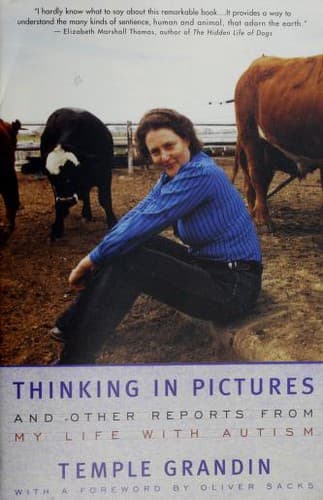
Sacks's literary approach combined rigorous neurological inquiry with deep empathy, presenting detailed case histories that explored how individuals adapted to profound neurological alterations. Rather than focusing solely on illness or pathology, his work examined how the brain adapts and how identity persists through perceptual and cognitive changes. His writing spanned themes of memory, musical perception, vision, and neurodivergence, including his engagement with autism advocacy and literature such as Thinking in Pictures, Expanded Edition: My Life with Autism, for which he wrote the foreword.
Major Works
- The Man Who Mistook His Wife for a Hat — A celebrated collection of neurological case studies exploring extraordinary perceptual disorders, cognitive adaptations, and individual resilience.
- Awakenings — An account of catatonic encephalitis lethargica survivors treated with L-Dopa, which inspired the 1990 Academy Award-nominated film.
- Thinking in Pictures, Expanded Edition: My Life with Autism — Temple Grandin's landmark memoir on autism, featuring an insightful foreword by Sacks that highlights neurodiversity and visual thinking.
- Musicophilia: Tales of Music and the Brain — An exploration of the complex connection between music and the human brain, examining conditions from amusia to musical hallucinations.
- An Anthropologist on Mars — A collection of seven medical case histories examining unique neurological conditions, including profiles of individuals with autism and amnesia.
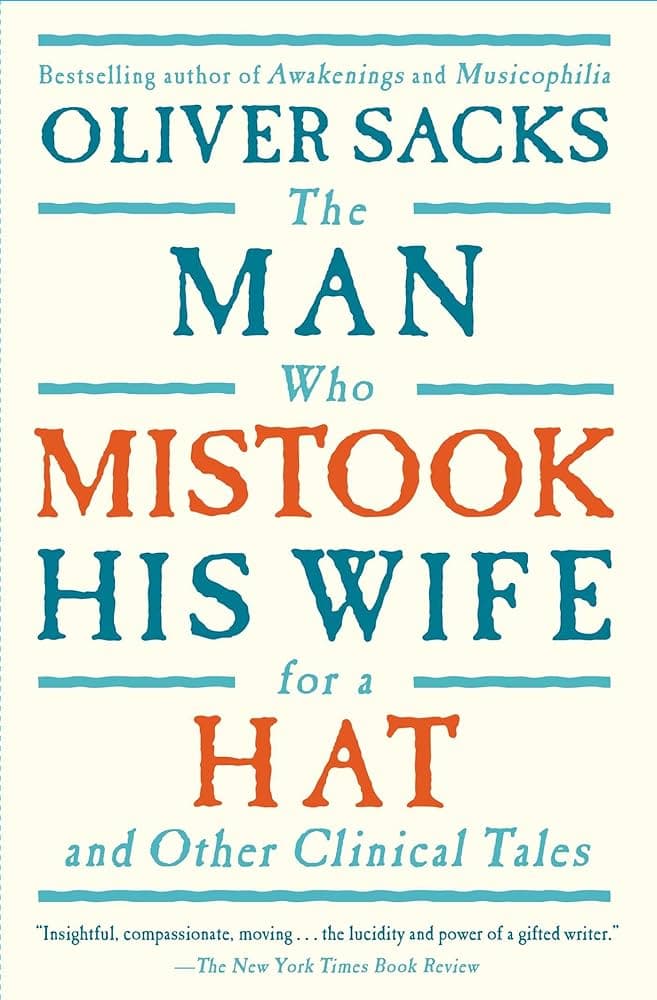
The Man Who Mistook His Wife for a Hat