
§Author· 5 books
Mira Grant
Also known as Seanan McGuire, A. Deborah Baker
Blending post-apocalyptic horror with detailed virology and investigative journalism, speculative fiction exploring post-zombie outbreak societies achieved major critical attention through the Newsflesh series. Mira Grant, the open science fiction pseudonym of California author Seanan McGuire, introduced this narrative universe in 2010 with the novel Feed, establishing a world where online reporters navigate political intrigue, corporate conspiracies, and viral threats in the wake of an epidemic.
Grant's fiction grounds apocalyptic concepts in realistic biological science, medical pathology, and media dynamics. Her speculative works have earned widespread recognition in science fiction and horror, including Hugo Award nominations for her full-length novels and shorter fiction.
Career & Background
Grant was born and raised in Northern California, where she developed an early interest in horror cinema, viral pathology, and zombie lore. During her college years, she was voted Most Likely to Summon Something Horrible in the Cornfield and co-founded the Horror Movie Sleep-Away Survival Camp, where her time record in the 'Swamp Cannibals' scenario remains unchallenged. Writing under her real name, Seanan McGuire, she became the recipient of the 2010 John W. Campbell Award for Best New Writer. She currently lives in a crumbling farmhouse in Northern California with an assortment of cats, comic books, horror movies, and books on infectious diseases. When not writing, she audits college virology courses, travels, and watches horror films, frequently visiting favorite destinations including Seattle, London, and a haunted corn maze near Huntsville, Alabama.
Writing Style & Themes
Grant's horror and speculative fiction is characterized by a strong grounding in plausible scientific mechanisms, virology, biological modification, and corporate ethics. Rather than relying on purely supernatural elements, her stories examine how human political systems, media networks, and medical institutions respond to sudden biological catastrophes. Recurring themes across her work include the unintended consequences of medical engineering, government secrecy, forced quarantine conditions, and the resilience of truth-seeking journalists during crises.
Major Works
- Feed — Published in 2010 as the opening novel of the Newsflesh series, this story follows news bloggers Georgia and Shaun Mason as they cover a presidential campaign while uncovering viral conspiracies twenty years after a zombie apocalypse. It was named one of Publishers Weekly's Best Books of 2010 and received a Hugo Award nomination.
- Deadline — The second installment in the Newsflesh series, following Shaun Mason as he investigates government cover-ups, viral mutations, and scientific malpractice in the aftermath of severe personal loss.
- Blackout — The concluding novel of the core Newsflesh trilogy, bringing together the storylines of media cover-ups, rogue virology, and systemic conspiracy during a ongoing biological threat.
- Parasite — The Hugo Award-nominated opening novel of the Parasitology series, examining a future where a genetically engineered intestinal parasite designed to boost human health begins taking over its human hosts.
- In the Shadow of Spindrift House — A novella that showcases Grant's handling of atmospheric horror, blending cosmic dread with biological tension in an isolated coastal setting.
§All Books

Feed
Mira Grant, 2010
185 ratings

Deadline
Mira Grant, 2011
93 ratings
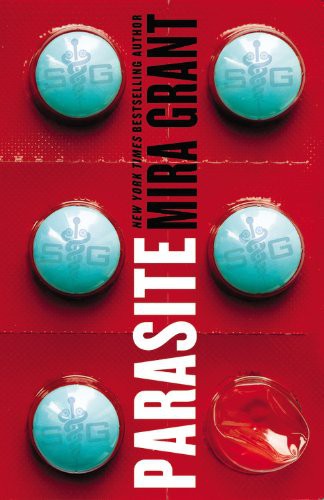
Parasite
Mira Grant, 2013
90 ratings

Blackout
Mira Grant, 2012
86 ratings

In the Shadow of Spindrift House
Mira Grant, 2019
13 ratings
§ About Mira Grant's books
- Books on SansFiction
- 5
- Published
- 2010–2019
- Average rating
- 3.9 / 5 across 467 ratings
- Genres
- Science Fiction, Young Adult, Dystopian, Fantasy
- Series
- Newsflesh
Start here: Feed (2010)
BOOK 1 IN THE NEW YORK TIMES BESTSELLING SERIES 'Gripping, thrilling and brutal . . . a masterpiece of suspense' Publishers Weekly 'The zombie novel Robert A. Heinlein might have written' Sci-Fi Magazine The year was 2014. We had cured cancer. We had beaten the common cold. But in doing so we created something new, something terrible that no one could stop.
Common questions about Mira Grant
- Who is Mira Grant?
- Grant was born and raised in Northern California, where she developed an early interest in horror cinema, viral pathology, and zombie lore. During her college years, she was voted Most Likely to Summon Something Horrible in the Cornfield and co-founded the Horror Movie Sleep-Away Survival Camp, where her time record in the 'Swamp Cannibals' scenario remains unchallenged.
- What is Mira Grant best known for?
- Mira Grant is best known for Feed, published in 2010 with 185 ratings and a 3.9 average. It is the most-rated of Mira Grant's books on SansFiction.
- How many books has Mira Grant written?
- SansFiction lists 5 books by Mira Grant, published between 2010 and 2019. The most popular are Feed, Deadline, Parasite, Blackout and In the Shadow of Spindrift House.
- What order should I read Mira Grant's Newsflesh books in?
- Read the Newsflesh books in series order: 1. Feed, 2. Deadline, 3. Blackout.
- What genres does Mira Grant write?
- Mira Grant's books on SansFiction are tagged Science Fiction, Young Adult, Dystopian and Fantasy.
Explore: Science Fiction · Young Adult · Dystopian · Fantasy