
§Author· 1 book
Michael Ondaatje
Also known as Philip Michael Ondaatje
Explorations of history, memory, and complex personal narratives define a rich multi-genre body of work spanning poetry, fiction, memoir, and film studies. Philip Michael Ondaatje established an international readership through his distinctive blending of historical detail and lyrical prose, most notably in his 1992 novel The English Patient, which won the Booker Prize and was later awarded the Golden Man Booker Prize.
Career & Background
Born on September 12, 1943, in Colombo, Ceylon (now Sri Lanka), Ondaatje moved to England in 1954 to attend Dulwich College before immigrating to Canada in 1962. He completed his undergraduate studies at the University of Toronto in 1965 and earned a master's degree from Queen's University in 1967. His literary career began in poetry with the publication of The Dainty Monsters in 1967, followed by The Collected Works of Billy the Kid in 1970 and There's a Trick with a Knife I'm Learning to Do in 1979, both of which earned Governor General's Awards.
Ondaatje expanded his focus into fiction and memoir, publishing works such as Coming Through Slaughter and the fictionalized memoir Running in the Family in 1982. His 1992 novel The English Patient achieved widespread acclaim and was adapted into an Academy Award-winning feature film in 1996. He continued publishing widely read fiction including Anil's Ghost, which won the Giller Prize, the Irish Times International Fiction Prize, and the Prix Médicis, as well as The Cat's Table and Warlight. Over his career, he has been named a Companion of the Order of Canada and has received five Governor General's Awards.
Writing Style & Themes
Ondaatje's writing style is recognized for integrating jazz rhythms, cinematic montage techniques, and poetic structures directly into narrative prose. His works often reexamine historical events or real figures through unconventional frameworks, exploring themes of multicultural identity, dislocation, and marginalized lives. By blending myth, personal memory, and archival research, his work consistently crosses traditional genre boundaries.
Major Works
- The English Patient — Published in 1992, this novel set during World War II received the Booker Prize, won the Golden Man Booker Prize, and was adapted into an Academy Award-winning film in 1996.
- The Collected Works of Billy the Kid — A 1970 hybrid volume combining poetry and prose to re-examine historical figures through non-traditional storytelling structures, earning the Governor General's Award.
- Running in the Family — A 1982 fictionalized memoir recording the author's return journey to Sri Lanka to explore his ancestry, family stories, and childhood origins.
- Anil's Ghost — A novel centering on an investigation into political violence and human rights in Sri Lanka, awarded the Giller Prize, the Irish Times International Fiction Prize, and the Prix Médicis.
§All Books
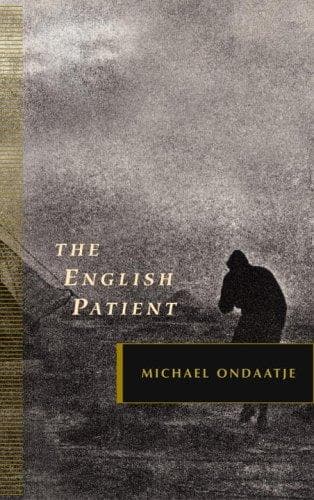
The English Patient
Michael Ondaatje, 1992
113 ratings