Michael Cunningham
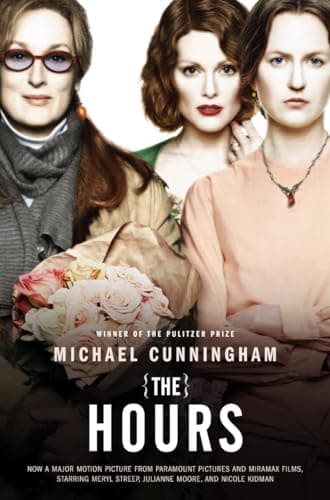
Exploring the intricate interiorities of daily life and the subtle resonance of human connection, multi-layered literary fiction often turns to narrative structures that recontextualize historic literary masterworks. Novelist and screenwriter Michael Cunningham gained widespread international renown with his Pulitzer Prize-winning novel The Hours, which weaves together three distinct eras of women linked by Virginia Woolf's Mrs. Dalloway. By capturing fleeting states of consciousness and private emotional truths, his writings establish deep parallels between personal memory, art, and human vulnerability.
Beyond his signature reimagining of classical narrative frames, Cunningham's expansive bibliography includes family sagas, short story collections, screenplays, and non-fiction. His works frequently examine intimacy, sexuality, and domestic history, offering readers profound meditations on how individuals construct meaningful lives within shifting cultural landscapes.
Career & Background
Born in Cincinnati, Ohio in 1952, Michael Cunningham spent his formative years growing up in La Cañada, California. He pursued higher education at Stanford University, earning a B.A. in English Literature in 1975, before continuing his studies at the University of Iowa, where he earned an M.F.A. in 1980 and received a Michener Fellowship in 1982. Early recognition followed through a National Endowment for the Arts Fellowship in 1988 and the publication of his short story 'White Angel', which was selected for Best American Short Stories 1989. His debut major novel, A Home at the End of the World, was published in 1990 to widespread acclaim, establishing his voice in contemporary fiction.
Throughout the 1990s and 2000s, Cunningham received major literary honors while continually expanding his body of work. He earned a Guggenheim Fellowship in 1993, followed by a Whiting Writers Award and the publication of his epic family saga Flesh and Blood in 1995. His landmark novel The Hours was awarded the 1999 Pulitzer Prize for Fiction and the PEN/Faulkner Award. His short fiction gained further prominent recognition when 'Mister Brother' appeared in the 2000 O. Henry Collection. Over the following decades, he published the novels Specimen Days, By Nightfall (optioned for film), The Snow Queen, and Day, which was named a New York Times Book Review Editor's Choice and a Best Book of the Year by NPR, Harper's Bazaar, Chicago Public Library, Lit Hub, Paste, and Kirkus Reviews.
In addition to his novels, Cunningham has contributed prose to leading periodicals including The New Yorker, The Atlantic Monthly, and The Paris Review. His literary output extends to non-fiction with Land's End: A Walk Through Provincetown, as well as A Wild Swan and Other Tales, a fairytale collection illustrated by Yuko Shimizu released by FSG in 2015. Cunningham has also worked extensively in cinema, co-writing the screenplay for the film Evening starring Vanessa Redgrave, Claire Danes, Toni Collette, Patrick Wilson, and Meryl Streep. Screen adaptations of his own fiction include A Home at the End of the World directed by Michael Mayer starring Colin Farrell and Robin Wright Penn, as well as Stephen Daldry's film adaptation of The Hours starring Julianne Moore, Nicole Kidman, and Meryl Streep, which received nine Academy Award nominations. In November 2022, an opera adaptation of The Hours starring Renée Fleming, Kelli O'Hara, and Joyce DiDonato debuted at the Metropolitan Opera. Cunningham currently serves as a senior lecturer and Professor in the Practice of Creative Writing at Yale University.
Writing Style & Themes
Cunningham's literary style is marked by a meticulous attention to telling detail, emotional authenticity, and the fluid rendering of internal monologue. He credits Virginia Woolf's Mrs. Dalloway with inspiring him to entertain 'the wild hope' of becoming a writer, an influence reflected in his ability to capture fleeting thoughts, states of consciousness, and quiet domestic epiphanies. His prose balances lyrical sensitivity with sharp observational clarity, tracing how small moments accumulate into profound life transformations.
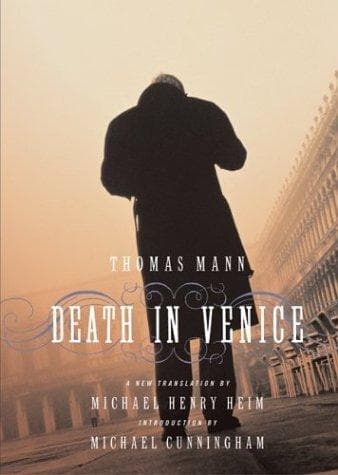
Central themes across Cunningham's works include the evolution of non-traditional families, the complexities of romantic and platonic devotion, artistic inspiration, and the enduring presence of mortality. His narrative structures frequently incorporate multi-generational perspectives or tripartite designs, creating dialogues across time and canonical literature. Readers exploring thematic representations of passion, art, and mortality will discover rich connections between Cunningham's catalog and enduring modern classics like Thomas Mann's Death in Venice, as both authors interrogate aesthetic beauty and personal desire within evolving societal backdrops.
Major Works
- The Hours — A Pulitzer Prize and PEN/Faulkner Award-winning novel that interweaves three generations of women impacted by Virginia Woolf's Mrs. Dalloway, adapted into an acclaimed feature film and a 2022 Metropolitan Opera production.
- Death in Venice — Thomas Mann's canonical novella exploring aesthetic obsession and mortality, frequently studied alongside The Hours in analyses of modernist literary influence and artistic devotion.
- A Home at the End of the World — A 1990 novel charting the evolving bond between two childhood friends and the unconventional family structure they form in New York, adapted into a 2004 feature film.
- Flesh and Blood — A sweeping multi-generational saga published in 1995 that traces the complex internal lives, secrets, and transformations of a modern American family across several decades.
- Specimen Days — A tripartite novel spanning three distinct historical centuries and genres, loosely connected by the poetry of Walt Whitman and recurring character dynamics.
- By Nightfall — A focused novel investigating art dealing, midlife domesticity, and romantic longing in contemporary Manhattan, optioned for cinematic adaptation.
- The Snow Queen — A contemplative novel centered on two brothers navigating artistic passion, love, illness, and spiritual transcendence following a subtle revelation in Central Park.
- A Wild Swan and Other Tales — A 2015 short fiction collection illustrated by Yuko Shimizu that darkly reimagines classic European fairytales and mythic tropes for contemporary readers.
- Day — An intimate novel structured across April 5th over three consecutive years, observing a family navigating love, domestic confinement, and quiet transformation.
- Land's End: A Walk Through Provincetown — A non-fiction book offering a vivid personal reflection and historical exploration of Provincetown, Massachusetts.
The Hours