
§Author· 2 books
Max Brooks
Also known as Maximilian Michael Brooks, Maximillian Michael Brooks
Fictional survival manuals and mock-documentary disaster chronicles brought unprecedented geopolitical realism and logistical detail to horror fiction, exemplified by the influential zombie narrative World War Z: An Oral History of the Zombie War. Max Brooks built a unique literary focus around apocalyptic contingency planning, using speculative survival scenarios to examine human organization, government response, and crisis decision-making.
By framing catastrophic encounters through historical, military, and institutional lenses, his books explore how individuals and societies react under extreme pressure. His fiction stretches from military field analyses of undead outbreaks to creature encounters in the Pacific Northwest, as seen in Devolution: A Firsthand Account of the Rainier Sasquatch Massacre.
Career & Background
Maximilian Michael Brooks was born on May 22, 1972, in Manhattan, New York City, to actors Mel Brooks and Anne Bancroft. Growing up with dyslexia, he faced early reading challenges before pursuing higher education at Pitzer College, where he earned a Bachelor of Arts degree, and later attending American University. In 2003, he married Michelle Kholos, with whom he has one child. His upbringing in a creative environment, combined with his personal efforts to overcome reading difficulties and manage personal anxieties, shaped his approach to writing fictional manuals and speculative narratives.
Brooks established his publishing presence with The Zombie Survival Guide and its companion graphic novel The Zombie Survival Guide: Recorded Attacks, followed by his best-selling novel World War Z: An Oral History of the Zombie War. His writing career also encompasses young adult fiction such as Minecraft: The Island. Outside of novel writing, his work on strategic preparation led to a position as a senior fellow at the Modern War Institute at West Point, New York, where he has lectured military personnel on the importance of creative thinking and mental flexibility in modern battlefield leadership.
Writing Style & Themes
A central element of Brooks's writing is the use of non-traditional narrative structures, such as oral histories, survival manuals, and recovered journals. In World War Z: An Oral History of the Zombie War, he constructs a global perspective through individual interviews, while Devolution: A Firsthand Account of the Rainier Sasquatch Massacre utilizes journal entries and primary reports to detail an isolated community's struggle against wild predators following a volcanic eruption. These realistic, document-style formats ground surreal premises in authentic technical and social detail.
Themes of preparedness, institutional vulnerability, and crisis management run throughout his body of work. Brooks uses fictional catastrophes as a sandbox to explore logistics, strategic planning, and human anxiety in the face of doomsday scenarios. By depicting how bureaucracy, resource scarcity, and psychological stress impact survival, his stories encourage readers and military strategists alike to cultivate adaptable problem-solving skills and mental agility.
Major Works
- World War Z: An Oral History of the Zombie War — A fictional oral history documenting a global apocalyptic disaster from the perspectives of international survivors, military leaders, and government officials.
- Devolution: A Firsthand Account of the Rainier Sasquatch Massacre — A horror novel presented through recovered journal entries detailing an isolated high-tech community's battle for survival against Sasquatch after Mount Rainier erupts.
- The Zombie Survival Guide — A comprehensive satire and survival manual outlining tactical advice, weapons, and defense strategies for surviving undead outbreaks.
- Minecraft: The Island — An official Minecraft novel following a stranded protagonist learning survival skills, adaptability, and self-reliance in an unfamiliar world.
§All Books
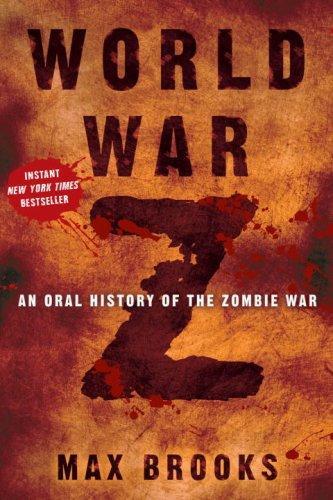
World War Z: An Oral History of the Zombie War
Max Brooks, 2006
1,295 ratings

Devolution: A Firsthand Account of the Rainier Sasquatch Massacre
Max Brooks, 2020
184 ratings
§ About Max Brooks's books
- Books on SansFiction
- 2
- Published
- 2006–2020
- Average rating
- 3.9 / 5 across 1,479 ratings
- Genres
- Adventure, Dystopian, Horror, Fiction
Start here: World War Z: An Oral History of the Zombie War (2006)
We have (temporarily?) defeated the living dead, but at what cost? Told in the haunting and riveting voices of the men and women who witnessed the horror firsthand, World War Z is the only record of the pandemic. The Zombie War came unthinkably close to eradicating humanity.
Common questions about Max Brooks
- Who is Max Brooks?
- Maximilian Michael Brooks was born on May 22, 1972, in Manhattan, New York City, to actors Mel Brooks and Anne Bancroft. Growing up with dyslexia, he faced early reading challenges before pursuing higher education at Pitzer College, where he earned a Bachelor of Arts degree, and later attending American University. In 2003, he married Michelle Kholos, with whom he has one child.
- What is Max Brooks best known for?
- Max Brooks is best known for World War Z: An Oral History of the Zombie War, published in 2006 with 1,295 ratings and a 3.9 average. It is the most-rated of Max Brooks's books on SansFiction.
- How many books has Max Brooks written?
- SansFiction lists 2 books by Max Brooks, published between 2006 and 2020. The most popular are World War Z: An Oral History of the Zombie War and Devolution: A Firsthand Account of the Rainier Sasquatch Massacre.
- Which Max Brooks book should I read first?
- World War Z: An Oral History of the Zombie War is the usual place to start: it is Max Brooks's most-rated book here, with a 3.9 average.
- What genres does Max Brooks write?
- Max Brooks's books on SansFiction are tagged Adventure, Dystopian, Horror and Fiction.