
§Author· 2 books
Mary Roach
Also known as Mary C. Roach
Popular science writing often bypasses the unusual, tactile, and unconventional corners of biological research, but detailed investigative reporting into human anatomy and physical phenomena brings these forgotten subjects into sharp focus. Stiff: The Curious Lives of Human Cadavers demonstrated how rigorous science journalism could blend meticulous research with accessible, humorous prose to explain complex medical and scientific topics. Mary Roach built a wide readership by exploring taboo, overlooked, or seemingly bizarre topics ranging from postmortem scientific contributions to space medicine, digestive anatomy, and wildlife law enforcement.
Career & Background
Born in Hanover, New Hampshire, on March 20, 1959, Roach graduated with a degree in psychology from Wesleyan University before relocating to San Francisco. Her professional writing career began in 1986 when she sold a humor piece regarding the IRS to the San Francisco Chronicle. This publication opened doors to freelance feature writing and first-person humor essays for major periodicals, including National Geographic, Wired, Vogue, GQ, The New York Times Magazine, and the Journal of Clinical Anatomy. She also authored a monthly humor column, "My Planet," for Reader's Digest. Although she writes primarily about science, she initially had no intention of turning it into her career; in an interview, she noted that science assignments consistently yielded the most intriguing stories. Between 1996 and 2005, she worked as part of the San Francisco writing community known as the Grotto, which provided the encouragement needed to transition into book-length non-fiction. Her engaging commentary has also made her a frequent guest on television and radio programs, including Coast to Coast AM, The Daily Show, and The Colbert Report.
Writing Style & Themes
Roach's approach to science writing is defined by firsthand reporting, deep archival research, and an irreverent, curiosity-driven humor that demystifies offbeat and taboo scientific topics. Rather than focusing on abstract theoretical frameworks, her work explores human physiology, bodily functions, and the practical challenges faced by researchers and technicians. Her narrative style relies heavily on immersion—visiting specialized laboratories, interviewing field experts, and investigating unconventional scientific questions with persistent enthusiasm. Across her titles, which have been translated into 21 languages, she translates complex medical, anatomical, and physical concepts into clear, engaging prose while highlighting the human element behind scientific discovery.
Major Works
- Stiff: The Curious Lives of Human Cadavers — Published in 2003, this breakout bestseller explores the history and scientific utility of human corpses in medical research, forensic investigations, and safety testing.
- Spook: Science Tackles the Afterlife — Released in 2005 and named a New York Times Notable Book, this volume investigates scientific attempts to evaluate claims of consciousness beyond death.
- Bonk: The Curious Coupling of Science and Sex — Published in 2008, this book examines the history of scientific research into human sexual physiology and behavior.
- Packing for Mars: The Curious Science of Life in the Void — Released in 2010, this work investigates the physiological and psychological challenges of space travel and zero-gravity human existence.
- Gulp: Adventures on the Alimentary Canal — Published in 2013, this book takes readers on a journey through the human digestive system from mouth to rectum.
- Grunt: The Curious Science of Humans at War — Published in 2016, this book explores military science, focusing on how researchers address physical challenges faced by soldiers, such as extreme heat, noise, and disease.
- Fuzz: When Nature Breaks the Law — Published in 2021, this bestseller investigates the unpredictable intersection between human laws, wildlife management, and animal behavior.
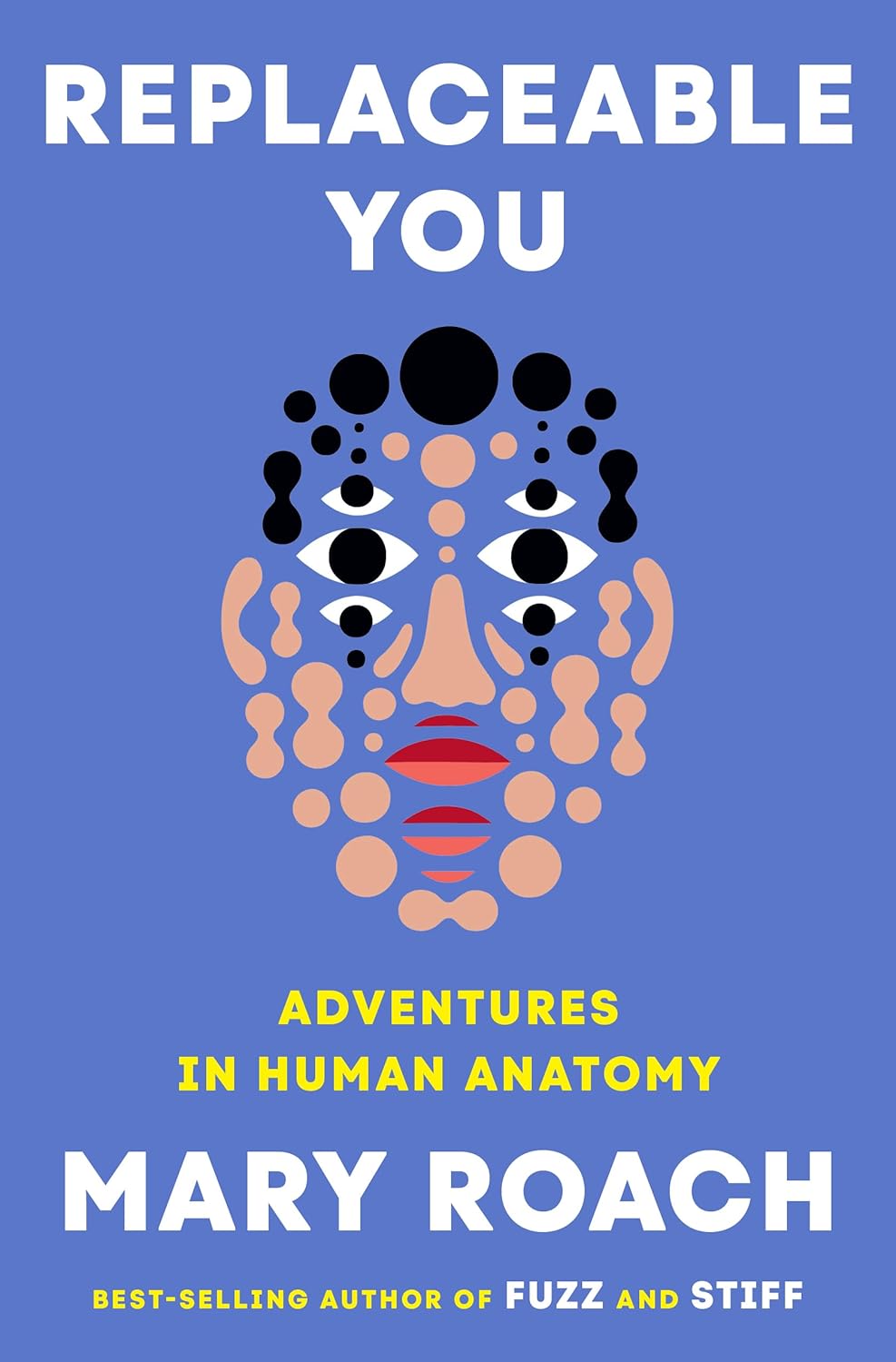
- Replaceable You: Adventures in Human Anatomy — Debuting in September 2025, this work examines the medical history, technology, and science behind re-creating and replacing parts of human anatomy.
§All Books

Stiff: The Curious Lives of Human Cadavers
Mary Roach, 2003
367 ratings
Replaceable You: Adventures in Human Anatomy
Mary Roach, 2025
§ About Mary Roach's books
- Books on SansFiction
- 2
- Published
- 2003–2025
- Average rating
- 3.9 / 5 across 367 ratings
- Genres
- History, Nonfiction, Science, Social Science
Start here: Stiff: The Curious Lives of Human Cadavers (2003)
Stiff is an oddly compelling, often hilarious exploration of the strange lives of our bodies postmortem. For two thousand years, cadavers―some willingly, some unwittingly―have been involved in science's boldest strides and weirdest undertakings.
Common questions about Mary Roach
- Who is Mary Roach?
- Born in Hanover, New Hampshire, on March 20, 1959, Roach graduated with a degree in psychology from Wesleyan University before relocating to San Francisco. Her professional writing career began in 1986 when she sold a humor piece regarding the IRS to the San Francisco Chronicle.
- What is Mary Roach best known for?
- Mary Roach is best known for Stiff: The Curious Lives of Human Cadavers, published in 2003 with 367 ratings and a 3.9 average. It is the most-rated of Mary Roach's books on SansFiction.
- How many books has Mary Roach written?
- SansFiction lists 2 books by Mary Roach, published between 2003 and 2025. The most popular are Stiff: The Curious Lives of Human Cadavers and Replaceable You: Adventures in Human Anatomy.
- Which Mary Roach book should I read first?
- Stiff: The Curious Lives of Human Cadavers is the usual place to start: it is Mary Roach's most-rated book here, with a 3.9 average.
- What genres does Mary Roach write?
- Mary Roach's books on SansFiction are tagged History, Nonfiction, Science and Social Science.
Explore: History · Nonfiction · Science · Social Science