Mary Doria Russell
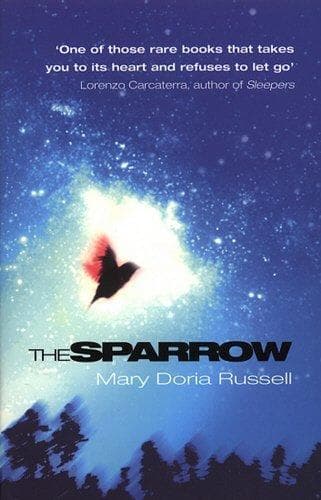
Exploration of philosophical and theological dilemmas through high-concept fiction gained widespread recognition following the 1996 publication of The Sparrow, a novel detailing a Jesuit mission to establish first contact with an alien civilization on the planet Rakhat. Author Mary Doria Russell entered the literary landscape after an academic career in anthropology, bringing deep research and cultural nuance to speculative storytelling. Her debut novel earned major international awards, including the Arthur C. Clarke Award, the BSFA Award, the John W. Campbell Award, and the James Tiptree, Jr. Award.
Career & Background
Born on August 19, 1950, in Elmhurst, Illinois, Russell grew up in suburban Chicago. Her mother worked as a Navy nurse and her father served as a Marine Corps drill sergeant and law enforcement officer. She pursued extensive academic studies in anthropology, receiving a Bachelor of Arts in cultural anthropology from the University of Illinois at Urbana-Champaign in 1972, a Master of Arts in social anthropology from Northeastern University in 1976, and a Ph.D. in biological anthropology from the University of Michigan, Ann Arbor, in 1983. Specializing in skeletal biology and paleoanthropology, she conducted scientific research and taught at Case Western Reserve University's School of Dentistry before transitioning to full-time fiction writing.
Writing Style & Themes
Russell's writing is distinguished by detailed historical and scientific research, complex character motivation, and inquiries into faith, ethics, and intercultural conflict. Following her speculative space-exploration duology—comprising The Sparrow and its 1998 sequel Children of God—she expanded into historical fiction across diverse eras. Her subsequent novels explored World War II resistance movements in Italy, political negotiations during the 1921 Cairo Peace Conference, re-evaluations of famous figures from the American West, and early twentieth-century labor activism in Midwestern mining communities.
Major Works
- The Sparrow — Published in 1996, this debut speculative novel follows a Jesuit expedition sent to investigate a radio signal from the planet Rakhat, examining the unforeseen consequences of first contact alongside questions of faith and human suffering.
- Children of God — Released in 1998 as the sequel to The Sparrow, this novel continues the story of survivor Emilio Sandoz, addressing the aftermath of the original mission and the ongoing tragic misunderstandings between human and alien cultures.
- A Thread of Grace — Published in 2005, this World War II historical novel focuses on Italian partisans and Jewish refugees seeking safety in Italy during the final years of the war.
- Dreamers of the Day — This 2008 historical novel centers on an American woman attending the 1921 Cairo Peace Conference, intersecting with historical figures such as Winston Churchill and T.E. Lawrence.
- Doc — Published in 2011, this biographical historical novel re-examines the early life, medical practice, and friendships of John Henry Holliday prior to the events at the O.K. Corral.
- Epitaph — Released in 2015, this historical Western re-imagines the iconic Gunfight at the O.K. Corral and its complex political aftermath, winning the Ohioana Fiction Award and True West awards.
- The Women of the Copper Country — Published in 2019, this historical novel dramatizes the 1913 Michigan copper strike through the story of labor organizer Annie Clemenc.