
§Author· 1 book
Marina Dyachenko
Also known as Maryna Yuryivna Dyachenko, Maryna Yuryivna Shyrshova, Marina Dyachenko-Shirshova, Maryna Dyachenko
Speculative fiction exploring metaphysical transformation, moral dilemma, and language-based magic reached international audiences through dark academia and psychological fantasy literature co-authored across several decades. Writing primarily in Russian alongside her late husband Sergey Dyachenko, Marina Dyachenko created complex fantasy worlds that earned widespread recognition, highlighted in English translation by the novel Vita Nostra.
Career & Background
Born in Kyiv, Ukraine, on January 23, 1968, Marina Dyachenko worked as an actress before forming a literary partnership with her husband, former psychiatrist Sergey Dyachenko. The duo published their debut novel, The Gate-Keeper (Privratnik), in 1994, which earned the Crystal Table Award and was named best debut at Eurocon 1996. Based in Ukraine and later Russia, they produced dozens of speculative novels, plays, screenplays, and short story collections. Their early catalog included the novel Ritual, as well as Skrut, Witch's Age (Ved'min Vek), The Cave (Peshera), Execution (Kazn'), and the Wanderers (Skital'tsy) trilogy comprising The Gate-Keeper, The Scar (Shram), and The Successor (Preyemnik).
The co-authors received the Aelita Prize in 2001 and were named the best science fiction writers in Europe at the 2005 Eurocon in Glasgow. In 2013, Dyachenko and her husband relocated to California. Following Sergey's death in May 2022, Dyachenko continued to see their joint catalog published internationally, including translated releases such as School of Shards, translated into English by Julia Meitov Hersey.
Writing Style & Themes
Works by the Dyachenkos combine rigorous dark academia structures, psychological tension, and speculative rules that test character ethics under extreme pressure. Drawing on theatre and psychiatric perspectives, their narratives often feature rigorous training environments where students or protagonists—such as Sasha Samokh in Vita Nostra—must navigate surreal authority figures, physical metamorphosis, and power over reality itself.
Major Works
- Vita Nostra — A dark academia novel centered on Sasha Samokh, who is forced to attend a mysterious institute where human beings are transformed into constructs of higher language.
- The Gate-Keeper — The 1994 debut novel that launched the Wanderers trilogy, winning the Crystal Table Award and Eurocon recognition.
- School of Shards — The final volume in the Vita Nostra trilogy, translated into English by Julia Meitov Hersey, bringing Sasha's journey of control and transformation to a climax.
- Witch's Age — A modern fantasy novel dealing with magical regulation and societal control.
- The Cave — A psychological speculative novel examining human nature and social structures under unearthly conditions.
§All Books
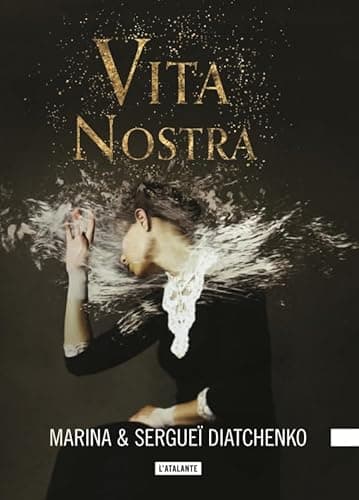
Vita Nostra
Marina Dyachenko, 2007
151 ratings