
§Author· 2 books
Malala Yousafzai
Personal memoirs and non-fiction accounts documenting life under extremist rule and advocating for human rights provide vital eyewitness perspectives on global education struggles, most prominently exemplified by I Am Malala. Malala Yousafzai first brought international attention to the suppression of female education in Pakistan through first-person record-keeping before expanding her narrative scope to amplify refugee voices worldwide in We Are Displaced. Her writing combines intimate autobiographical detail with direct advocacy, documenting both personal survival and systemic injustice faced by young women seeking an education.
Career & Background
Born in Mingora in the Swat Valley of Pakistan, Yousafzai grew up amidst changing regional political conditions. When the Taliban movement took control of the valley in 2008, girls' schools were systematically burned down and female education was banned. Encouraged by her father Ziauddin's activism, she began writing an anonymous diary in 2009 for BBC Urdu, using her entries to speak out against the Taliban's terrorist regime. Her public writing and speaking drew international attention and threats against her life. In 2012, Yousafzai was shot in the head on a school bus by a Taliban gunman. After surviving the attack, she was forced to move to England and live in exile. In 2013, TIME magazine named her one of "The 100 Most Influential People in the World," and on her 16th birthday she addressed the United Nations to call for universal education rights, becoming an international symbol for the cause. In 2014, she was awarded the Nobel Peace Prize for her fight for the right of every child to receive an education, becoming the youngest Nobel laureate in history.
Writing Style & Themes
Yousafzai's non-fiction work is characterized by straightforward prose, deeply personal reflections, and testimony-driven narratives. Across her memoirs and collaborative storytelling, recurring themes include educational equity, gender equality, exile, resilience, and the human cost of religious extremism and forced migration. In I Am Malala, she integrates historical context regarding Pashtun culture and Pakistani history alongside her lived experiences under siege. In We Are Displaced, her narrative approach expands to oral history, weaving her own experiences of displacement together with first-person accounts of young refugee women from around the world. Her accessible style renders complex geopolitical conflicts understandable while emphasizing the dignity and agency of young women.
Major Works
- I Am Malala — First published in 2013, this memoir co-authored with Christina Lamb chronicles Yousafzai's childhood in Pakistan's Swat Valley, her anonymous BBC blogging following the Taliban's 2008 ban on girls' education, the 2012 assassination attempt, and her global campaign for education rights.
- We Are Displaced — Published in 2019, this book pairs Yousafzai's account of leaving her home in Pakistan with first-person stories gathered from young refugee women globally, highlighting the human experience behind international displacement.
§All Books
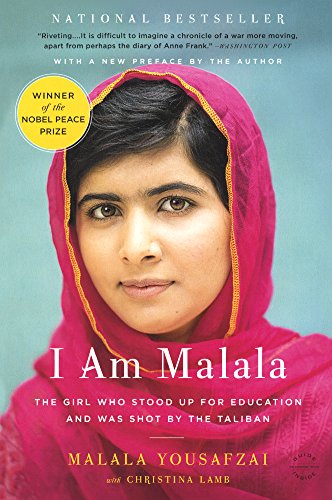
I Am Malala
Malala Yousafzai, 2012
272 ratings
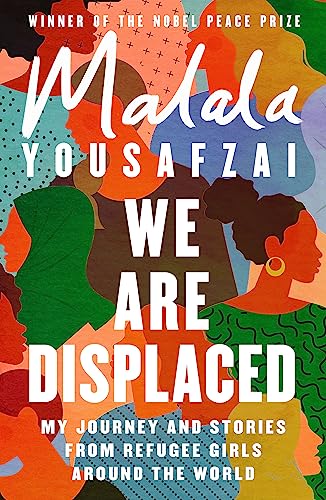
We Are Displaced
Malala Yousafzai, 2016
8 ratings
§ About Malala Yousafzai's books
- Books on SansFiction
- 2
- Published
- 2012–2016
- Average rating
- 4.2 / 5 across 280 ratings
- Genres
- Young Adult, 2001-, Afghan War, History
Start here: I Am Malala (2012)
When the Taliban took control of the Swat Valley in Pakistan, one girl spoke out. Malala Yousafzai refused to be silenced and fought for her right to an education. On Tuesday, October 9, 2012, when she was fifteen, she almost paid the ultimate price.
Common questions about Malala Yousafzai
- Who is Malala Yousafzai?
- Born in Mingora in the Swat Valley of Pakistan, Yousafzai grew up amidst changing regional political conditions. When the Taliban movement took control of the valley in 2008, girls' schools were systematically burned down and female education was banned.
- What is Malala Yousafzai best known for?
- Malala Yousafzai is best known for I Am Malala, published in 2012 with 272 ratings and a 4.2 average. It is the most-rated of Malala Yousafzai's books on SansFiction.
- How many books has Malala Yousafzai written?
- SansFiction lists 2 books by Malala Yousafzai, published between 2012 and 2016. The most popular are I Am Malala and We Are Displaced.
- Which Malala Yousafzai book should I read first?
- I Am Malala is the usual place to start: it is Malala Yousafzai's most-rated book here, with a 4.2 average.
- What genres does Malala Yousafzai write?
- Malala Yousafzai's books on SansFiction are tagged Young Adult, 2001-, Afghan War and History.
Explore: Young Adult · 2001- · Afghan War · History