
§Author· 1 book
Kaveh Akbar
Also known as کاوه اکبر
The intersection of addiction recovery, devotional poetry, and Iranian-American identity forms the core of Kaveh Akbar's acclaimed body of writing. Akbar initially earned recognition as a poet exploring faith and sobriety before publishing his bestselling debut prose work, Martyr! A Novel.
His writing bridges intimate personal struggles with philosophical and political questions, earning honors including a Guggenheim Fellowship and selection as a National Book Award finalist.
Career & Background
Born in Tehran, Iran, in 1989, Akbar moved to the United States at two years old. He pursued higher education in creative writing, earning a Master of Fine Arts from Butler University and a PhD from Florida State University. Akbar later joined the faculty at the University of Iowa, serving as director of the undergraduate creative writing program. Beyond university teaching, he founded the literary interview platform Divedapper and served as Poetry Editor for The Nation.
Akbar's early publications established his standing in contemporary poetry, beginning with his 2017 chapbook Portrait of the Alcoholic and his debut full-length collection, Calling a Wolf a Wolf, published the same year. He followed these with Pilgrim Bell in 2021. In addition to his own writing, Akbar edited The Penguin Book of Spiritual Verse: 100 Poets on the Divine and co-edited Another Last Call: Poems on Alcoholism & Addiction with Paige Lewis. His honors include a Ruth Lilly and Dorothy Sargent Rosenberg Fellowship, multiple Pushcart Prizes, the Levis Reading Prize, a Lucille Medwick Memorial Award, and inclusion on the 2024 TIME100 Next list.
Writing Style & Themes
Across poetry and prose, Akbar's work frequently engages with themes of addiction, sobriety, heritage, and spiritual longing. Drawing on his Iranian background and his experience learning English as a second language, he incorporates Farsi language elements and stylistic defamiliarization into his writing. His work balances emotional vulnerability with humor, confronting past trauma while seeking divine and human connection.
Major Works
- Martyr! A Novel — Published in 2024, this debut novel follows a recovering addict and poet named Cyrus Cyrus as he explores grief, art, and martyrdom. The book became an instant New York Times bestseller and was named a finalist for the National Book Award.
- Pilgrim Bell — Released in 2021, Akbar's second full-length poetry collection investigates faith, national identity, addiction, and spiritual longing through formally inventive verse.
- Calling a Wolf a Wolf — This 2017 debut poetry collection offers a direct, candid examination of addiction, physical breakdown, and the process of recovery.
- Portrait of the Alcoholic — A 2017 chapbook that presents a dreamlike examination of substance abuse, vulnerability, and early sobriety.
- The Penguin Book of Spiritual Verse: 100 Poets on the Divine — An edited anthology gathering spiritual poetry across centuries and traditions, highlighting diverse artistic responses to the sacred.
§All Books
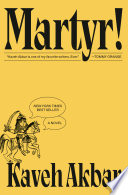
Martyr! A Novel
Kaveh Akbar, 2024
241 ratings
§ About Kaveh Akbar's books
- Books on SansFiction
- 1
- Published
- 2024
- Average rating
- 4.1 / 5 across 241 ratings
- Genres
- Fiction, Contemporary Fiction, Lgbtq, Philosophical Fiction
The book: Martyr! A Novel (2024)
Cyrus Shams is a young man grappling with an inheritance of violence and loss: his mother’s plane was shot down over the skies of the Persian Gulf in a senseless accident; and his father’s life in America was circumscribed by his work killing chickens at a factory farm in the Midwest.
Common questions about Kaveh Akbar
- Who is Kaveh Akbar?
- Born in Tehran, Iran, in 1989, Akbar moved to the United States at two years old. He pursued higher education in creative writing, earning a Master of Fine Arts from Butler University and a PhD from Florida State University. Akbar later joined the faculty at the University of Iowa, serving as director of the undergraduate creative writing program.
- What is Kaveh Akbar best known for?
- Kaveh Akbar is best known for Martyr! A Novel, published in 2024 with 241 ratings and a 4.1 average. It is the most-rated of Kaveh Akbar's books on SansFiction.
- What genres does Kaveh Akbar write?
- Kaveh Akbar's books on SansFiction are tagged Fiction, Contemporary Fiction, Lgbtq and Philosophical Fiction.
Explore: Fiction · Contemporary Fiction · Lgbtq · Philosophical Fiction