
§Author· 2 books
Julian Barnes
Also known as Dan Kavanagh, Edward Pygge
Crafting intricate novels, short stories, and analytical essays, modern British literature offers profound investigations into memory, history, art, and personal perception. Julian Patrick Barnes established his footprint as an English writer whose versatile output spans contemplative fiction, cultural journalism, and crime novels published under the pseudonym Dan Kavanagh. His award-winning work frequently examines how individuals reconstruct their pasts and construct personal narratives against historical facts.
Career & Background
Born in Leicester, England, on January 19, 1946, Julian Barnes attended the City of London School before studying modern languages at Magdalen College, Oxford, graduating with honours in 1968. Following his university studies, he spent three years working as a lexicographer for the Oxford English Dictionary supplement, specializing in sports and etymology. In 1977, he transitioned into literary journalism, serving as a reviewer and editor for the New Statesman and The New Review, and later working as a television critic. He published his debut novel, Metroland, in 1980. Alongside his standard literary output, he authored crime fiction using the pseudonym Dan Kavanagh, expanding his narrative range across diverse genres.
Writing Style & Themes
Barnes is widely noted for his intellectual precision, formal invention, and deep engagement with art and history. His writing often blurs the line between fiction, memoir, and essay, incorporating historical figures, literary analysis, and philosophical meditation directly into his narrative structures. Recurring motifs in his bibliography include the unreliable nature of human memory, the grief of loss, and the subjective interpretation of historical events. His non-fiction and essay collections, such as Keeping an Eye Open: Essays on Art, showcase his sharp critical perspective, examining visual artists and their cultural context with the same nuance he applies to his narrative prose.
Major Works
- The Sense of an Ending — This 2011 novel won the Man Booker Prize and tells the story of an aging man reflecting on his youth, friendship, and past relationships, examining how memory reshapes personal history over time.
- Keeping an Eye Open: Essays on Art — A compelling collection of essays focusing on nineteenth- and twentieth-century French and British art, exploring the relationship between visual artists, their masterpieces, and critical interpretation.
- Metroland — Published in 1980, this debut novel follows the coming-of-age journey of two boys growing up in suburban London and traveling to Paris, establishing core themes of memory and aesthetic discovery.
§All Books
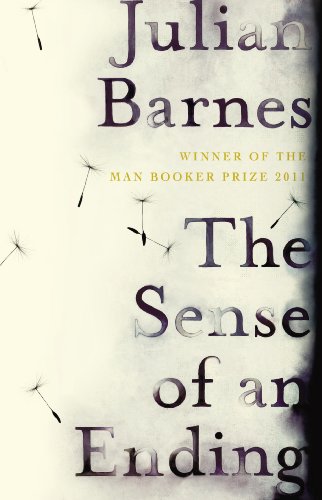
The Sense of an Ending
Julian Barnes, 2011
248 ratings

Keeping an Eye Open: Essays on Art
Julian Barnes, 2011
1 ratings
§ About Julian Barnes's books
- Books on SansFiction
- 2
- Published
- 2011
- Average rating
- 3.8 / 5 across 249 ratings
- Genres
- Classics, Fiction, Friendship, History
Start here: The Sense of an Ending (2011)
By an acclaimed writer at the height of his powers, The Sense of an Ending extends a streak of extraordinary books that began with the best-selling Arthur & George and continued with Nothing to Be Frightened Of and, most recently, Pulse.
Common questions about Julian Barnes
- Who is Julian Barnes?
- Born in Leicester, England, on January 19, 1946, Julian Barnes attended the City of London School before studying modern languages at Magdalen College, Oxford, graduating with honours in 1968. Following his university studies, he spent three years working as a lexicographer for the Oxford English Dictionary supplement, specializing in sports and etymology.
- What is Julian Barnes best known for?
- Julian Barnes is best known for The Sense of an Ending, published in 2011 with 248 ratings and a 3.8 average. It is the most-rated of Julian Barnes's books on SansFiction.
- How many books has Julian Barnes written?
- SansFiction lists 2 books by Julian Barnes, published in 2011. The most popular are The Sense of an Ending and Keeping an Eye Open: Essays on Art.
- Which Julian Barnes book should I read first?
- The Sense of an Ending is the usual place to start: it is Julian Barnes's most-rated book here, with a 3.8 average.
- What genres does Julian Barnes write?
- Julian Barnes's books on SansFiction are tagged Classics, Fiction, Friendship and History.
Explore: Classics · Fiction · Friendship · History