
§Author· 2 books
Jostein Gaarder
Also known as Gorder, Justejn, Gaarder Jostein, Jostein. Gaarder, Gaarder,Jostein, JOSTEIN GAARDER
Combining philosophical inquiry with narrative fiction for young readers and adults, the 1991 novel Sophie's World introduced millions of global readers to the history of Western thought through the story of a teenager receiving mysterious philosophical lessons in the mail. Norwegian author Jostein Gaarder created the work after spending over a decade teaching high school philosophy, religion, and literature, turning complex intellectual history into an engaging, multi-layered mystery.
Career & Background
Born in Oslo, Norway, on August 8, 1952, Jostein Gaarder completed his education in Oslo before entering the field of education. He worked as a high school teacher in Norway for eleven years, instructing students in philosophy, religion, and literature. During this career, he engaged in broader educational and literary projects, lecturing, co-authoring textbooks, and writing poetry and articles for newspapers. He made his literary debut with short stories published in 1982 and 1986, followed by his initial children's books, Barna fra Sukhavati in 1987 and Froskeslottet in 1988.
Following the international publication of Sophie's World, Gaarder transitioned to writing full-time. First published in Norwegian as Sofies verden in 1991 and translated into English in 1994, the book became the top-selling novel worldwide in 1995. Over subsequent decades, Gaarder expanded his bibliography with numerous novels and children's titles, including The Solitaire Mystery, Through a Glass, Darkly, Vita Brevis, The Ringmaster's Daughter, The Orange Girl, The Christmas Mystery, Anna. A Fable About the Earth's Climate and Environment, and The Puppeteer.
Writing Style & Themes
A central element of Gaarder's prose is his reliance on child and youth perspectives, which allow his narratives to emphasize wonder, open-minded questioning, and philosophical curiosity. His works frequently feature metafictional structures, including nested stories and internal texts, that invite readers to reflect on the nature of reality and literary construction. By incorporating historical, ethical, and existential topics—ranging from classical philosophy to modern environmental responsibility—into narrative frameworks, Gaarder bridges instructional subjects with imaginative storytelling.
Major Works
- Sophie's World — Published in Norwegian in 1991 and translated into English in 1994, this novel follows a fourteen-year-old girl who receives a series of anonymous philosophy lessons in the mail, constructing a narrative history of Western thought.
- The Solitaire Mystery — This novel pairs a boy's European road trip with his father with a fantasy narrative found in a tiny hidden book, focusing on themes of family, fate, and human consciousness.
- The Orange Girl — Framed around a letter written by a deceased father to his growing son, this narrative explores love, time, mortality, and the choices that define a human life.
- Through a Glass, Darkly — Centering on dialogue between a seriously ill girl and an angel named Ariel, this book examines human perception, the physical world, and existence.
§All Books
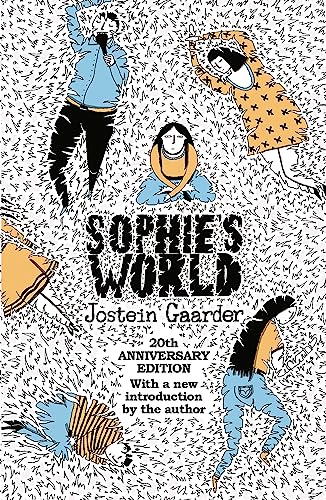
Sophie's World
Jostein Gaarder, 1905
334 ratings
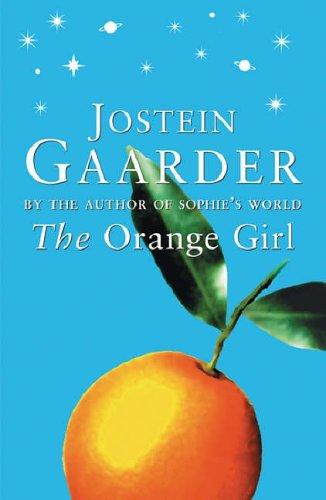
The Orange Girl
Jostein Gaarder, 2003
22 ratings
§ About Jostein Gaarder's books
- Books on SansFiction
- 2
- Published
- 1905–2003
- Average rating
- 3.7 / 5 across 356 ratings
- Genres
- Fiction, Classics, Fantasy, Juvenile Fiction
Start here: Sophie's World (1905)
The international bestseller about life, the universe and everything. 'A simply wonderful, irresistible book' DAILY TELEGRAPH 'A terrifically entertaining and imaginative story wrapped round its tough, thought-provoking philosophical heart' DAILY MAIL 'Remarkable ...
Common questions about Jostein Gaarder
- Who is Jostein Gaarder?
- Born in Oslo, Norway, on August 8, 1952, Jostein Gaarder completed his education in Oslo before entering the field of education. He worked as a high school teacher in Norway for eleven years, instructing students in philosophy, religion, and literature. During this career, he engaged in broader educational and literary projects, lecturing, co-authoring textbooks, and writing poetry and articles for newspapers.
- What is Jostein Gaarder best known for?
- Jostein Gaarder is best known for Sophie's World, published in 1905 with 334 ratings and a 3.7 average. It is the most-rated of Jostein Gaarder's books on SansFiction.
- How many books has Jostein Gaarder written?
- SansFiction lists 2 books by Jostein Gaarder, published between 1905 and 2003. The most popular are Sophie's World and The Orange Girl.
- Which Jostein Gaarder book should I read first?
- Sophie's World is the usual place to start: it is Jostein Gaarder's most-rated book here, with a 3.7 average.
- What genres does Jostein Gaarder write?
- Jostein Gaarder's books on SansFiction are tagged Fiction, Classics, Fantasy and Juvenile Fiction.
Explore: Fiction · Classics · Fantasy · Juvenile Fiction