
§Author· 2 books
Jordan B. Peterson
Also known as Jordan Bernt Peterson, Jordan Peterson, Dr. Jordan B. Peterson
Combining clinical psychology, evolutionary theory, and comparative mythology, non-fiction writing on human motivation and personal responsibility has attracted millions of readers seeking practical frameworks for personal conduct. Jordan B. Peterson reached an expansive global audience with his 2018 self-help treatise 12 Rules for Life: An Antidote to Chaos, which topped non-fiction bestseller lists internationally across North America, Europe, and Australasia.
His work connects empirical psychological research on personality traits with narrative structures found in myth and religious texts, presenting readers with structured principles to navigate psychological suffering, social dynamics, and personal development.
Career & Background
Born on June 12, 1962, in Edmonton, Alberta, Peterson grew up in Alberta and completed undergraduate degrees in political science and psychology at the University of Alberta. He earned a Ph.D. in clinical psychology from McGill University, remaining there as a post-doctoral fellow from 1991 to 1993. Moving to Harvard University as an associate professor of psychology, he was nominated for the Levinson Teaching Prize before joining the faculty at the University of Toronto in 1998, where he eventually became Professor Emeritus.
Throughout his academic tenure, he co-authored more than a hundred scientific papers investigating personality, competence, and creativity. In addition to his research and clinical practice, Peterson developed public lectures, educational software, and podcasts that expanded his audience beyond traditional academia into international publishing and public speaking.
Writing Style & Themes
Peterson's writing synthesizes scientific empirical research with detailed analyses of archetypal literature, mythology, and theology. He focuses on the fundamental tension between order and chaos, arguing that human beings maintain psychological stability by balancing familiar social structures with voluntary exposure to new challenges. His arguments rely on Carl Jung's psychological concepts, evolutionary biology, and close readings of historical and religious texts.
Adopting a direct, instructional tone, his non-fiction balances academic rigor with accessible self-improvement advice. Recurring themes include individual responsibility, the psychological foundation of belief systems, the dangers of ideological extremism, and the necessity of personal truthfulness.
Major Works
- 12 Rules for Life: An Antidote to Chaos — Published in 2018, this international bestseller outlines twelve practical ethical guidelines grounded in psychology, evolutionary biology, and mythological narrative. The book topped non-fiction lists in multiple countries and was slated for translation into dozens of languages.
- Maps of Meaning: The Architecture of Belief — First published in 1999, this comprehensive academic work presents a scientifically grounded theory explaining how human beings construct meaning and belief systems. It synthesizes insights from neurobiology, myth, and clinical psychology to examine how individuals manage chaos and order.
§All Books

12 Rules for Life: An Antidote to Chaos
Jordan B. Peterson, 26
394 ratings
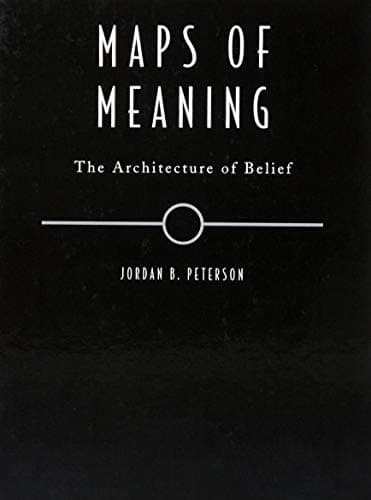
Maps of Meaning: The Architecture of Belief
Jordan B. Peterson, 1999
9 ratings