
§Author· 2 books
Jo Walton
Explorations of speculative fiction across fantasy, science fiction, and alternate history have redefined how traditional tropes interact with literary form and historical pastiche. Welsh-Canadian author Jo Walton established a distinct presence in speculative literature by crafting narrative worlds where Victorian manners merge with dragon society, classical philosophy shapes mythical cities, and intimate coming-of-age stories double as tributes to genre fandom. Her novel Among Others achieved widespread critical recognition by winning both the Hugo and Nebula Awards.
Career & Background
Born in Aberdare, Wales, in 1964, Walton began publishing genre fiction in the late 1990s following early novel projects such as The Rebirth of Pan. Her debut published novel, The King's Peace (2000), launched the Tir Tanagiri sequence, a fantasy reworking of Arthurian legends set in early medieval times. She received the John W. Campbell Award for Best New Writer in 2002, the same year she relocated to Canada. Settling in Montreal, Walton expanded her bibliography across multiple subgenres, publishing the World Fantasy Award–winning novel Tooth and Claw in 2003, as well as the Small Change alternate-history trilogy comprising Farthing, Ha'penny, and Half a Crown.
In addition to her narrative fiction, Walton has contributed extensive criticism, essays, and reviews to Tor.com and other genre venues. Her essay collection What Makes This Book So Great earned the Locus Award for Non-Fiction in 2014. Over her career, Walton has produced fifteen novels along with collections of poetry, short stories, and plays, establishing a reputation for genre versatility and literary analysis.
Writing Style & Themes
Walton's writing style is characterized by the blending of distinct literary genres, historical periods, and speculative premises. Her narratives frequently examine social hierarchies, ethics, religion, and the influence of literature on human lives. Whether constructing an alternate history through the framework of mid-century cozy murder mysteries or building a city governed by classical Greek philosophy, Walton emphasizes character-focused perspectives and domestic settings over epic conflict. Her work regularly incorporates meta-fictional elements and homage to the history of science fiction and fantasy literature.
Major Works
- Among Others — A coming-of-age fantasy novel presented as the diary of a Welsh teenager navigating personal tragedy, magical realism, and science fiction fandom, which won the Hugo and Nebula Awards for Best Novel.
- The Just City — A speculative fantasy novel that explores classical philosophy as the goddess Pallas Athene attempts to establish Plato's ideal Republic using time travelers, historical thinkers, and technology.
- Tooth and Claw — A World Fantasy Award–winning novel that combines Victorian family inheritance plotlines and strict social etiquette with a society composed entirely of dragons.
- Small Change Series — An alternate-history trilogy consisting of Farthing, Ha'penny, and Half a Crown, which merges cozy mystery conventions with a dark political thriller set in a fascist post-WWII Britain.
- My Real Children — An alternate-history novel depicting the dual timelines and contrasting personal outcomes of a woman living through different twentieth-century historical paths, recipient of the Tiptree Award.
§All Books
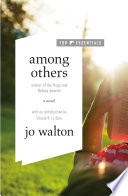
Among Others
Jo Walton, 2011
141 ratings

The Just City
Jo Walton, 2015
48 ratings
§ About Jo Walton's books
- Books on SansFiction
- 2
- Published
- 2011–2015
- Average rating
- 3.8 / 5 across 189 ratings
- Genres
- Fantasy, Fiction, Science Fiction, Young Adult
Start here: Among Others (2011)
Seeking refuge in fantasy novel worlds throughout a youth under the shadow of a dubiously sane half-brother who dabbled in magic, Mori Phelps is forced to confront her mother in a tragic battle and gains unwanted attention when she attempts to perform spells herself.
Common questions about Jo Walton
- Who is Jo Walton?
- Born in Aberdare, Wales, in 1964, Walton began publishing genre fiction in the late 1990s following early novel projects such as The Rebirth of Pan. Her debut published novel, The King's Peace (2000), launched the Tir Tanagiri sequence, a fantasy reworking of Arthurian legends set in early medieval times. She received the John W. Campbell Award for Best New Writer in 2002, the same year she relocated to Canada.
- What is Jo Walton best known for?
- Jo Walton is best known for Among Others, published in 2011 with 141 ratings and a 3.9 average. It is the most-rated of Jo Walton's books on SansFiction.
- How many books has Jo Walton written?
- SansFiction lists 2 books by Jo Walton, published between 2011 and 2015. The most popular are Among Others and The Just City.
- Which Jo Walton book should I read first?
- Among Others is the usual place to start: it is Jo Walton's most-rated book here, with a 3.9 average.
- What genres does Jo Walton write?
- Jo Walton's books on SansFiction are tagged Fantasy, Fiction, Science Fiction and Young Adult.
Explore: Fantasy · Fiction · Science Fiction · Young Adult