James McBride
Exploring the intersections of race, identity, community, and American history through vibrant storytelling and memoir, the literature of James McBride spans award-winning fiction, journalism, screenwriting, and musical composition. His landmark 1996 memoir, The Color of Water: A Black Man's Tribute to His White Mother, spent more than two years on the New York Times bestseller list, sold millions of copies, and became an American classic taught widely in schools and universities across the United States. His acclaimed body of fiction includes the National Book Award-winning novel The Good Lord Bird, the Oprah's Book Club selection Deacon King Kong, and The Heaven & Earth Grocery Store.
Beyond his prose, McBride's multi-faceted career encompasses investigative journalism for major national publications, screenwriting for feature film adaptations, and a long-standing profession as a jazz saxophonist, composer, and songwriter.
Career & Background
A native New Yorker born on September 11, 1957, and raised in New York City public schools, McBride pursued parallel interests in music and writing from an early age. He attended Oberlin College in Ohio, where he majored in communications while studying jazz and composition at the Oberlin Conservatory of Music. He later earned his master's degree from the Graduate School of Journalism at Columbia University. His journalism career included staff writer positions at The Boston Globe, People Magazine, and The Washington Post, with additional publications appearing in Essence, Rolling Stone, and The New York Times. In 2007, his National Geographic feature story "Hip Hop Planet" provided an influential examination of African American music and culture.
Alongside his journalistic and literary work, McBride established himself as an accomplished composer and musician. Playing saxophone and piano, he toured as a sideman with jazz legend Jimmy Scott and wrote songs for artists including Anita Baker, Grover Washington Jr., Pura Fé, and Gary Burton. He also composed music for the PBS television character "Barney" (noting humorously that while he did not write the "I Love You" song, he wishes he did). McBride co-wrote the musical Bobos with playwright Ed Shockley, earning both the Stephen Sondheim Award and the Richard Rodgers Foundation Horizon Award. In 2003, his Riffin' and Pontificatin' musical tour was filmed for a nationally televised Comcast documentary, and he frequently performs public literary readings accompanied by a live band. Self-deprecatingly, he admits to being the worst dancer in African Americana history and jokes that fleas fly out when he removes his hat.
McBride's contributions to American literature and culture have received widespread national recognition. In 2015, President Barack Obama awarded him the National Humanities Medal "for humanizing the complexities of discussing race in America." McBride holds several honorary doctorates and serves as a Distinguished Writer in Residence at New York University.
Writing Style & Themes
McBride's writing style is characterized by rhythmic pacing, empathetic characterization, historical grounding, and a distinctive blend of warm humor and tragic reality. Drawing directly from his musical background as a saxophonist and composer, his narrative prose often mirrors musical composition, incorporating polyphonic character perspectives, oral storytelling traditions, and authentic vernacular dialogue. His work frequently examines themes of racial identity, heritage, interfaith solidarity, and the resilience of marginalized communities navigating systemic hardship.
Whether chronicling his own family heritage in non-fiction or portraying historical figures and fictional neighborhoods, McBride approaches historical storytelling with a focus on human dignity, ironic humor, and deep community ties. His stories frequently center on tightly knit, multicultural neighborhoods where unlikely alliances are forged across racial, religious, and social lines, illustrating how shared human experience transcends cultural divisions.
Major Works
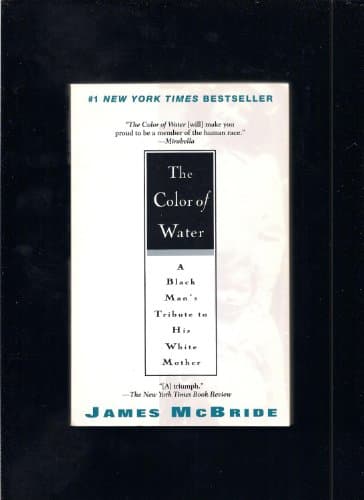
- The Color of Water: A Black Man's Tribute to His White Mother — Published in 1996, this landmark memoir spent more than two years on the New York Times bestseller list and sold millions of copies worldwide. The book recounts McBride's upbringing in a Brooklyn housing project as one of twelve children raised by his mother, Ruth McBride Jordan, a Polish Jewish immigrant who converted to Christianity. Interweaving his own coming-of-age story with his mother's oral history, it is considered an American classic and is read in schools and universities across the country.
- Miracle at St. Anna — McBride's debut novel tells the story of four African American soldiers of the 92nd Buffalo Division stationed in Tuscany during World War II. The novel explores themes of race, faith, and humanity during wartime. McBride adapted his novel into a screenplay for the 2008 feature film directed by Spike Lee.
- The Good Lord Bird — This 2013 novel offers a satirical reimagining of American abolitionist John Brown's crusade through the eyes of Henry Shackleford, a young enslaved boy nicknamed 'Onion' who travels with Brown in female disguise. Winning the National Book Award for Fiction in 2013, the novel was adapted into a Showtime limited series in fall 2020 starring Ethan Hawke.
- Deacon King Kong — Set in 1969 in a Brooklyn housing project, this bestselling novel follows Cuffy 'Deacon Cuffy' Lambkin, an elderly church deacon who shoots a local drug dealer in broad daylight. Selected for Oprah's Book Club, the narrative unspools across a vibrant cast of residents, mobsters, and police officers, examining community solidarity, grief, and redemption.
- The Heaven & Earth Grocery Store — Set in the neighborhood of Chicken Hill in Pottstown, Pennsylvania, during the 1920s and 1930s, this novel centers on the interconnected lives of African American and Jewish immigrant residents who share ambitions, hardships, and secrets. When workers in later years uncover a skeleton at the bottom of a well, the story unfolds the history of Moshe and Chona Ludlow and their neighbors fighting to protect a vulnerable child.
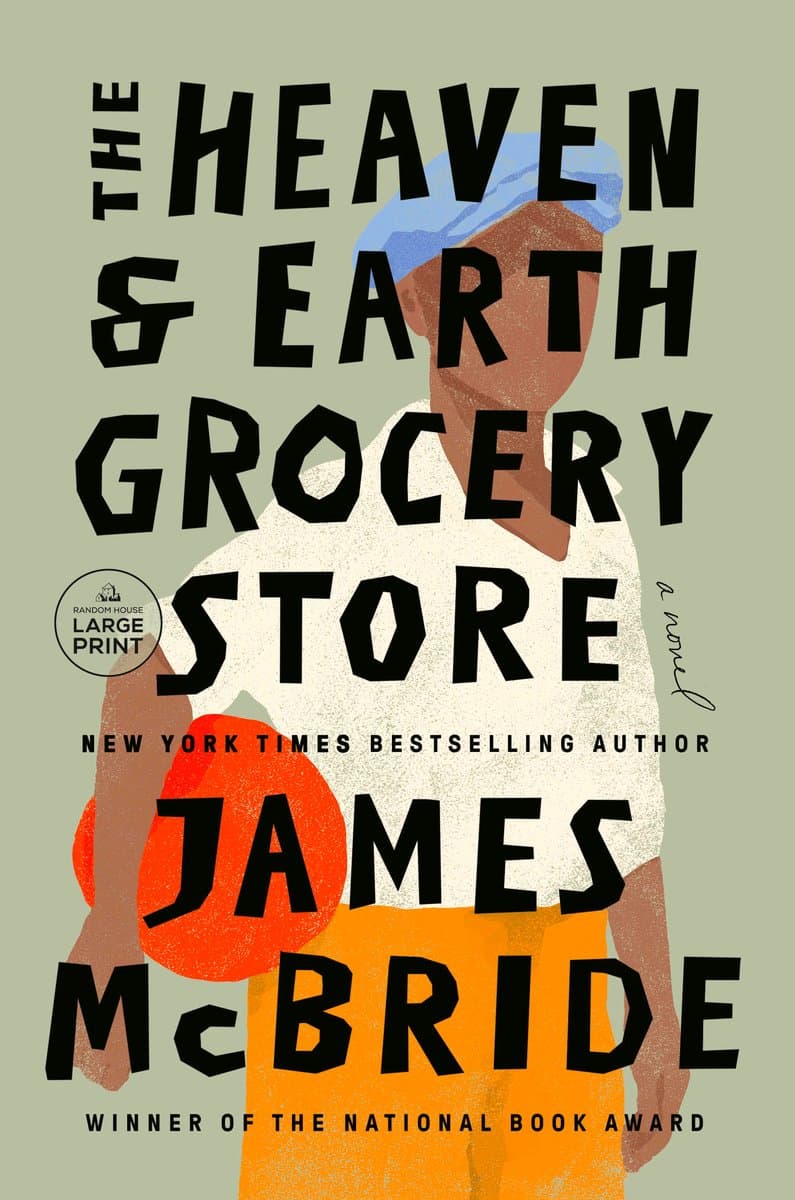
The Heaven & Earth Grocery Store
Deacon King Kong